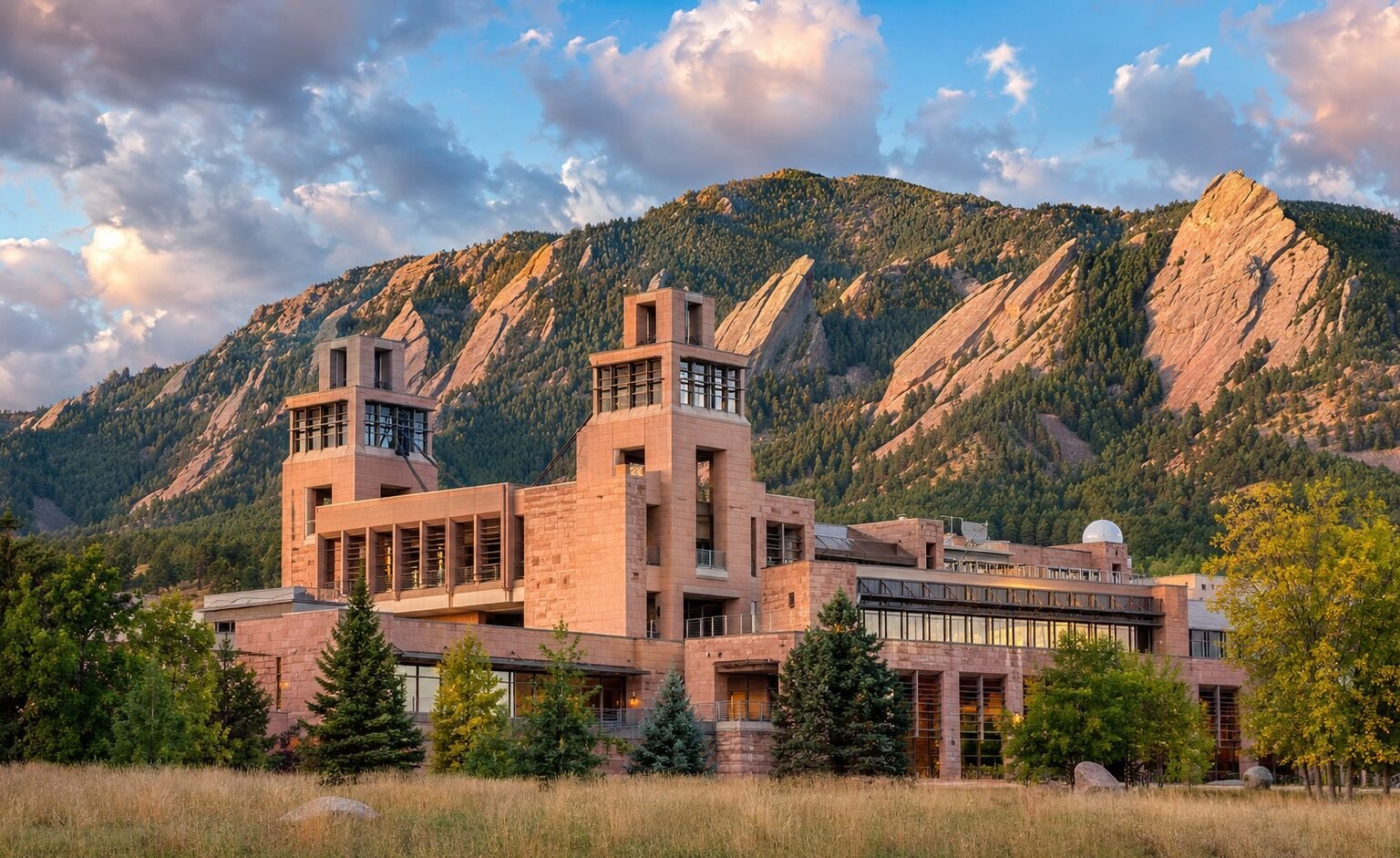
A federal judge has temporarily blocked the Trump administration from breaking apart the National Center for Atmospheric Research, the Boulder-based institution that sits at the heart of America’s climate and weather science. On June 1, 2026, Colorado U.S. District Judge R. Brooke Jackson issued a temporary injunction halting the move, pointing to evidence that the effort amounted to political retaliation against Colorado.
The ruling stops, at least for now, one of the more striking attempts to reshape the federal scientific landscape by targeting a single research hub in a single state. And the reason the court gave for stepping in is what makes the case stand out: this was less about science or budgets, the judge found, and more about politics.
What NCAR Is – And Why It Matters
The National Center for Atmospheric Research is not an obscure government office. Based in Boulder, Colorado, it is one of the country’s premier centers for studying the atmosphere, the weather, and the climate. Its researchers build the models and gather the data that feed into the forecasts, storm warnings, and long-range climate projections that communities across the United States rely on every single day.
When people check whether a hurricane is turning toward the coast, when farmers plan around a drought, when emergency managers prepare for extreme heat or flooding, they are leaning on the kind of science that institutions like NCAR make possible. Pulling that institution apart would not just affect Boulder or Colorado. It would ripple outward to anyone who depends on accurate weather and climate information – which is to say, nearly everyone.
The Court Steps In
On June 1, Judge R. Brooke Jackson of the U.S. District Court in Colorado issued a temporary injunction blocking the administration’s plan to break up the center. A temporary injunction is exactly what it sounds like – a legal hold that freezes an action in place while the underlying dispute is sorted out. It is not the final word, but it stops the clock and prevents the breakup from moving forward in the meantime.
What pushed the court to act was the evidence pointing toward political motive. According to the ruling, the move looked less like a neutral policy decision and more like retaliation aimed at Colorado. That distinction is critical. Governments are generally given wide latitude to set policy and manage agencies. They are not supposed to use that power to punish a state for political reasons.
Why The Political Angle Is The Whole Story
Strip away the bureaucratic language and the heart of this case is simple. The science was not the problem. The forecasting was not the problem. The target appears to have been a state and a research institution that landed on the wrong side of the administration’s politics.
That is why the ruling resonates well beyond Boulder. If an administration can dismantle a respected scientific institution as a form of political payback, then no state’s universities, labs, or research centers are truly safe from the same treatment. The injunction draws a line: scientific institutions should not be bargaining chips in political fights.
What This Means For Americans
For ordinary people, the stakes are concrete. The research produced at centers like NCAR underpins the everyday tools families use to stay safe – the storm alerts on a phone, the drought outlooks that shape food prices, the climate data that helps cities plan for the next heat wave or flood. Weakening that infrastructure carries real costs, even if they are not always visible.
For now, the injunction holds the line. But it is temporary, and the larger fight – over whether an administration can punish a state by gutting its scientific institutions – is far from over. How the courts ultimately rule could shape the independence of public science for years to come.
Stay informed on the stories that matter most. Follow Your Daily Updates on Facebook and bookmark yourdailyupdates.news for breaking news and analysis.