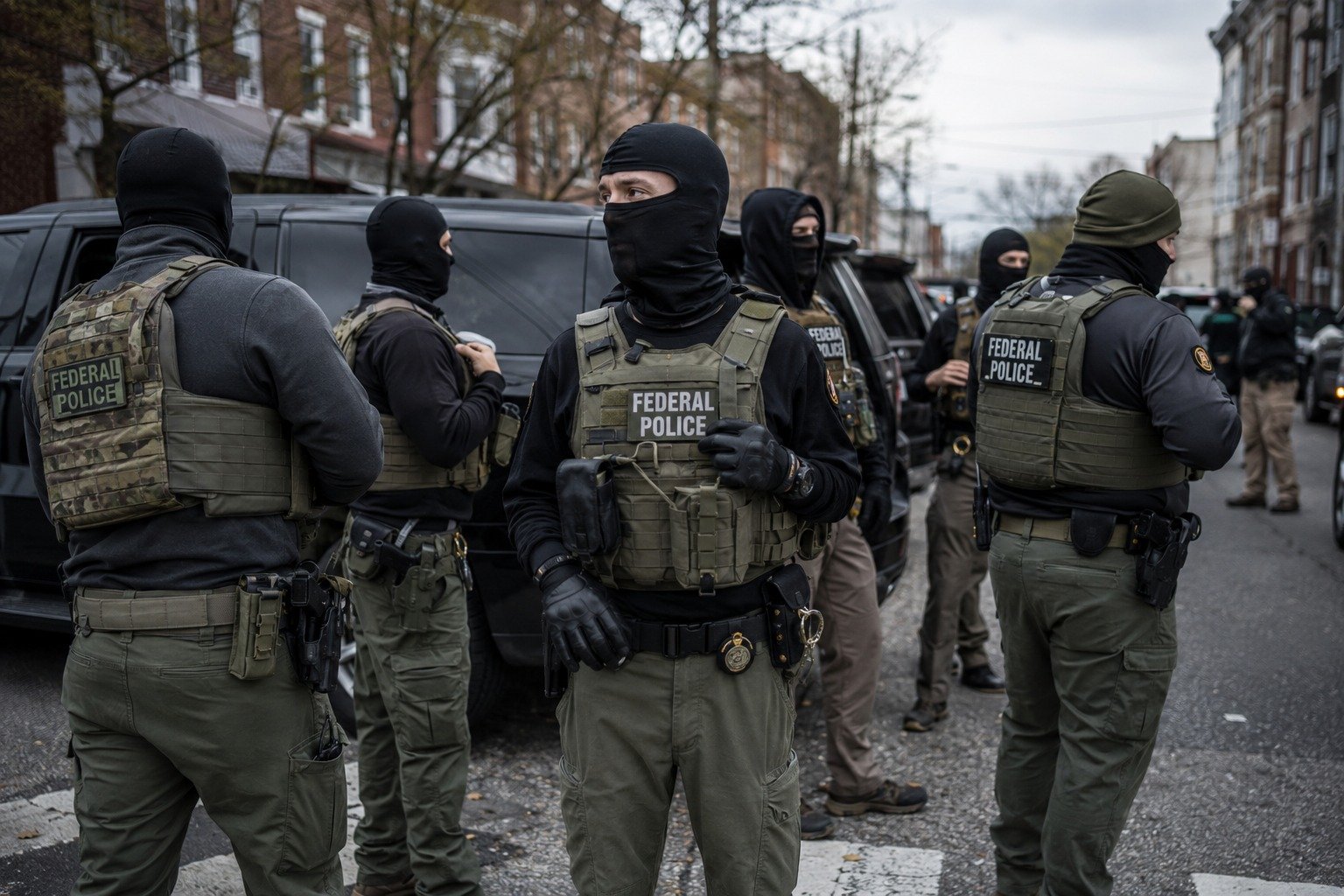
A federal judge has blocked Philadelphia from enforcing a first-of-its-kind law that would have forced federal agents to stop hiding their faces while operating in the city – and the order landed just five days before the ordinance was set to take effect.
U.S. District Judge Chad F. Kenney, a Trump appointee, issued the ruling on July 2, 2026, halting Philadelphia’s “ICE Out” ordinance. The measure was scheduled to go live on July 7. Instead, it is now frozen while the courts decide its fate.
What the Ordinance Would Have Done
The law, passed by Philadelphia’s City Council in late April, would have barred local, state, and federal law enforcement officers from wearing masks or face coverings, intentionally concealing their badges, or using unmarked vehicles while carrying out enforcement actions in the city. It was one piece of a broader “ICE Out” legislative package introduced earlier in the year to rein in the conduct of federal officers taking part in the administration’s immigration crackdown.
Supporters framed it as a basic transparency measure: if an armed officer is going to detain someone on a public street, the public should be able to see who they are and confirm they are actually law enforcement. Anonymous, masked agents pulling people into unmarked cars had become a flashpoint in Philadelphia and other cities.
Why the Judge Blocked It
The Justice Department sued Philadelphia in mid-June, calling the ordinance a “blatantly unconstitutional” attempt to regulate the conduct of federal agents. The government argued that the rules would endanger officers and hamper their operations.
Judge Kenney sided with the DOJ, finding it was likely to win its case. He grounded the decision in the Supremacy Clause – the constitutional principle that federal law overrides conflicting state and local rules. Under that reasoning, a city generally cannot dictate how federal officers dress or operate while enforcing federal law.
Kenney also noted that Philadelphia Mayor Cherelle Parker had declined to sign the bill, acting on advice from the city solicitor’s office that the measure carried significant legal problems. The judge wrote that Parker “acted with civic wisdom and courage” in choosing not to sign it.
Part of a Broader Fight
Philadelphia is not alone. Similar rulings came down in Virginia and California, part of a coordinated federal push to keep agents’ identities shielded as cities move to require transparency. The clashes reflect a growing standoff between local governments trying to impose accountability on immigration enforcement and a federal government determined to protect how its agents operate.
What This Means for Americans
For now, masked and badgeless agents can continue operating in Philadelphia without the identification the city tried to require. Critics say that erodes the basic accountability that is supposed to come with a badge – the ability to know who is detaining you and to hold them responsible if something goes wrong. Supporters of the agents counter that anonymity protects officers and their families from threats. The legal fight is far from over, and how it resolves could shape whether any city in the country can require federal officers to show their faces.
Stay informed on the stories that matter most. Follow Your Daily Updates on Facebook and bookmark yourdailyupdates.news for breaking news and analysis.