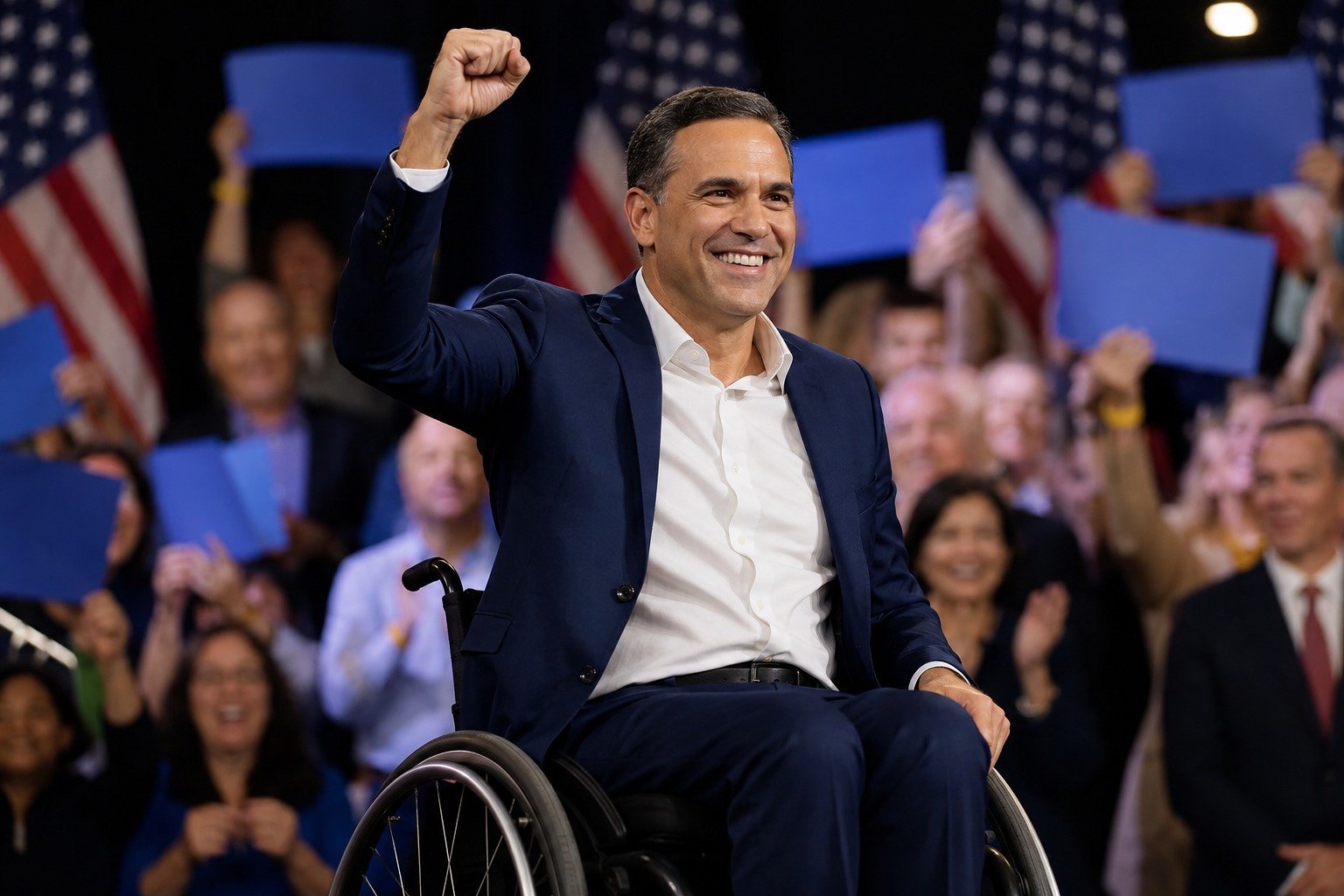
Josh Turek, a two-time Paralympic gold medalist and current Iowa state representative, has won the Democratic primary for Iowa’s open U.S. Senate seat. The victory was decisive: Turek captured 62.6% of the vote, far ahead of state Senator Zach Wahls, who finished with 37.4%. He now advances to one of the most closely watched Senate races in the country.
From the Basketball Court to the Ballot
Turek’s path to this moment is unlike almost anyone else’s in American politics. He was born with spina bifida after his father was exposed to Agent Orange during military service in Vietnam. By the age of 12, Turek had already undergone 21 surgeries. Rather than slowing him down, those early challenges shaped a relentless competitor.
He went on to represent the United States at four Paralympic Games as a member of the men’s wheelchair basketball team, bringing home gold medals in both 2016 and 2020. That résumé made him a recognizable figure long before he entered elected office, and it has become central to the story he tells voters: that perseverance and grit can overcome long odds.
A Landslide Primary Win
The primary itself was not close. Turek’s nearly 25-point margin over Wahls, a well-known figure in Iowa Democratic politics, signaled broad support across the party’s base. Wahls had built his own profile as a state senator and national voice, which makes the size of Turek’s win all the more striking.
Turek ran as a self-described “prairie populist,” leaning into a rural, working-class message aimed at voters who have drifted away from Democrats in recent cycles. His pitch centers on economic fairness and standing up for ordinary Iowans, a framing designed to travel beyond the party’s traditional strongholds and into the small towns and farm communities that decide statewide races in Iowa.
The Harkin Connection
Turek’s campaign carries a notable endorsement: former Senator Tom Harkin, the last Iowa Democrat to win a U.S. Senate seat. Harkin’s backing is both symbolic and strategic. It links Turek to the last era of Democratic success in the state and lends credibility to the argument that the seat is winnable for the party again.
Harkin himself authored the Americans with Disabilities Act, giving the endorsement an additional layer of meaning for a candidate who would be one of the most prominent wheelchair-using figures ever to serve in the Senate.
A Steep Road Ahead
The general election will be an uphill climb. Turek will face Republican Rep. Ashley Hinson in November. Iowa has trended sharply to the right in recent years, with Donald Trump carrying the state by 13 points in 2024. Republicans also hold a registration advantage of nearly 200,000 voters, a structural edge that any Democrat must overcome to win statewide.
Still, national forecasters are paying attention. The Cook Political Report shifted its rating of the race after Turek’s win, a sign that analysts see his candidacy as more competitive than a typical Democratic bid in a red-leaning state. Supporters argue that his personal story and populist message give him a rare crossover appeal; critics counter that Iowa’s political fundamentals remain a major obstacle.
What This Means for Americans
Iowa’s Senate race could help determine which party controls the chamber, making it far bigger than a single state contest. For voters across the country, races like this one shape the balance of power that decides everything from federal spending to the confirmation of judges. A competitive Iowa also tests whether a working-class, biography-driven campaign can pull voters back across the aisle in a place that has moved away from Democrats.
Stay informed on the stories that matter most. Follow Your Daily Updates on Facebook and bookmark yourdailyupdates.news for breaking news and analysis.