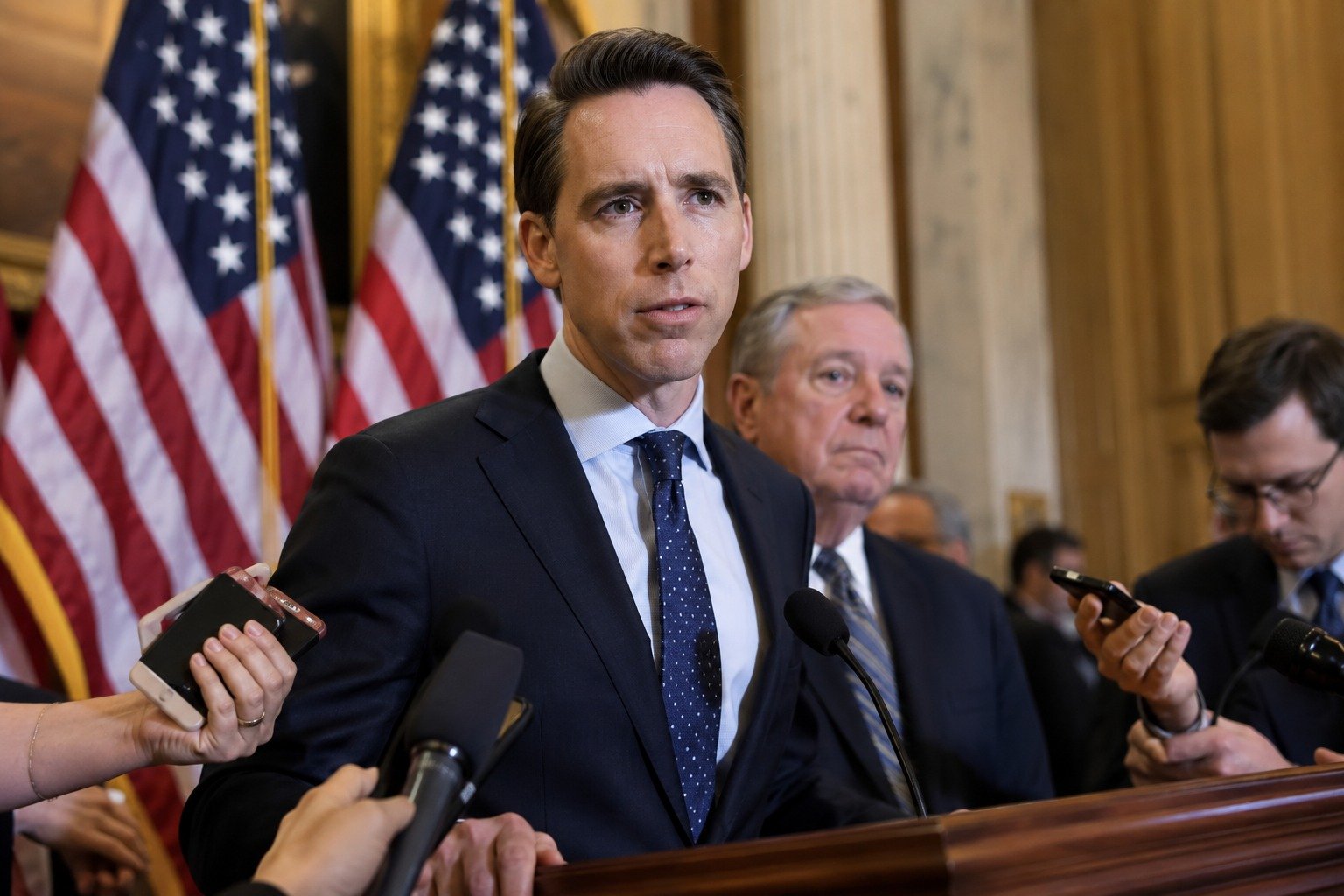
Senator Josh Hawley (R-MO) has introduced legislation that would strip taxpayer-funded federal pensions from any member of Congress convicted of a felony sex crime — a bill targeting a significant loophole in current federal law that allows convicted offenders to continue receiving government retirement benefits for life.
A Loophole Hiding in Plain Sight
Under current federal law, members of Congress face mandatory pension forfeiture for a range of felony convictions — including fraud, bribery, treason, and perjury. But one critical category is absent from that list: sexual abuse and sex crimes. The gap means a lawmaker could be convicted of felony sexual assault and still receive thousands of dollars per month in retirement payments funded entirely by American taxpayers.
Hawley’s bill — formally titled the No Pensions for Congressional Predators Act — aims to close that loophole permanently by amending existing law to add felony sex crimes to the automatic forfeiture list.
What the Bill Does
The legislation would apply to any serving or former member of Congress convicted of a qualifying felony sex offense after the bill’s enactment. Upon conviction, the member would immediately lose their right to receive federal retirement benefits — the same consequence already in place for those convicted of fraud, corruption, or crimes against the government.
“Right now, a member of Congress can be convicted of sexual abuse and still receive a taxpayer-funded pension. That is unacceptable,” Hawley said in a statement. “I’m introducing legislation to end this loophole and ensure that lawmakers are never compensated with taxpayer dollars after such a breach of trust.”
The Swalwell Resignation That Sparked the Push
The bill’s introduction followed the high-profile resignation of former Rep. Eric Swalwell (D-CA), who stepped down from Congress after five women — including a former member of his own congressional staff — came forward with allegations of sexual misconduct and rape. Swalwell denied all allegations, and no criminal charges have been filed. But his case put a direct spotlight on the loophole Hawley’s bill targets: a lawmaker facing serious sexual misconduct allegations while still eligible for taxpayer-funded pension benefits based on years of congressional service.
Swalwell’s resignation was part of a broader reckoning on Capitol Hill, where multiple high-profile misconduct cases in recent months have renewed scrutiny of the accountability structures — or lack thereof — governing members of Congress.
Political Implications
Hawley’s bill puts every member of Congress in a difficult political position. A “no” vote would require openly defending pension payments to convicted sex offenders — a stance nearly impossible to justify to constituents. Bipartisan support is plausible on the merits alone. But the bill still faces the same obstacle that has derailed similar congressional ethics measures for decades: getting it through committee and to a floor vote requires members to actively police themselves and their colleagues.
Legal observers note that while the forward-looking provisions of the bill appear straightforward, any attempt to apply it retroactively — stripping pensions from members already convicted — could invite constitutional challenges under ex post facto protections. As written, the bill appears to target future convictions only.
What This Means for Taxpayers
For American taxpayers, the question this bill raises is simple: why wasn’t this law already on the books? The forfeiture rules covering fraud, bribery, and perjury were built on a straightforward principle — public officials who betray the public trust should not profit from it. The omission of sex crimes from that list was never publicly explained or debated. Hawley’s bill forces the issue into the open and asks Congress to take a clear, public position. Whatever its legislative fate, that conversation is long overdue.
Stay informed on the stories that matter most. Follow Your Daily Updates on Facebook and bookmark yourdailyupdates.news for breaking news and analysis.