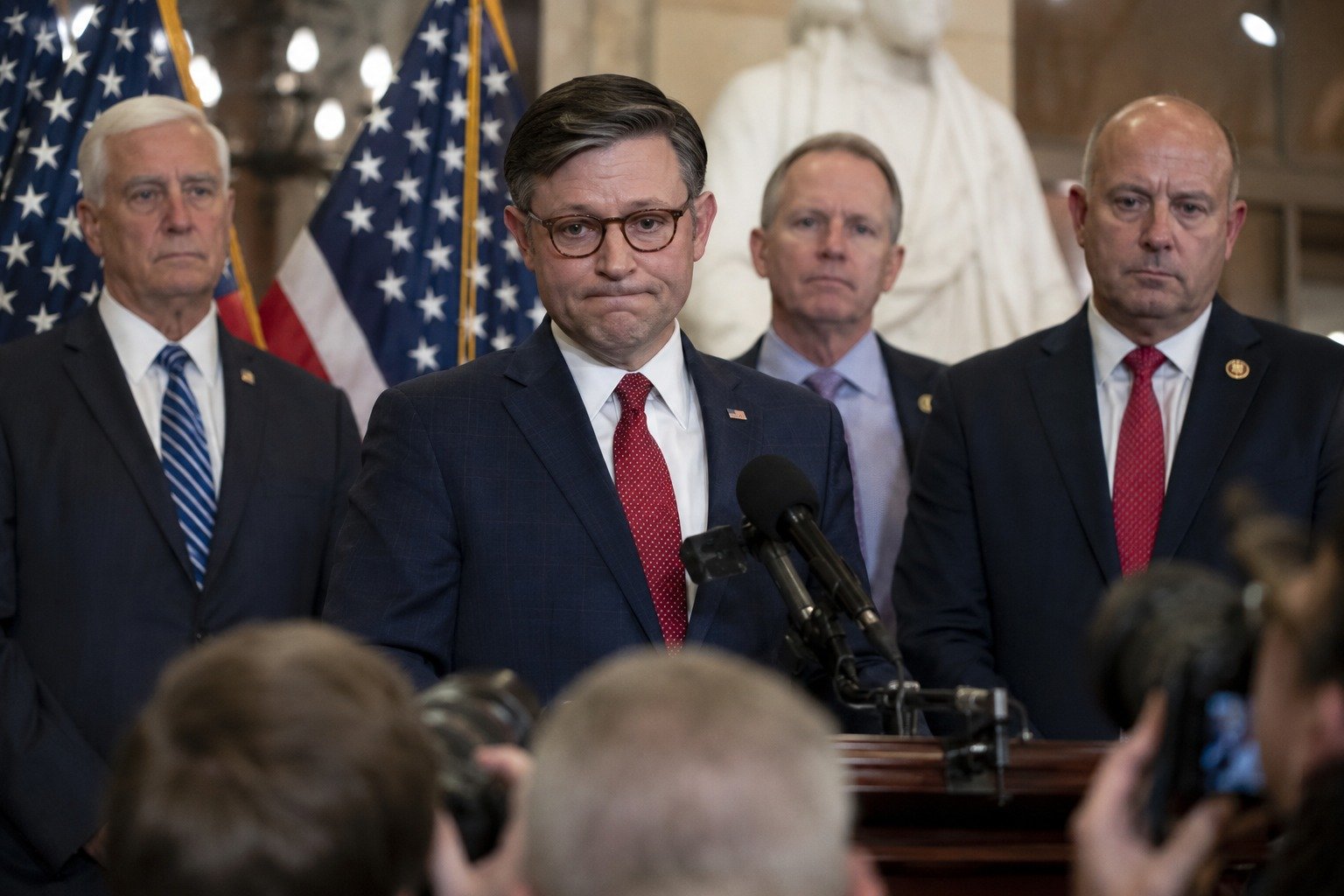
For the second week in a row, House Republican leaders could not move their own agenda through the chamber they control — and on June 30, Speaker Mike Johnson cancelled the week’s remaining votes and sent members home early ahead of the July 4 recess. The trigger was a failed procedural vote, blocked by members of Johnson’s own party, that left the House floor frozen.
A Routine Vote That Wasn’t
The breakdown came over a procedural rule — the kind of vote a functioning majority normally passes without a second thought. A rule vote does not decide the fate of any bill on its own; it simply sets the terms for debate and allows legislation to reach the floor. But this time, a bloc of roughly a dozen Republicans joined together to sink it, and the measure went down 224-198.
Without that rule, nothing moves. The House cannot begin debate, cannot amend, and cannot vote on final passage. In practical terms, one blocked procedural vote brought the entire legislative week to a halt — for the second straight week running.
What Got Stuck
The pileup behind the blockade was substantial. Among the measures leadership had hoped to move before the break were the annual National Defense Authorization Act (NDAA) — the sweeping bill that sets Pentagon policy and pay every year — and the fiscal 2027 appropriations bill funding the State Department. Several other items were queued up behind them.
These are not fringe bills. The NDAA in particular is one of the few pieces of legislation Congress reliably passes every year, often with strong bipartisan support. Watching it stall out because a governing majority could not clear a procedural hurdle underscores just how deep the dysfunction runs.
The Revolt Came From Inside
Crucially, this was not a case of the minority party grinding the gears. The revolt came from within Johnson’s own conference. Hardline members were frustrated that Republican priorities they had been promised action on — including the SAVE America Act, a voter-eligibility measure, and the HR 2 border package — had stalled. Rather than advance leadership’s agenda, they withheld their votes on the rule to register that frustration.
The math is what makes this striking. Republicans currently hold the House, the Senate, and the White House. In theory, unified control should make governing easier. In practice, the party has repeatedly been unable to move its own bills because a small group of members can bring the floor to a standstill whenever they choose.
Leadership Pulls the Plug
Faced with a floor it could not control, leadership opted not to grind through the standoff. Instead, it cancelled the remaining votes for the week and sent lawmakers home a couple of days early, folding the disruption into the run-up to the July 4 holiday. Members are not expected back for votes until the middle of July.
For Johnson, the episode is another reminder of how narrow his margin for error is. With a slim majority, even a handful of defectors can dictate the pace of the entire chamber. Every rule vote becomes a negotiation, and every negotiation becomes leverage for the members most willing to say no.
What This Means for Americans
Gridlock like this is not an abstract inside-Washington story. When the House cannot pass a defense bill or fund the State Department on schedule, the work of government is delayed and the public is left waiting. Voters were told that unified control would deliver results. What they are watching instead is a majority that struggles to keep its own floor open for business. When the party in charge cannot clear a basic procedural vote two weeks running, the real question is not who is blocking the agenda — it is whether the majority can govern at all.
Stay informed on the stories that matter most. Follow Your Daily Updates on Facebook and bookmark yourdailyupdates.news for breaking news and analysis.