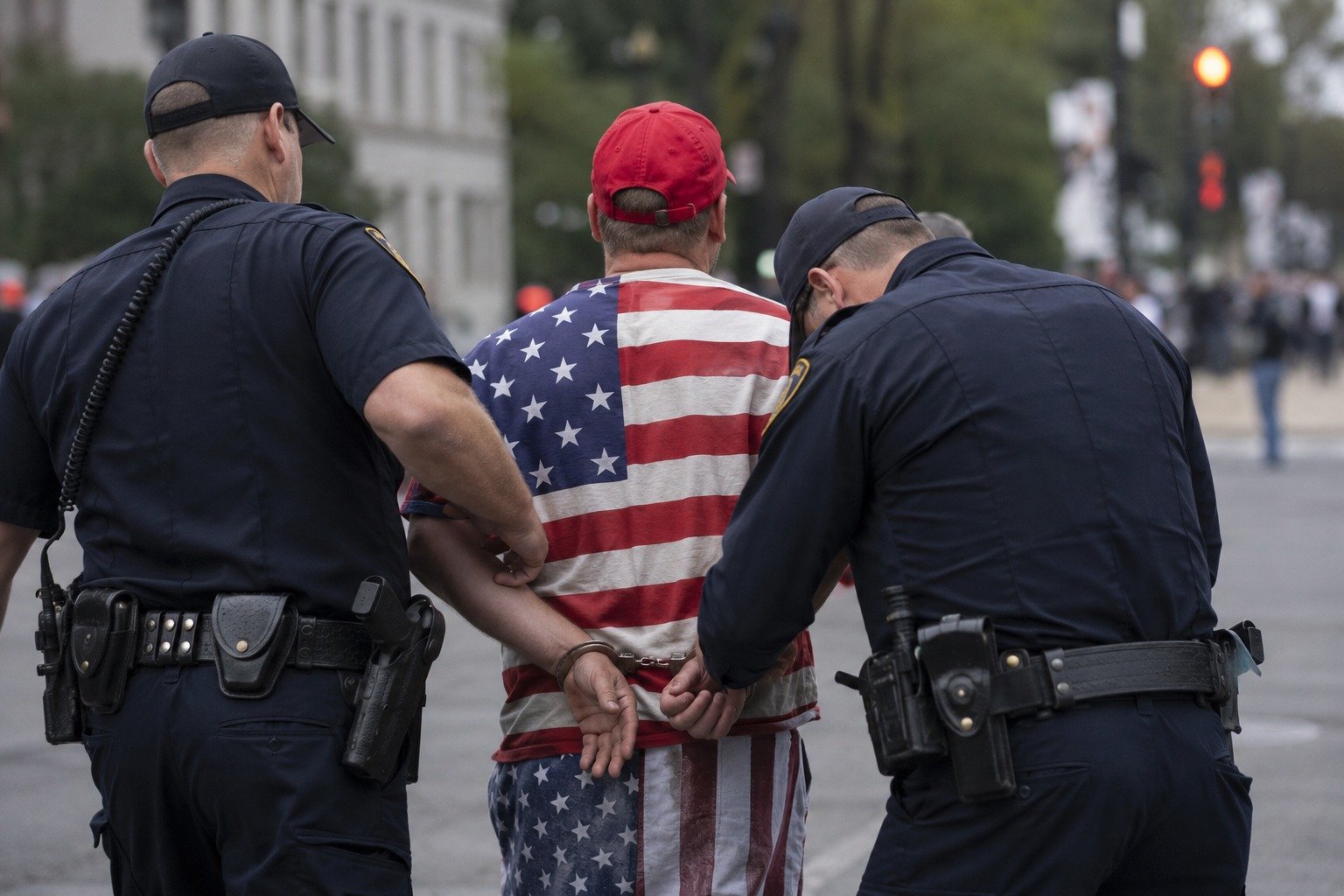
On his first day back in the White House, President Donald Trump signed sweeping pardons for nearly 1,600 people charged in connection with the January 6, 2021 attack on the U.S. Capitol. A new analysis from the national security outlet Lawfare now finds that roughly 97 of those pardoned defendants have already been arrested again — about one in sixteen, or close to 6 percent.
That figure is a correction to a claim that spread widely online. An earlier viral version of the story asserted that “more than a fifth” of pardoned rioters had been re-arrested. That number was wrong, and The New Republic revised its headline to reflect the accurate figure: one in sixteen. The lower number is still a striking measure of what happened after a mass act of clemency wiped away years of federal prosecution in a single stroke.
What the pardons did
The January 6 prosecutions were the largest federal investigation in American history. More than 1,500 people were charged, ranging from misdemeanor trespassing to seditious conspiracy. Hundreds had already pleaded guilty or been convicted at trial. Some were serving multi-year prison sentences for assaulting police officers.
Trump’s clemency order erased nearly all of it. He pardoned the vast majority outright and commuted the sentences of others, including leaders of extremist groups. Throughout his campaign he had called the defendants “patriots” and “hostages,” and framed the prosecutions as political persecution. The pardons made that framing official policy.
The re-arrest numbers
According to the Lawfare review, at least 97 of the pardoned individuals have since been arrested on new charges. The cases span a wide range of alleged conduct — assault, weapons offenses, driving violations, and other crimes that have nothing to do with politics or the events of January 6. Some of the new arrests involve serious felonies.
One in sixteen may sound modest, but it is a meaningful share for a group that had, in many cases, just been released from custody. It suggests that a measurable portion of the people cleared by the pardons returned to behavior that brought them back into contact with the criminal justice system within months.
Reactions and implications
For the law enforcement officers who defended the Capitol that day — many of whom were beaten, crushed in doorways, or sprayed with chemical irritants — the pardons were a bitter blow. Several have spoken publicly about feeling abandoned, arguing that erasing the convictions sent a message that violence against police carries no lasting consequence so long as it is committed for the right cause.
Critics of the pardons argue that the re-arrest data validates their warnings. Prosecutors spent years building cases, securing convictions, and, in many instances, persuading judges that the defendants posed an ongoing risk. Wiping those judgments away, they say, ignored the findings of the courts that heard the evidence firsthand.
What this means for Americans
Pardons are among the most absolute powers a president holds, and they are not subject to review. But they are not consequence-free. When clemency is granted on this scale, the public effectively absorbs whatever risk the courts had previously contained. The re-arrest figures put a number on that risk — and they are now part of the permanent record of what the mass pardons set in motion.
Stay informed on the stories that matter most. Follow Your Daily Updates on Facebook and bookmark yourdailyupdates.news for breaking news and analysis.