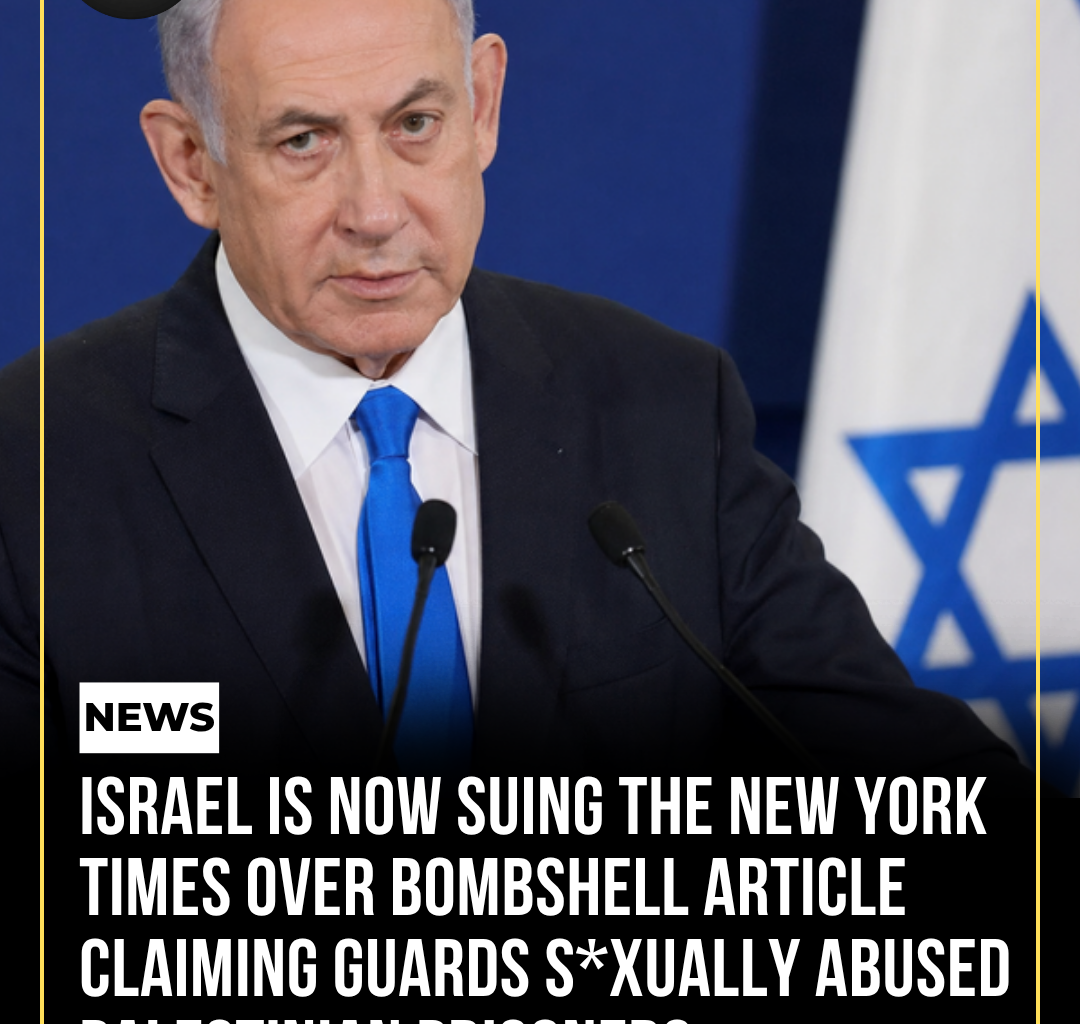
Israel has announced plans to sue The New York Times for defamation — a move that marks one of the most aggressive direct confrontations between a foreign government and a major American media outlet in recent memory. Prime Minister Benjamin Netanyahu made the announcement after the Times published an opinion column alleging that Israeli prison guards sexually abused Palestinian detainees held in military custody.
The Column That Started It All
The piece at the center of the legal threat was written by Nicholas Kristof, one of the Times’ longest-tenured and most prominent columnists. Published under the headline “The Silence That Meets the Rape of Palestinians,” the column drew on accounts from 14 alleged victims — both men and women — supported by independent human rights research and testimony submitted directly to the United Nations. Kristof has spent decades covering human rights abuses worldwide, and the Times treated the piece as serious investigative opinion journalism backed by documented sourcing.
The Israeli government’s reaction was immediate and incendiary. Netanyahu and Foreign Minister Gideon Sa’ar called the column “one of the most hideous and distorted lies ever published against the State of Israel in the modern press.” Netanyahu directed his legal team to pursue what he described as “the harshest legal action” possible — targeting both the newspaper and Kristof personally. Sa’ar suggested the article was not journalism but a deliberate act of delegitimization against Israel on the world stage.
The Times Is Not Backing Down
The New York Times responded swiftly and without concession. A spokesperson dismissed the threatened lawsuit as “without merit” and characterized it as “part of a well-worn political playbook” — implying this is a recognized pattern of governments using legal threats to pressure unflattering media coverage into silence. The paper stood fully behind Kristof’s reporting, emphasizing that the column relied on verified victim accounts, findings from credentialed human rights organizations, and testimony formally submitted to the UN. No corrections or retractions were issued.
Legal Experts: This Has Almost No Chance in an American Court
Legal scholars on both sides of the Atlantic have been blunt. One prominent U.S. law professor stated flatly that there is “no chance” a federal court would entertain such a case. An international media law expert called the concept “ludicrous.” The analysis is rooted in settled American law: the landmark 1964 Supreme Court ruling in New York Times v. Sullivan established that public figures and institutions suing over published reporting must prove “actual malice” — meaning the outlet either knew the information was false or acted with reckless disregard for the truth. That is an extraordinarily high bar, nearly impossible for any plaintiff to clear in American courts, and particularly steep for a foreign government bringing a claim over an opinion column.
The jurisdictional hurdles compound the legal obstacles. For Israel to pursue this case in U.S. courts, it would need to establish proper jurisdiction, demonstrate harm occurring on American soil, and then clear the actual malice standard. Each of those steps represents a significant barrier. Most attorneys who have reviewed the situation publicly expect the case never to be formally filed in a U.S. court, let alone reach trial.
The Broader Concern: Governments Targeting Journalists
Press freedom organizations have flagged a concern that extends beyond this specific case. Even a lawsuit that never survives initial legal review imposes real costs — financial, reputational, and psychological — on news organizations and the individual reporters who cover controversial stories. Netanyahu’s announcement drew criticism from journalism groups across the ideological spectrum, not solely because of the specific allegations at issue, but because of the broader precedent it signals: that foreign governments view U.S. legal processes as a tool to apply pressure on American media coverage they find unflattering.
The dispute also arrives against a backdrop of intense global scrutiny of media coverage of the Israel-Gaza conflict. Outlets have faced criticism from multiple directions — accusations of being too sympathetic to one side or the other. Netanyahu’s legal announcement injects a new and more direct dimension into that ongoing debate about what journalists can and should report.
What This Means for Americans
At its core, this case is a stress test for one of the most important principles in American law: the right of a free press to publish reporting that powerful governments find inconvenient. The First Amendment and the Sullivan ruling were designed to create exactly this kind of protection — to prevent government power, domestic or foreign, from using defamation law as a censorship tool. Most legal experts believe Israel’s threatened lawsuit will never reach a courtroom. But the fight to control the narrative around this reporting, and the message it sends to journalists covering sensitive stories, is already having an effect. The question now is whether the House of an American news organization will be cowed — or whether the American legal tradition of press freedom will hold.
Stay informed on the stories that matter most. Follow Your Daily Updates on Facebook and bookmark yourdailyupdates.news for breaking news and analysis.