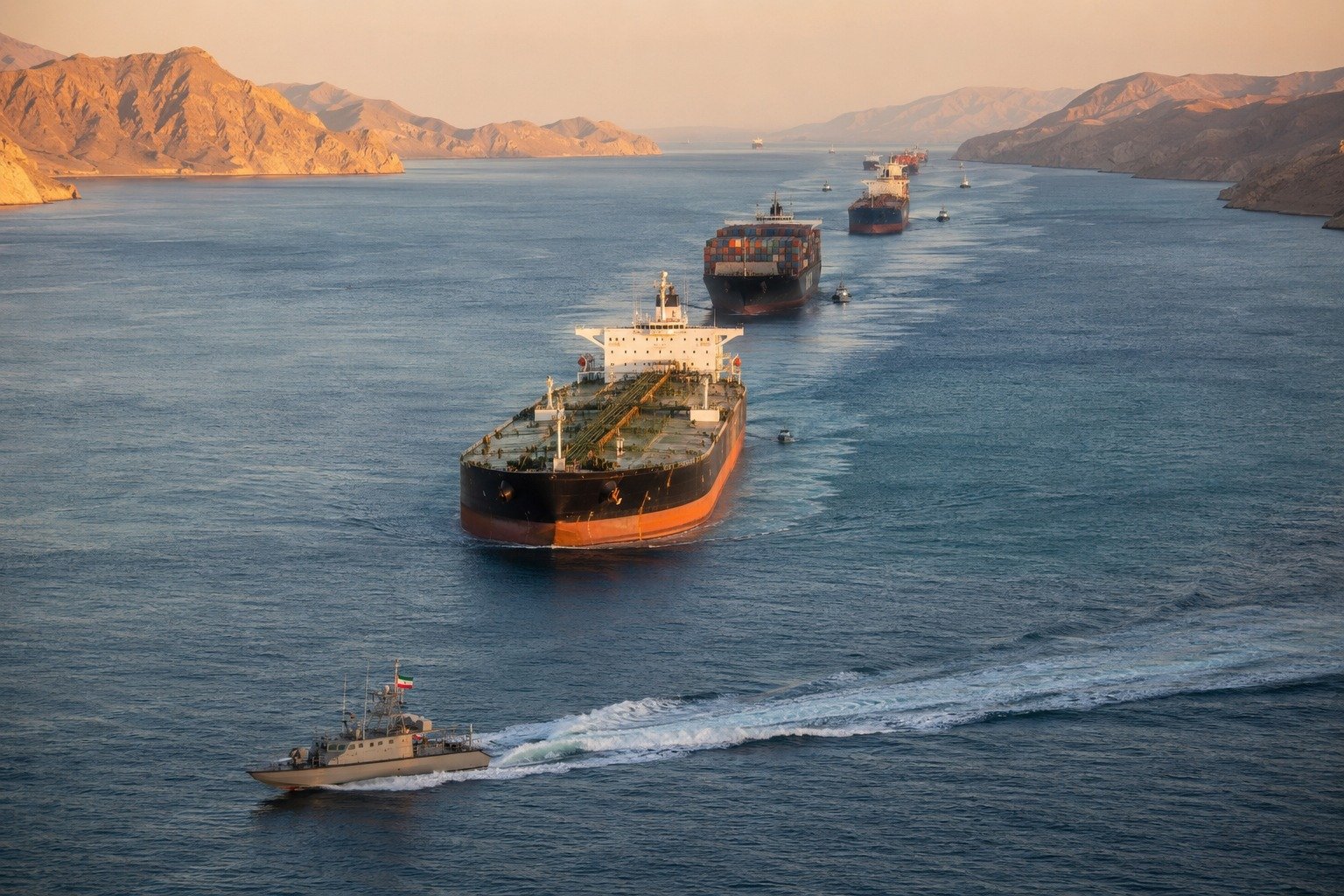
Iran has announced that ships passing through the Strait of Hormuz could soon face new charges to make the crossing – a move that lands just days after President Donald Trump declared the strategic waterway reopened and promised it would remain “toll-free, permanently.”
The strait is one of the most consequential stretches of water on the planet. Roughly a fifth of the world’s oil moves through the narrow channel between Iran and Oman, a route that tankers cannot avoid. Any change to the cost of passage ripples outward into global energy markets within hours.
“Fees,” Not “Tolls”
Iran’s foreign ministry has been careful with its language. Spokesman Esmail Baghaei said Tehran is “not seeking to levy transit tolls,” but added that “fees will be charged in exchange for the services that are provided.” Officials have pointed to navigation assistance, security, environmental protection, and maritime insurance support – services they say would be offered jointly with neighboring Oman.
The distinction matters to Tehran because Trump’s reopening announcement explicitly ruled out tolls. By framing the charges as payment for services rather than a fee for passage itself, Iran can argue it is not contradicting the deal that reopened the strait – even as ships end up paying to get through.
Critics Call It a Toll in Disguise
That framing has not convinced everyone. Maritime experts and five Gulf states have pushed back, arguing that a mandatory charge to cross a chokepoint is a toll regardless of what it is called. Iran has not specified what the services would cost, how the figure would be calculated, or who would have the authority to set and collect it.
The lack of detail is part of the concern. Without published rates or an independent body overseeing the charges, critics warn that “service fees” could become a flexible lever Tehran adjusts at will – one that shipping companies, and ultimately consumers, would have little choice but to absorb.
Why the Stakes Are So High
The Strait of Hormuz handles a volume of trade that gives whoever controls access to it enormous leverage. Even a modest per-vessel fee, multiplied across the thousands of tankers and cargo ships that transit each year, adds up to a steady new revenue stream for Iran and a potential point of pressure over global oil prices.
Similar reporting from outlets including The National, Euronews, and Yahoo Finance has tracked the back-and-forth between Washington’s toll-free pledge and Tehran’s service-fee plan. The gap between the two positions is now the central question hanging over the waterway.
What This Means for Americans
For ordinary people far from the Persian Gulf, the impact shows up at the pump and in the broader cost of goods. Anything that raises the cost of moving oil through Hormuz can nudge energy prices higher, and energy prices touch nearly everything – transportation, manufacturing, food, and household bills. A dispute over a single word, “fee” versus “toll,” can quietly translate into real money for American families.
Stay informed on the stories that matter most. Follow Your Daily Updates on Facebook and bookmark yourdailyupdates.news for breaking news and analysis.