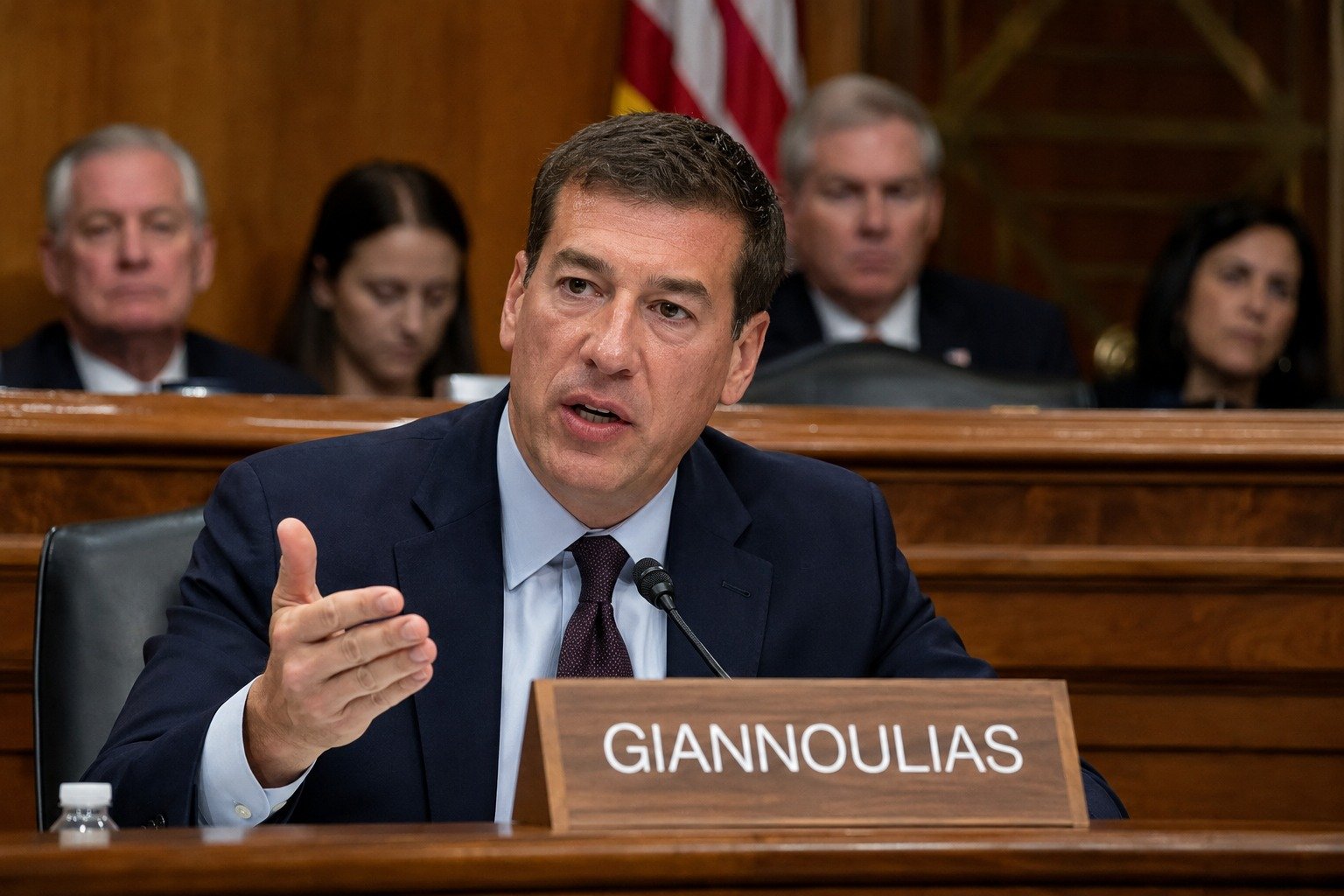
Illinois drew a line in the sand on book bans nearly two years ago. Now the man who drafted that law is defending it in front of the entire United States Senate.
In 2023, Illinois became the first state in the country to fight the wave of library book removals with the one lever that actually gets a library’s attention: state money. Public Act 103-0100, drafted by Secretary of State Alexi Giannoulias and signed into law by Governor JB Pritzker on June 12, 2023, ties state grant funding to a clear standard. If a public library removes books for partisan or doctrinal reasons, it can lose access to state dollars.
How the law works
The mechanism is straightforward. To remain eligible for state grants administered through the Secretary of State’s office, a public library must adopt the American Library Association’s Library Bill of Rights, or develop its own written statement making clear that materials will not be removed simply because someone objects to the ideas inside them. The requirement applies to every library in the state, regardless of which party controls the local government.
Crucially, the law does not order any specific title back onto a shelf, and it does not literally outlaw book bans. What it does is condition public funding on a commitment to open access, using the state’s grant program as an incentive to keep libraries from caving to organized pressure campaigns.
A partisan fight from the start
The measure passed over significant Republican opposition. Critics argued it stripped local communities of control over their own library shelves and inserted the state into decisions best left to local boards and parents. Supporters framed it very differently: as a firewall against a coordinated national campaign to purge libraries of books dealing with race, American history, and LGBTQ lives.
That divide has only sharpened since. Book challenges and removals have climbed to record levels nationwide, with a heavy concentration of targeted titles written by or about people of color and LGBTQ Americans. Illinois positioned itself as the counterweight, and its first-in-the-nation approach has drawn attention from lawmakers in other states weighing similar steps.
The fight goes national
Now that fight has moved to Capitol Hill. Giannoulias has appeared before the U.S. Senate Judiciary Committee to defend the Illinois law and hold it up as a model as book bans surge in schools and libraries across the country. His testimony reframes a state policy fight as a national question about who gets to decide what Americans are allowed to read.
For Giannoulias, the argument is about more than one state’s grant program. He has cast the debate as a test of whether libraries remain places where readers can encounter a full range of ideas, or whether they become battlegrounds where the loudest and most organized voices dictate what stays on the shelf.
The Illinois law remains on the books and continues to shape how libraries there set their collection policies. But its architect defending it before a Senate committee is a sign of how far the book-ban debate has traveled since 2023 and how central the question of library access has become to the national conversation.