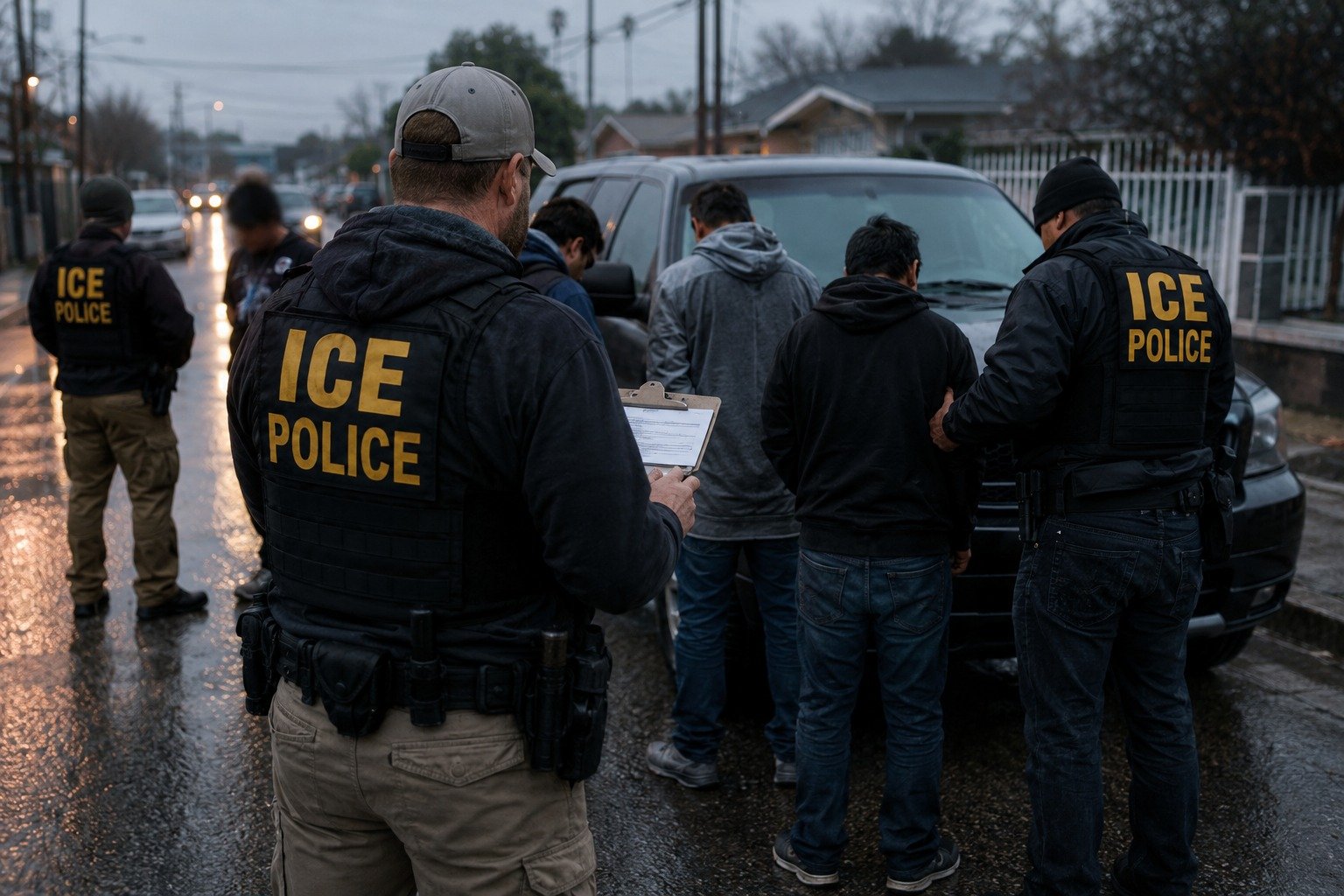
Federal immigration agents detained more than 10,000 people in just five days at the end of June and start of July 2026 — one of the fastest arrest surges the agency has ever recorded. The spike, first reported on July 1, is being driven by an internal push inside Immigration and Customs Enforcement to raise arrest numbers across the country.
Daily arrests have roughly doubled. Earlier this year, ICE was making about 1,000 arrests a day. That figure has now climbed to nearly 2,000 a day, according to reporting on the agency’s operations. Agents in the field have described mounting pressure to meet aggressive targets, with the higher numbers communicated as an expectation rather than a suggestion.
Arrests Are Not the Same as Deportations
One critical distinction keeps getting lost in the headlines: the 10,000 figure describes arrests and detentions, not deportations. Being detained means being taken into custody while an immigration case moves through the system. It does not mean a person has been removed from the country, and it does not settle whether they have a legal right to remain.
That difference matters because detention is the front end of a long legal process, not the end of one. Many of the people swept up in the recent surge have no criminal record at all. Public reporting throughout 2025 and 2026 has documented a shift toward community-based street arrests and away from the large, headline-grabbing worksite raids that defined earlier phases of the crackdown.
A Record Detention Population
The arrest surge sits on top of a detention system that has expanded dramatically. ICE is now holding roughly 73,000 people in detention, a record high, after capacity grew from under 40,000. Arrests of individuals with no criminal history have surged sharply as the enforcement net widens to include people who would not have been prioritized for detention in past years.
Immigration detention is civil, not criminal. People held in these facilities are not serving sentences; they are being held while the government decides whether to pursue removal. A rapidly growing detention population means more people are spending more time in custody before any decision is made about their case.
Due-Process Concerns
Civil rights advocates warn that quota-driven enforcement invites shortcuts on due process — the constitutional guarantee that everyone, regardless of immigration status, is entitled to a fair hearing before the government takes action against them. When the operational goal is a bigger arrest number by the end of the week, they argue, the pressure lands on speed rather than accuracy.
The concern is not abstract. Faster arrests can mean thinner vetting of who is actually being detained, a higher risk of mistaken identity, and less time for people to secure legal representation before consequential decisions are made. Legal aid groups have reported difficulty locating and reaching clients as transfers between facilities accelerate.
Two Sides of the Debate
Supporters of the surge say it delivers on a core promise of stepped-up immigration enforcement and demonstrates that the government is following through on its stated priorities. To them, rising arrest numbers are evidence that the system is working as intended.
Critics counter that raw arrest counts are a dangerous way to run a system that decides people’s freedom. Tying performance to a target number, they argue, changes the incentives for agents on the ground and can push a system built around individual cases toward volume for its own sake.
What is not in dispute is the scale. More than 10,000 people detained in five days, a detention population at a record high, and a daily arrest rate that has doubled all point to an enforcement operation moving faster than at almost any point in recent memory — and to a set of questions about accuracy, custody, and fairness that will not be answered by the numbers alone.