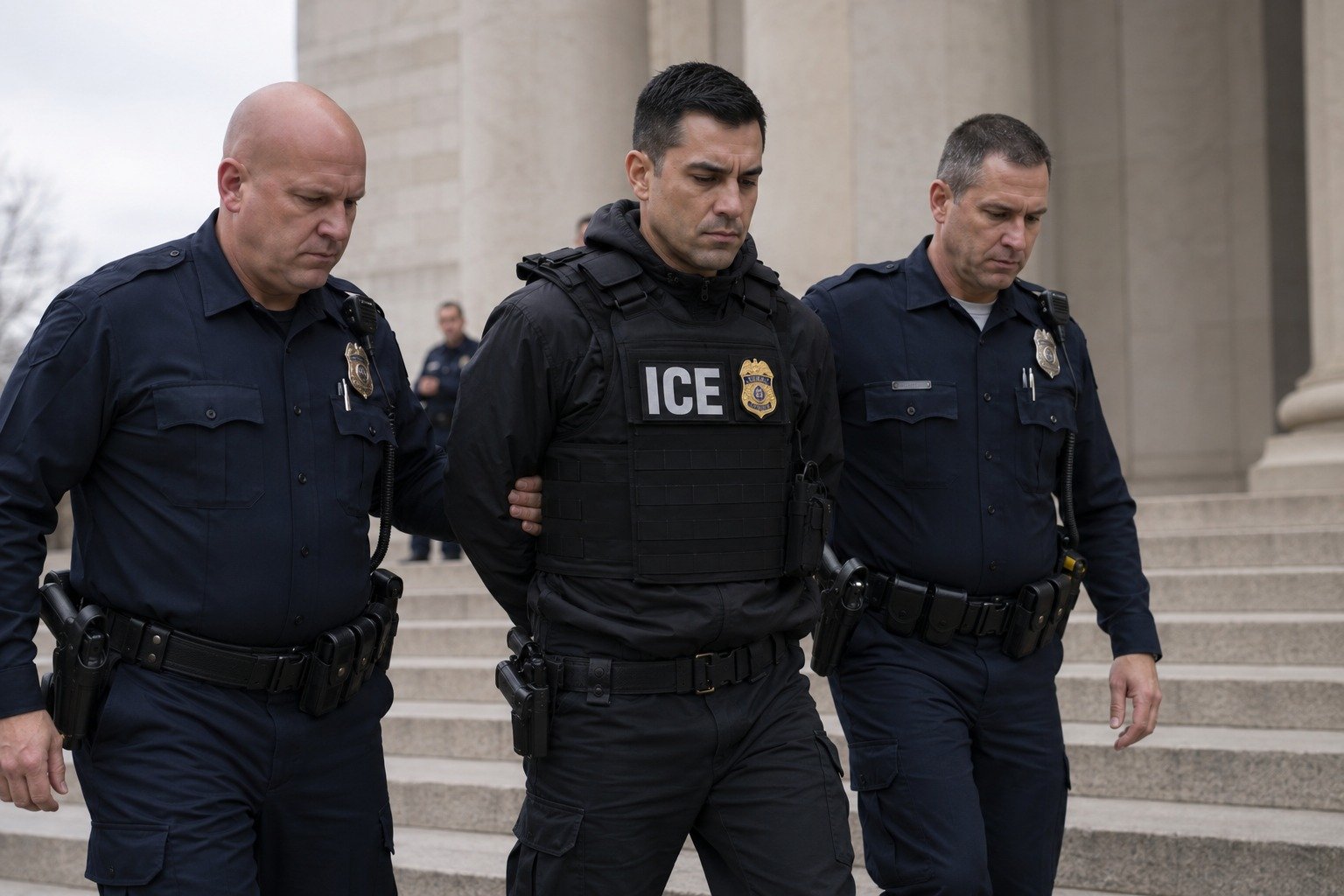
A federal ICE agent has been criminally charged with murder after shooting a Venezuelan man through a closed door during an immigration enforcement operation — killing him in what prosecutors say was an unjustified and unlawful use of deadly force. The case has ignited a fierce national debate over the boundaries of immigration enforcement authority and the accountability of federal officers operating under an aggressive new era of immigration policy.
What Happened
According to prosecutors, the ICE agent fired his weapon through a closed door without issuing a warning, without clearly identifying himself as law enforcement, and without a legal justification to use lethal force. The victim — a Venezuelan national — never had the opportunity to respond. He died from his injuries. The shooting took place during what authorities described as a routine immigration enforcement operation, though the circumstances leading up to the fatal shot remain under scrutiny.
The criminal charge now facing the agent — murder — would have been considered almost unimaginable in the context of federal immigration enforcement just a few years ago. ICE agents have carried out tens of thousands of arrests in recent months under expanded enforcement mandates, often in high-pressure, fast-moving situations. The rapid acceleration of operations, critics say, has stretched oversight thin and created the conditions for tragedies like this one.
Two Sides of a Deepening Divide
The response to the charge has split sharply along predictable lines. Law enforcement groups and supporters of aggressive immigration enforcement have rallied behind the agent, arguing that the prosecution is politically motivated and that criminally charging an officer for a split-second decision made under dangerous conditions sets a dangerous precedent. Several unions representing federal law enforcement officers have publicly condemned the charges and pledged legal support for the agent.
On the other side, immigrant advocacy groups and the victim’s family argue the case vindicates years of warnings about what happens when enforcement is prioritized over accountability. For them, this is not an isolated incident — it is the predictable result of a system that has expanded rapidly with minimal checks on the use of force. They are calling for a full federal investigation into enforcement protocols and oversight mechanisms across ICE field operations.
A Rare Moment of Consequence
Federal agents are rarely prosecuted for on-duty conduct. The legal and political barriers to criminal charges against officers operating under federal authority are significant. That this charge was brought at all marks a notable moment — regardless of how the case ultimately resolves. Legal experts say the outcome will send a signal across federal law enforcement about where courts and prosecutors draw the line between justified force and criminal violence.
If the case proceeds to trial, it will almost certainly become one of the most watched legal proceedings in the country. The questions at stake — what authority does a federal agent have to use deadly force? What oversight exists? Who is accountable when that force kills someone who posed no confirmed threat? — go far beyond this single incident.
What This Means for Americans
This case forces a direct reckoning with a question most Americans rarely have to think about: what happens when the people authorized to enforce the law break it? Whether you support strict immigration enforcement or oppose it, the core issue here — whether federal agents can be held criminally accountable for unjustified killings — affects every American. The answer will define what oversight of federal power looks like in the years ahead.
Stay informed on the stories that matter most. Follow Your Daily Updates on Facebook and bookmark yourdailyupdates.news for breaking news and analysis.