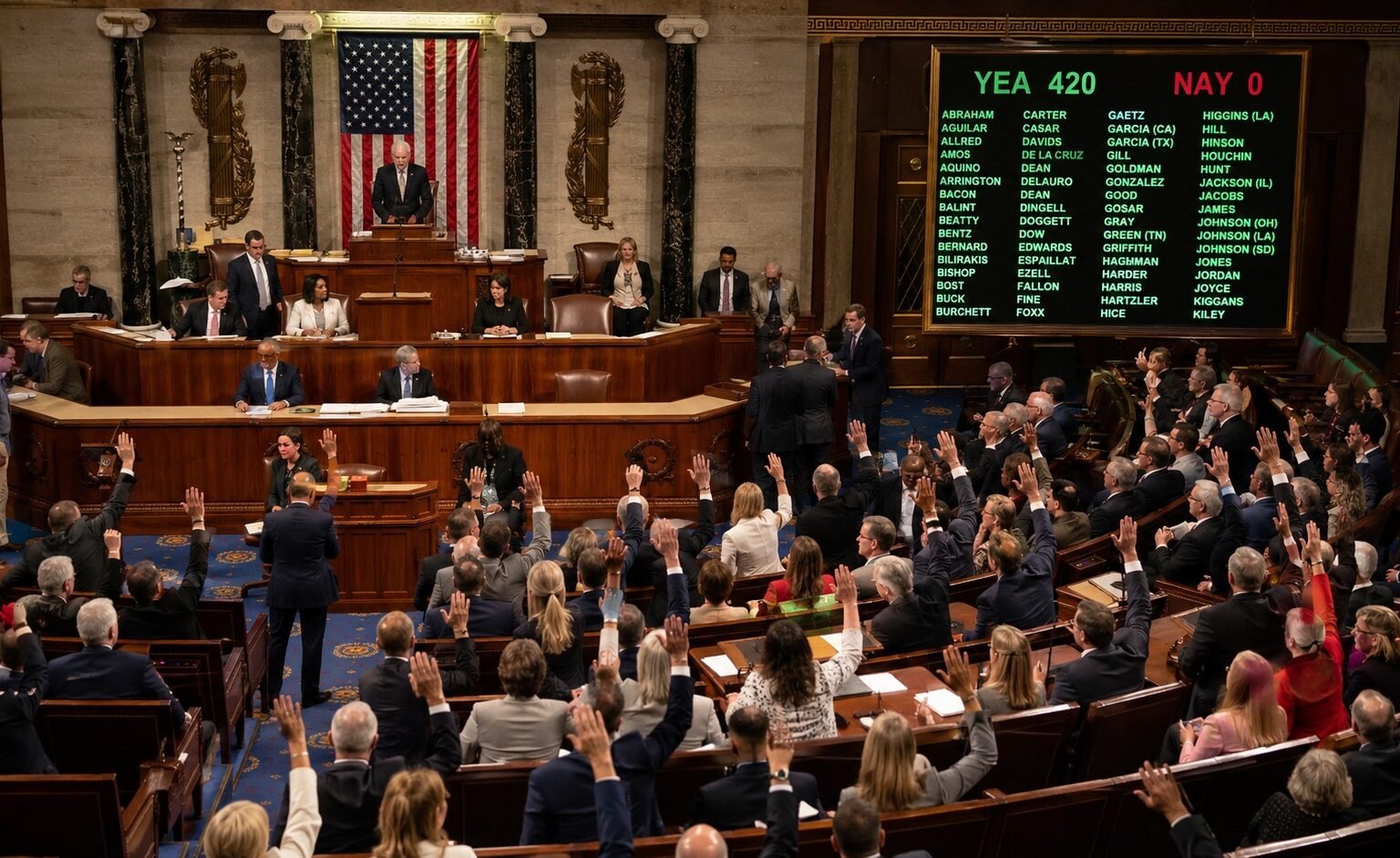
Four hundred and twenty members of the U.S. House of Representatives voted yes. Not a single one voted no. On June 30, 2026, the House adopted H.Res. 1399 by a vote of 420-0, ordering the disclosure of every House member connected to a s*xual harassment or abuse claim that was settled with taxpayer money. Rep. Nancy Mace of South Carolina voted “present” — the only member who declined to take a side.
The unanimity is the story. In a chamber that struggles to agree on the date, not one member of Congress was willing to go on the record defending the secrecy that has surrounded these settlements for years.
What the Vote Actually Does
It is important to be precise here, because the headline version of this story often gets it wrong: the vote did not name anyone. No names have been released. What H.Res. 1399 does is set a clock running.
The resolution directs the Office of Congressional Workplace Rights and the House Ethics Committee to produce, within 60 days, a single consolidated list — every House member tied to a settlement paid with public funds, along with the total amount of taxpayer money involved. That deadline lands around the end of August. As of today, the public still has no list, no names, and no confirmed total.
Rep. Thomas Massie of Kentucky forced the issue by filing the measure as a privileged resolution, a procedural maneuver that compels a floor vote and takes away leadership’s ability to quietly bury a bill in committee. Once it reached the floor, no one was willing to be the one to kill it.
The Money Nobody Can Account For
The financial side of this is its own scandal, and it is smaller in the telling than it is in reality. Records obtained under the 2018 disclosure process showed that more than $300,000 in taxpayer funds had been used to settle allegations involving House members or their offices.
That figure is a floor, not a total. It reflects what partial disclosures revealed — not a complete accounting. The full amount of public money spent settling these claims is, at this moment, unknown to the public and arguably unknown to Congress itself. That uncertainty is a large part of why the resolution exists at all. You cannot demand a full accounting of something that has already been fully accounted for.
Congress banned the use of public funds for these settlements in 2018, as part of reforms to the Congressional Accountability Act. That means the payouts in question are older than the ban — and the people who benefited from the arrangement have had years of quiet since.
What Happens Next
This is a House resolution governing the House’s own records. It does not go to the Senate. It does not require a presidential signature. There is no second chamber to water it down and no veto pen waiting for it. The only thing standing between the public and these names is whether the two offices tasked with producing the list actually meet the deadline.
That is not a small caveat. Disclosure deadlines have been missed before, and a 420-0 vote is a statement of principle, not a guarantee of follow-through. The pressure that produced the vote will have to survive the 60 days that follow it.
What This Means for Americans
Every dollar in those settlements came out of the public treasury. Taxpayers financed the resolution of misconduct claims against the people they elected, and were never told who, or how much. The 420-0 vote is an admission — unanimous, on the record — that this was never defensible. The question now is whether the institution that voted for transparency will actually deliver it, or whether the list quietly slips past its deadline while nobody is watching.
Stay informed on the stories that matter most. Follow Your Daily Updates on Facebook and bookmark yourdailyupdates.news for breaking news and analysis.