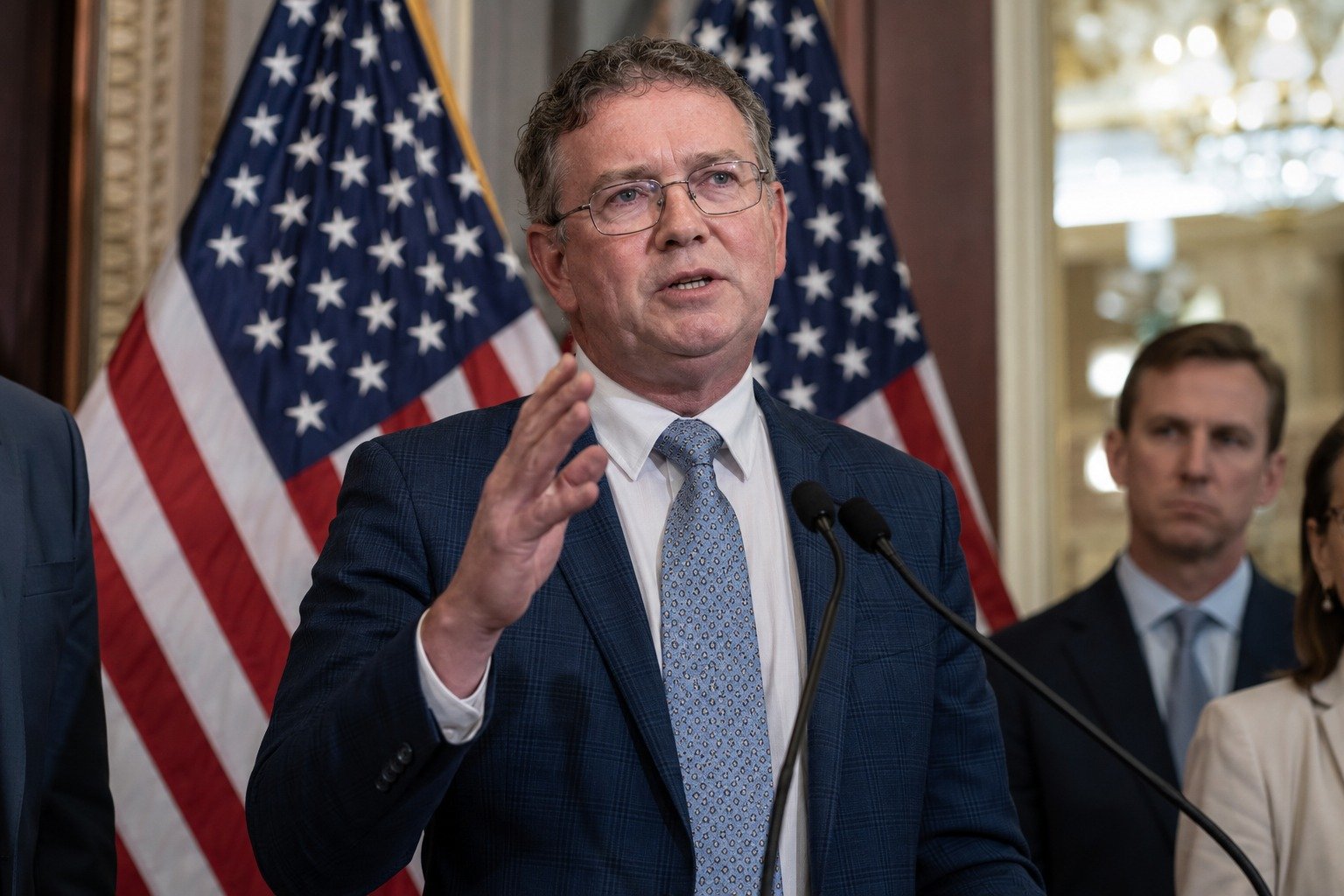
For years, when a member of the U.S. House of Representatives was accused of sexual harassment or abuse, the case could be quietly settled with taxpayer money and the public would never learn the name, the accusation, or the amount. On June 30, 2026, the House voted to end that secrecy – and it did so without a single dissenting vote.
The chamber adopted a resolution led by Rep. Thomas Massie of Kentucky by a vote of 420-0. Rep. Nancy Mace of South Carolina voted “present.” The measure orders House officials to compile and disclose a full accounting of members who were investigated for sexual misconduct that resulted in a settlement paid with public funds – along with exactly how much money was spent.
What The Resolution Actually Requires
The resolution directs the House Ethics Committee and the Office of Congressional Workplace Rights to produce, within 60 days, a list of every member who was the subject of an investigation into sexual harassment or abuse that ended in a taxpayer-funded settlement. Critically, the disclosure is required to include the dollar amounts attached to each case.
It is important to be precise about the scope. This is a House resolution, which means it governs the House of Representatives – not the entire Congress. The Senate is a separate body with its own rules and is not bound by this measure. But within the House, the reach is real and the clock is now running. Two months from the vote, information that has been shielded from public view for years is supposed to be on the record.
Why This Has Been Hidden For So Long
The mechanism that made these payments possible has drawn criticism for years. Complaints of workplace misconduct on Capitol Hill were historically routed through a process that could result in confidential settlements. When those settlements were funded with public money, taxpayers were effectively paying to resolve claims against the very lawmakers they elected – without ever being told it happened.
That combination of public money and private secrecy is exactly what this resolution targets. By forcing the names and the amounts into the open, the measure aims to close a loophole that allowed accountability to be quietly purchased.
A Rare Show Of Unity
In a deeply divided Congress, a 420-0 vote is striking. It means members from both parties agreed – at least on the question of disclosure – that the public has a right to know. Massie, who has built a reputation for pushing transparency measures that make leadership uncomfortable, drove the effort. Mace’s decision to vote “present” rather than yes or no was the only crack in an otherwise unanimous tally.
The reporting on the vote, covered by outlets including Roll Call, CNN, and the Washington Examiner, framed the moment as a rare instance of Congress voluntarily turning the spotlight on itself. Whether that unity survives once the actual list is produced is another question entirely.
What This Means For Americans
This is, at its core, a story about your money. Every settlement paid to resolve a misconduct claim against a lawmaker came out of public funds – funds that could have gone anywhere else. For years, the people footing the bill had no way of knowing which members were involved or how much was spent. Within 60 days, that is supposed to change.
The bigger test comes when the deadline arrives. A unanimous vote to require a list is one thing; producing a complete and honest list, with names and dollar figures attached, is another. The real accountability will be measured not by the vote count, but by what shows up when the clock runs out – and who is on it.
Stay informed on the stories that matter most. Follow Your Daily Updates on Facebook and bookmark yourdailyupdates.news for breaking news and analysis.