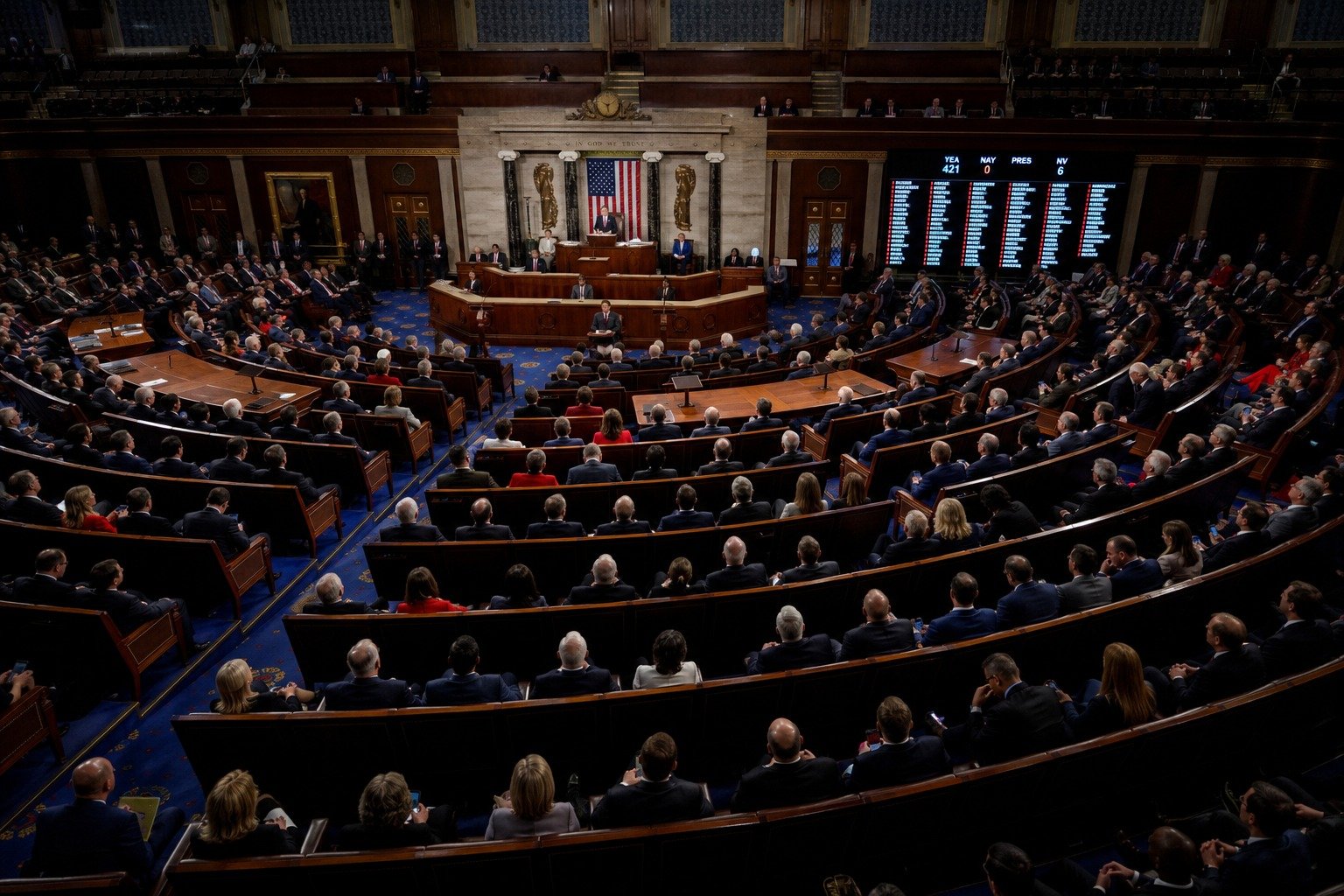
For years, a quiet loophole let members of Congress settle harassment and misconduct complaints with public money while keeping their names out of view. On June 30, 2026, the House moved to slam that loophole shut – and it did so with a level of unanimity almost unheard of in today’s Capitol.
By a vote of 420-0, the House passed a privileged resolution introduced by Rep. Thomas Massie of Kentucky. The measure, H.Res. 1399, directs the House Ethics Committee and the Office of Congressional Workplace Rights to compile and publicly release, within 60 days, the names of members tied to taxpayer-funded sexual harassment or abuse settlements, along with the dollar amounts paid out in each case.
A rare show of near-total unity
In a chamber that routinely splits along party lines over even routine business, a 420-0 tally stands out. Every member who cast a yes vote – Democrats and Republicans alike – agreed that the public has a right to know when its money was used to quietly resolve claims of sexual misconduct against sitting lawmakers.
The lone exception was Rep. Nancy Mace of South Carolina, who voted “present” rather than yes. No member voted against the resolution.
What the resolution actually does
It is important to be precise about the scope. The resolution is a directive, not an instant document release. It sets a hard 60-day deadline for the Ethics Committee and the Office of Congressional Workplace Rights to gather the relevant records and make them public. That means the names and settlement amounts are expected to surface within two months, not the moment the gavel came down.
The scope is also specific. The disclosure covers settlements involving sexual harassment and sexual misconduct or abuse – not every workplace dispute or every category of misconduct claim a member might have faced. The measure zeroes in on cases where taxpayer funds were used to settle allegations of a sexual nature.
Why taxpayers have long been in the dark
For decades, the process that handled workplace complaints on Capitol Hill was criticized as opaque and protective of the powerful. Settlements could be reached and paid without the public – or even many colleagues – learning which offices were involved or how much was spent. Reform efforts over the years chipped away at that secrecy, but the question of naming names and disclosing amounts remained unresolved.
This resolution takes direct aim at that gap. If a member’s alleged misconduct was resolved with money that came from public coffers, the argument goes, the public that provided the funds is entitled to know about it.
Accountability as a shared value
The unanimous support underscores something worth noting: transparency about taxpayer-funded settlements is not a partisan cause. When the resolution reached the floor, it drew yes votes across the political spectrum. That kind of consensus is a reminder that basic accountability – knowing where public money goes and who benefits from it – can still command broad agreement.
The next test comes over the following two months, as the responsible offices work to meet the 60-day deadline. Whether the disclosures arrive on time, and how complete they are, will show whether the unanimous vote translates into real transparency. For now, the countdown has begun, and the public is one step closer to learning who used taxpayer money to settle claims that were supposed to stay hidden.