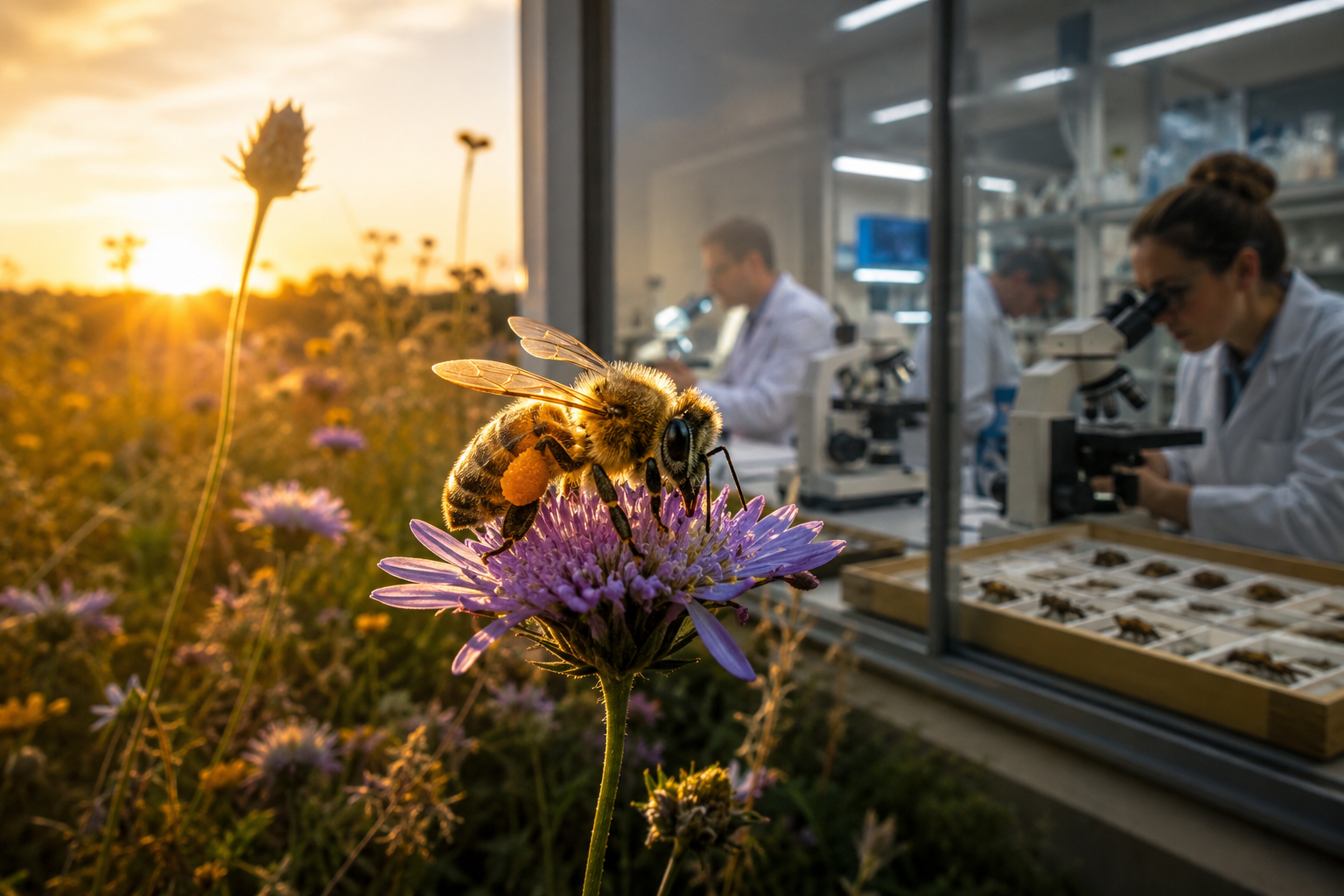
Australian scientists announced a discovery that stunned the medical world: honeybee venom destroyed 100% of triple-negative breast cancer cells in laboratory conditions in just 60 minutes. The research, conducted at the Harry Perkins Institute of Medical Research in Perth in 2020, has since become one of the most cited findings in experimental oncology — and it all starts with a compound that bees have been producing for millions of years.
Why Triple-Negative Breast Cancer Is So Dangerous
Not all breast cancers are equal. Triple-negative breast cancer (TNBC) is the most aggressive subtype, accounting for roughly 10 to 15 percent of all breast cancer diagnoses but representing a disproportionately high share of deaths. The reason it’s so difficult to treat is right there in the name — it tests negative for estrogen receptors, progesterone receptors, and HER2 protein. That means the targeted hormone therapies that work so well on other forms of breast cancer simply don’t apply. Patients with TNBC are left with far fewer treatment options, and survival rates are significantly lower than other subtypes.
That’s what makes this discovery so significant. Researchers weren’t just looking for another drug that slows tumor growth — they found a natural compound that eliminates these notoriously drug-resistant cells entirely, at least in controlled laboratory conditions.
What Honeybee Venom Actually Does
The active ingredient is melittin — a small peptide that makes up the majority of dry honeybee venom by weight. Melittin works by physically disrupting cancer cell membranes. It punches holes in the outer membrane of the cell, destabilizing it so rapidly that the cell cannot survive. At the doses used in the study, melittin attacked cancer cells while leaving healthy surrounding cells largely intact — a critical distinction that separates it from most conventional chemotherapy drugs, which cause widespread damage to healthy tissue.
Researchers collected venom from 312 individual honeybees and bumblebees across multiple geographic regions and tested their potency against cancer cell lines. The results were clear: honeybee venom dramatically outperformed bumblebee venom. In triple-negative breast cancer cells, it achieved 100% cell death within 60 minutes. Even more encouraging, when melittin was combined with docetaxel — a standard chemotherapy drug — the combination slowed tumor growth in mice significantly faster than either compound used alone, suggesting melittin doesn’t just work independently but could amplify the effects of existing treatments.
Where the Research Stands in 2026
The findings generated enormous attention when published in 2020, and for good reason. But as of 2026, melittin has not advanced to human clinical trials. The compound faces real challenges: the therapeutic window — the gap between the dose that kills cancer cells and the dose that becomes toxic to healthy tissue — is narrow. At high concentrations, melittin can break down red blood cells, which makes systemic delivery dangerous. Researchers are working on targeted delivery mechanisms, such as nanoparticles or lipid-based carriers, that could deposit melittin directly at the tumor site and reduce the risk of broader toxicity.
Scientists at multiple institutions are now pursuing this line of research, but the path from a striking laboratory result to an approved treatment typically spans a decade or more of trials, safety testing, and regulatory review. The Harry Perkins Institute study was a proof of concept — remarkable and promising, but not a cure that patients can access today.
What This Could Mean for Cancer Patients
For the millions of Americans diagnosed with breast cancer every year — and especially for those facing the most aggressive forms of the disease — research like this represents exactly the kind of breakthrough that could eventually change outcomes. Triple-negative breast cancer disproportionately affects younger women and women of color, populations that have historically had fewer treatment options and worse prognoses. A targeted, naturally derived compound that could be combined with existing chemotherapy to improve outcomes would be a genuine medical advance. The science is real. The results in the lab are extraordinary. Whether it translates to the clinic depends on the next phase of research — and the funding and institutional will to pursue it.
Stay informed on the stories that matter most. Follow Your Daily Updates on Facebook and bookmark yourdailyupdates.news for breaking news and analysis.