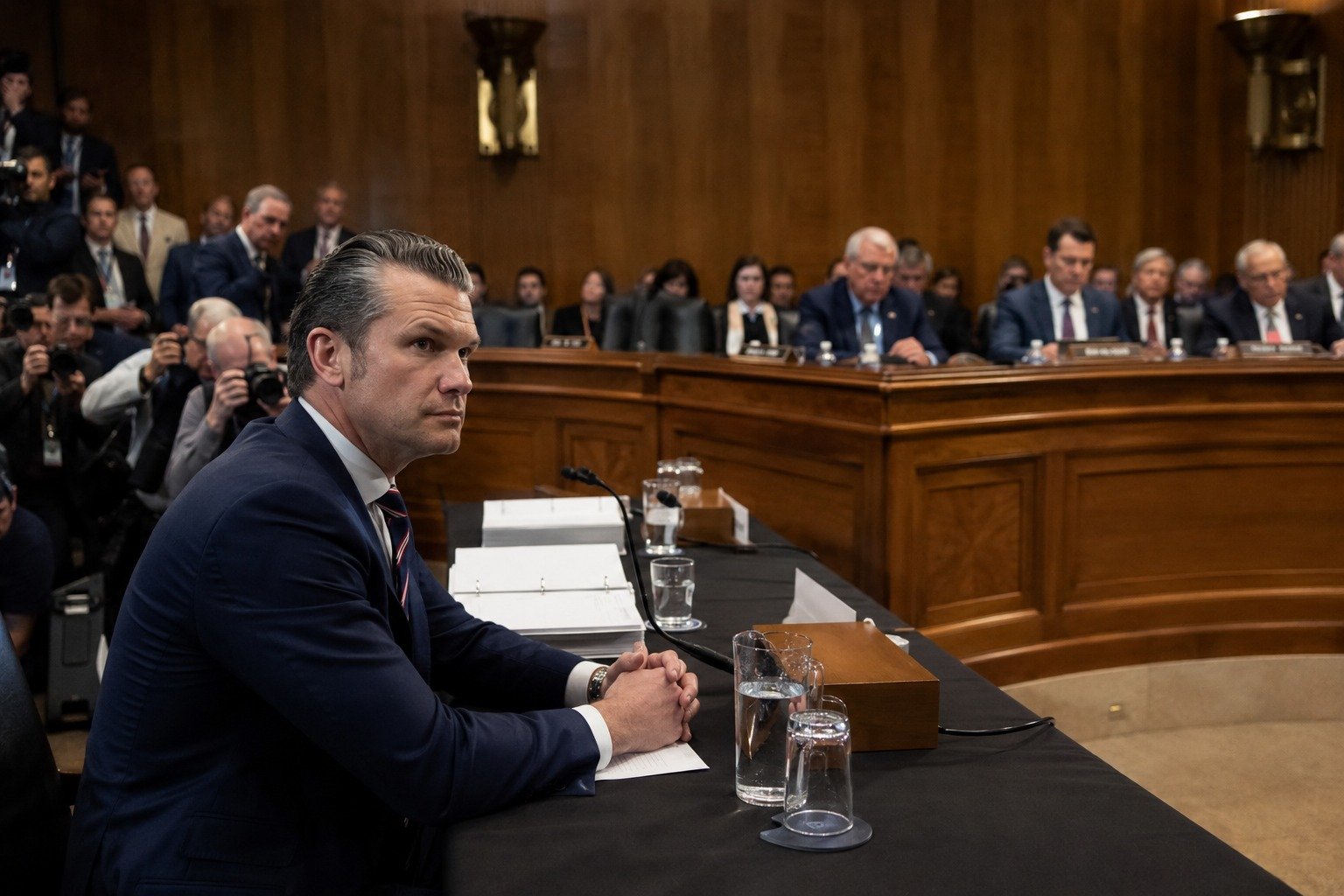
A bipartisan group of senators has moved to put a hard condition on Defense Secretary Pete Hegseth’s spending – and they are using the Pentagon’s own budget as leverage. Tucked into this year’s defense bill, a provision advanced by the Senate Armed Services Committee would withhold roughly 75% of the Defense Secretary’s travel funding until the Pentagon releases the full, unredacted investigation into a deadly February airstrike in Iran.
The strike in question hit a school in Minab, Iran, on February 28, 2026. According to reporting from The Hill, Military.com, and ABC News, it reportedly killed more than 150 people, most of them children. The Pentagon has conducted an internal civilian-harm review of the incident, but has so far declined to make the full findings public. Senators now want that review – along with unedited video of a separate boat strike – handed over before the department’s travel dollars are released.
A Bipartisan Demand, Not a Party-Line Fight
What makes this provision notable is who is behind it. Early coverage framed the move as a Republican effort, but the measure is bipartisan – senators from both parties signed on, agreeing that the Pentagon should not be allowed to investigate itself in secret when the death toll is this high. The committee’s action reflects a broader frustration in Congress over how much information the executive branch withholds from oversight, citing national security.
Conditioning a portion of a Cabinet official’s travel budget is a relatively narrow tool, but it sends a pointed message. The idea is simple: comply with the oversight request, and the funding flows normally. Keep the report buried, and a large share of the Secretary’s discretionary travel money stays frozen. It is the kind of leverage Congress holds through its power of the purse – and lawmakers from both sides decided it was worth using here.
What the Provision Actually Does
It is important to be precise about where this stands. The provision has been advanced by the Senate Armed Services Committee as part of the National Defense Authorization Act, but it has not been enacted into law. The full NDAA must still move through the Senate, be reconciled with the House version, and be signed before any of its provisions take effect. In other words, this is a committee-level step in a long legislative process, not a finished mandate.
The measure also conditions the funds rather than canceling them. The roughly 75% of travel funding at issue is not eliminated – it is held back until the Pentagon meets the disclosure requirement. If the department releases the unredacted civilian-harm report and the unedited boat-strike footage, the money becomes available. The structure is designed to compel transparency, not to permanently strip resources from the Defense Secretary’s office.
Why Transparency Is the Core Issue
Civilian-harm investigations have long been a flashpoint between the Pentagon and Congress. When a strike results in significant loss of life – especially among children – lawmakers and the public have a strong interest in understanding what happened, what went wrong, and whether anyone will be held accountable. Redacted reports and withheld footage make that kind of accountability difficult, and they fuel suspicion that the worst details are being kept out of public view.
By attaching the disclosure demand to funding, the senators are signaling that they no longer consider a request for transparency optional. The provision reframes the conversation: rather than asking the Pentagon to volunteer the information, it builds a financial incentive to release it. Supporters argue that this is exactly how congressional oversight is supposed to work – that the legislative branch should be willing to use its budget authority to enforce accountability over the most consequential military decisions.
For now, the outcome rests with the broader fate of the defense bill and with the Pentagon’s response. If the department chooses to release the full report and footage, the funding question resolves itself. If it does not, the standoff over the Minab strike – and over how much the public is allowed to know about a strike that reportedly killed more than 150 people – is likely to intensify in the months ahead.