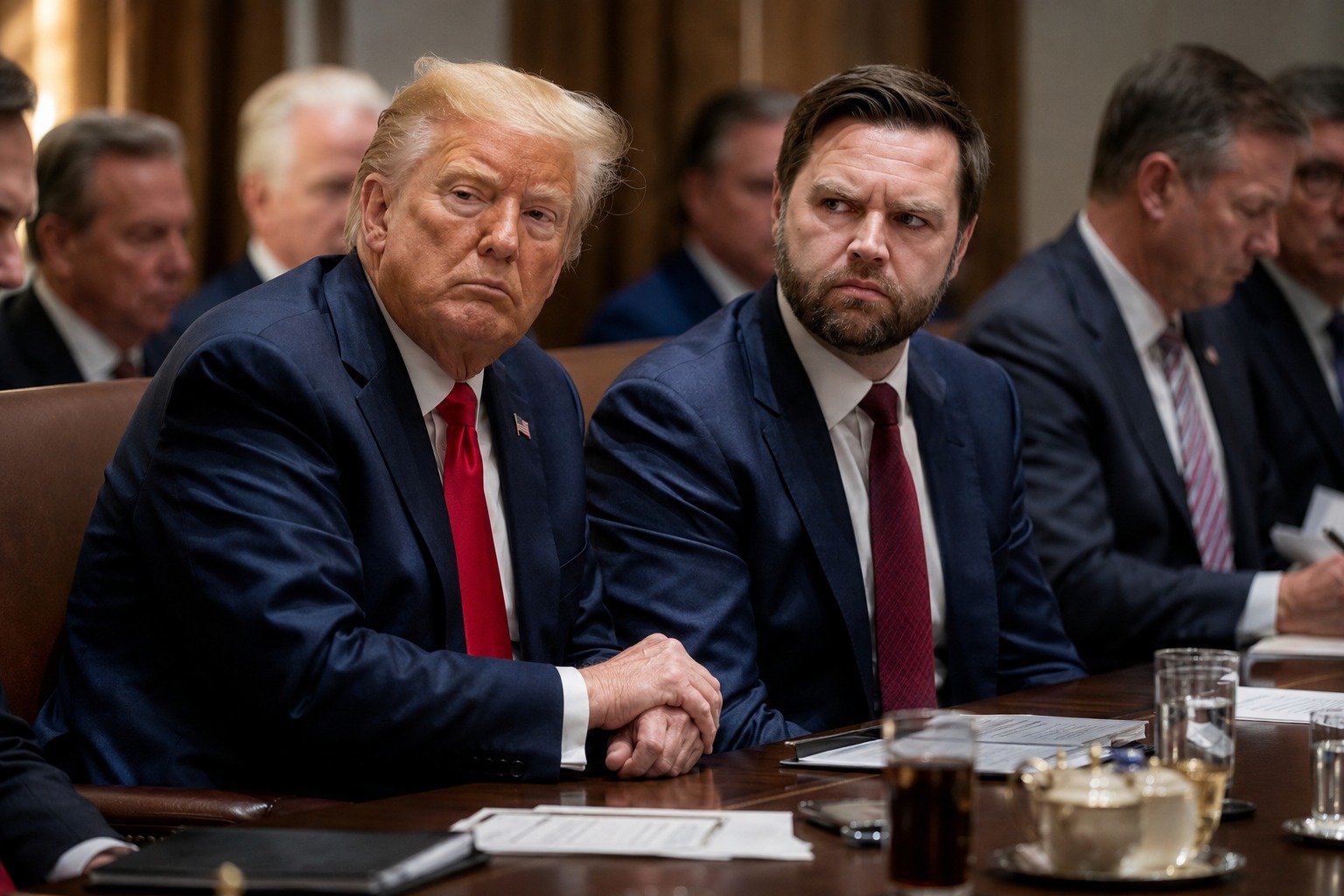
New polling shows a majority of Americans now support impeaching President Donald Trump — with at least one national survey putting support at 55 percent. The question gripping Washington is no longer whether the numbers exist. It’s whether Congress will act on them, and whether any proceedings would target Vice President JD Vance simultaneously.
The Polling Numbers
A Verasight poll conducted in April 2026 found that 55 percent of U.S. adults want the House of Representatives to vote on articles of impeachment against Trump. A separate survey targeting voters across 17 key swing congressional districts placed support at 49 percent — below a majority but within striking distance. Taken together, the polls represent the clearest public signal yet that a broad cross-section of the American electorate is open to congressional action.
What makes these numbers significant is the geography. The swing district poll was specifically designed to test opinion in the places that will decide the 2026 midterms and beyond. Finding near-majority support for impeachment in those districts — not just in deep-blue urban centers — tells a different story than the typical partisan baseline.
Why Both Trump and Vance?
The calls aren’t stopping at Trump. A growing coalition of Democratic lawmakers and advocacy groups is pushing for simultaneous impeachment proceedings against both Trump and Vice President JD Vance. The argument is strategic: removing Trump alone would elevate Vance to the presidency, leaving the administration’s core agenda effectively intact. To change the direction of the executive branch, they argue, you’d have to remove both at once.
Critics call that approach overreach — an attempt to undo a decisive 2024 election result through procedural mechanics rather than at the ballot box. Republicans argue that pursuing dual impeachments would be seen by voters as precisely the kind of political weaponization Democrats claim to oppose.
The Case for Impeachment
Supporters of impeachment proceedings argue the constitutional case is substantive. They point to what they describe as executive overreach — including instances where the administration has defied federal court orders — and allegations that the Justice Department has been directed to investigate political opponents. These are the kinds of actions, they argue, that the founders specifically anticipated when they wrote impeachment into the Constitution as a remedy for presidential abuse of power.
The founders debated impeachment at length. The standard they settled on — “high crimes and misdemeanors” — was deliberately broad. It was never meant to be limited only to criminal convictions. Constitutional scholars have long argued that abuse of the office itself, not just criminal conduct, can meet the threshold. That interpretation is at the heart of the current impeachment push.
The Math in Congress
For impeachment to succeed, the process starts in the House, where a simple majority vote is required to pass articles of impeachment. Conviction and removal require a two-thirds supermajority in the Senate — 67 votes. With Republicans controlling the Senate, that path doesn’t currently exist unless a significant number of GOP senators break with their party.
No Republican senator has publicly signaled any willingness to cross the aisle on this. Trump was impeached twice during his first term — once over the Ukraine phone call and once over January 6th — and both times the Senate acquitted him, with only a handful of Republicans voting to convict. The historical pattern does not favor the outcome impeachment advocates are pushing for.
The political calculus runs deeper than vote counts. Democrats who force a floor vote on impeachment would energize their base. But a failed impeachment — which is the likely outcome under current numbers — could also hand Republicans a rallying cry heading into November 2026. That two-sided risk is why House Democratic leadership has historically been cautious about moving forward unless the case is airtight.
What This Means for Americans
For most Americans, an impeachment proceeding means months of congressional hearings, wall-to-wall political coverage, and a government consumed by process rather than legislating. Bills stall. Nominations slow. The country’s attention narrows to a single constitutional fight. That calculus has always complicated the impeachment debate — even voters who want a president removed have to weigh whether the cost of the process is worth the outcome when removal is unlikely.
What’s different this time is the breadth of public support. The 55 percent number — if it holds — is historically significant. It doesn’t guarantee Congress will act. But it does mean the political environment for impeachment is unlike anything seen in prior cycles. Whether that translates into action depends entirely on what House Democrats decide to do next.
Stay informed on the stories that matter most. Follow Your Daily Updates on Facebook and bookmark yourdailyupdates.news for breaking news and analysis.