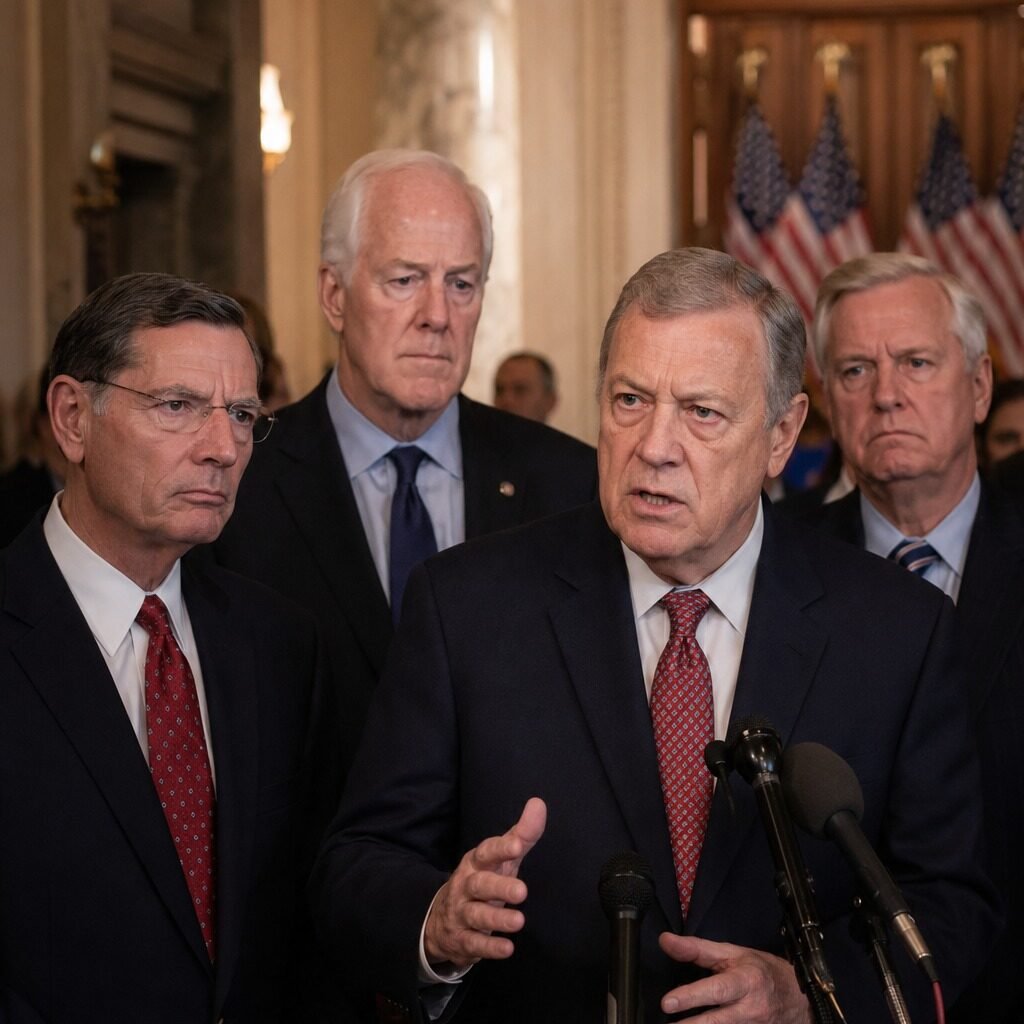
It is one thing for Democrats to attack President Donald Trump’s foreign policy. It is another thing entirely when the criticism comes from inside his own party. On June 18, several of the most prominent Republicans in the Senate broke publicly with the President over his new framework with Iran, with one calling it the worst foreign policy blunder in decades.
The split lays bare a growing rift between Trump and the Senate hawks who have long been among his most reliable allies on national security. At the center of the backlash are the terms of the deal itself, specifically the sanctions relief extended to Tehran and a large reconstruction fund tied to the agreement.
What the Senators Said
Senator Bill Cassidy of Louisiana delivered the sharpest line, describing the agreement as the worst foreign policy blunder in decades. Coming from a member of the President’s own party, the verdict landed with unusual force. It was not the cautious hedging that often accompanies intraparty disagreement. It was a direct, public rebuke.
Cassidy was not alone. Senators Ted Cruz of Texas, Tom Cotton of Arkansas, and Roger Wicker of Mississippi joined the criticism. These are not fringe voices. They are among the most hawkish and influential Republicans on matters of defense and foreign affairs, and their objections carry weight with the broader conference.
The Heart of the Objection
The senators’ concerns center on two elements of the framework. The first is the sanctions relief the deal would hand to Iran. For years, sanctions have been the primary tool the United States has used to pressure Tehran over its nuclear ambitions and its support for proxy forces across the region. To these Republicans, loosening that pressure risks giving Iran economic breathing room without securing enough in return.
The second sticking point is a large reconstruction fund tied to the framework. Critics within the party view the combination of sanctions relief and a major financial commitment as a lopsided arrangement, one that looks less like a hard-nosed negotiation and more like a giveaway. The question they keep returning to is simple: what is the United States getting in exchange?
Why This Matters
The significance of this moment is not just the substance of the disagreement but the source of it. When a President faces opposition from the other party, it is politics as usual. When he faces it from the senators who normally cheer his every move on national security, it signals something deeper. A revolt among the hawks is far harder to dismiss as partisan noise.
The framework still has a long road ahead before anything is finalized. But the early opposition suggests the White House will have to spend real political capital defending the sanctions relief and the reconstruction money to members of its own party. Any agreement that requires Senate buy-in cannot afford to lose figures like Cruz, Cotton, Cassidy, and Wicker.
What This Means for Americans
Foreign policy can feel distant from everyday life, but deals like this one shape national security, the price of energy, and America’s standing in a volatile region. When senators from the President’s own party warn that an agreement gives away too much, Americans deserve a clear explanation of what the country gains in return. Accountability does not stop at the party line, and the loudest demand for answers right now is coming from Trump’s own side of the aisle.
Stay informed on the stories that matter most. Follow Your Daily Updates on Facebook and bookmark yourdailyupdates.news for breaking news and analysis.