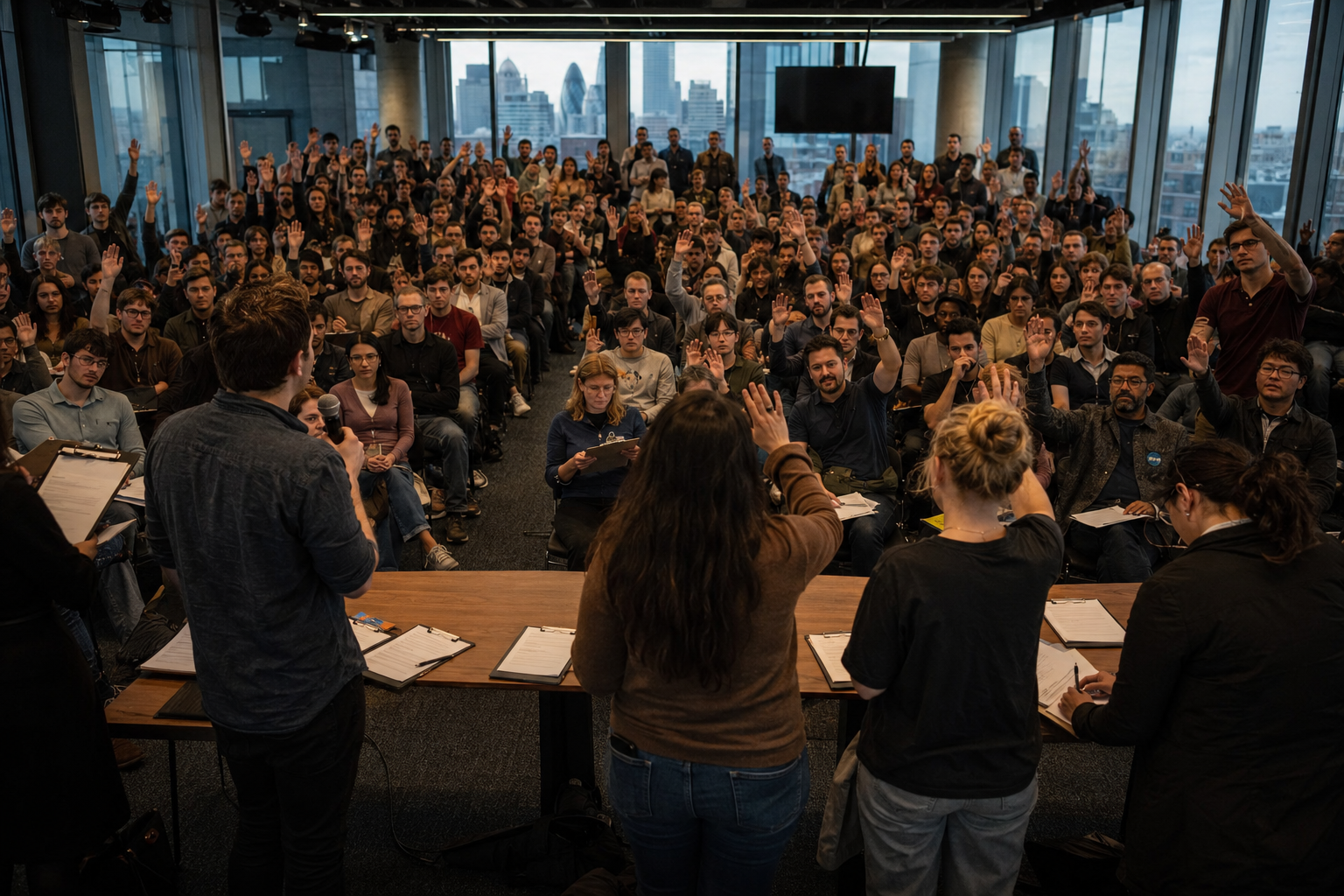
In a stunning rebuke from within one of the world’s most powerful technology companies, workers at Google’s DeepMind AI division have voted 98% in favor of unionizing — and their top demand is the cancellation of a lucrative contract with the U.S. Pentagon. The vote marks one of the most significant labor actions in Silicon Valley history, sending shockwaves through the tech industry and raising serious questions about the future of AI’s role in military operations.
What Happened
Google DeepMind researchers and engineers submitted union authorization cards in a near-unanimous show of force, with an overwhelming 98% of participating workers backing the effort to organize. The move makes DeepMind’s workforce one of the largest groups of AI professionals to seek union representation in the United States. Workers say the union push is not just about wages or working conditions — it’s fundamentally about the direction of Google’s AI technology and who gets to use it.
The central flashpoint: a multi-year contract Google secured with the U.S. Department of Defense to provide AI capabilities for military applications. Workers contend they were not consulted before the deal was signed and argue that deploying their research for lethal or surveillance purposes violates the ethical principles they were hired to uphold. They are demanding the contract be cancelled outright before they formally ratify the union agreement.
Why This Matters
This is not the first time Google’s workforce has erupted over military partnerships. In 2018, thousands of employees signed a letter demanding the company withdraw from Project Maven — a Pentagon program that used AI to analyze drone footage. Google ultimately chose not to renew that contract. But this time, the stakes are far higher. DeepMind is considered among the most advanced AI research organizations in the world, and a union with collective bargaining power represents a fundamentally different kind of leverage than a petition.
The vote also arrives at a critical moment for the tech industry broadly. AI companies are under intense pressure from both government contracts and growing public scrutiny about the ethics of artificial intelligence. Workers at Amazon, Microsoft, and other major players have increasingly pushed back against their employers’ defense partnerships — but none have organized at this scale or with this level of unity.
The Pentagon Contract at the Center of the Fight
Details of Google’s Pentagon contract have not been fully disclosed publicly, but workers familiar with the agreement say it involves AI systems that could be used in combat decision-support, surveillance, and autonomous targeting applications. DeepMind employees argue that these uses directly contradict the company’s own stated AI ethics principles, which include commitments to avoid systems that cross ethical “red lines” and to maintain human oversight in high-stakes decisions.
Google has defended the contract, stating that its involvement in national security projects is responsible and in keeping with its ethics guidelines. Company leadership has not publicly indicated any willingness to cancel the deal. That sets up what could become a prolonged standoff between one of the world’s most profitable corporations and its own AI researchers — the very people whose labor underpins Google’s most valuable technology.
Reactions and Implications
Labor advocates are calling the DeepMind vote a watershed moment for the entire tech sector. “When 98% of a workforce agrees on anything, that’s not a protest — that’s a mandate,” said one labor organizer familiar with the effort. Civil liberties groups have rallied behind the workers, arguing that AI researchers have both the right and the responsibility to refuse participation in projects they believe could cause harm.
Critics of the union push, however, argue that private employees should not have veto power over government contracts, and that AI researchers at a publicly traded company cannot unilaterally dictate national security policy. Defense officials have warned that ceding AI development to foreign adversaries — particularly China — could have serious strategic consequences if American companies are pressured to step back from military work.
What This Means for Americans
The outcome of this standoff will affect more than just Google employees. If DeepMind workers succeed in forcing the cancellation of the Pentagon contract, it could set a precedent that gives tech workers across the country new power to block corporate partnerships with the federal government. For Americans who pay taxes and rely on military readiness, the question is a serious one: should a company’s workforce be able to override defense contracts negotiated between corporate leadership and elected officials? The answer may soon be tested in court, in Congress, and on the picket line.
Stay informed on the stories that matter most. Follow Your Daily Updates on Facebook and bookmark yourdailyupdates.news for breaking news and analysis.