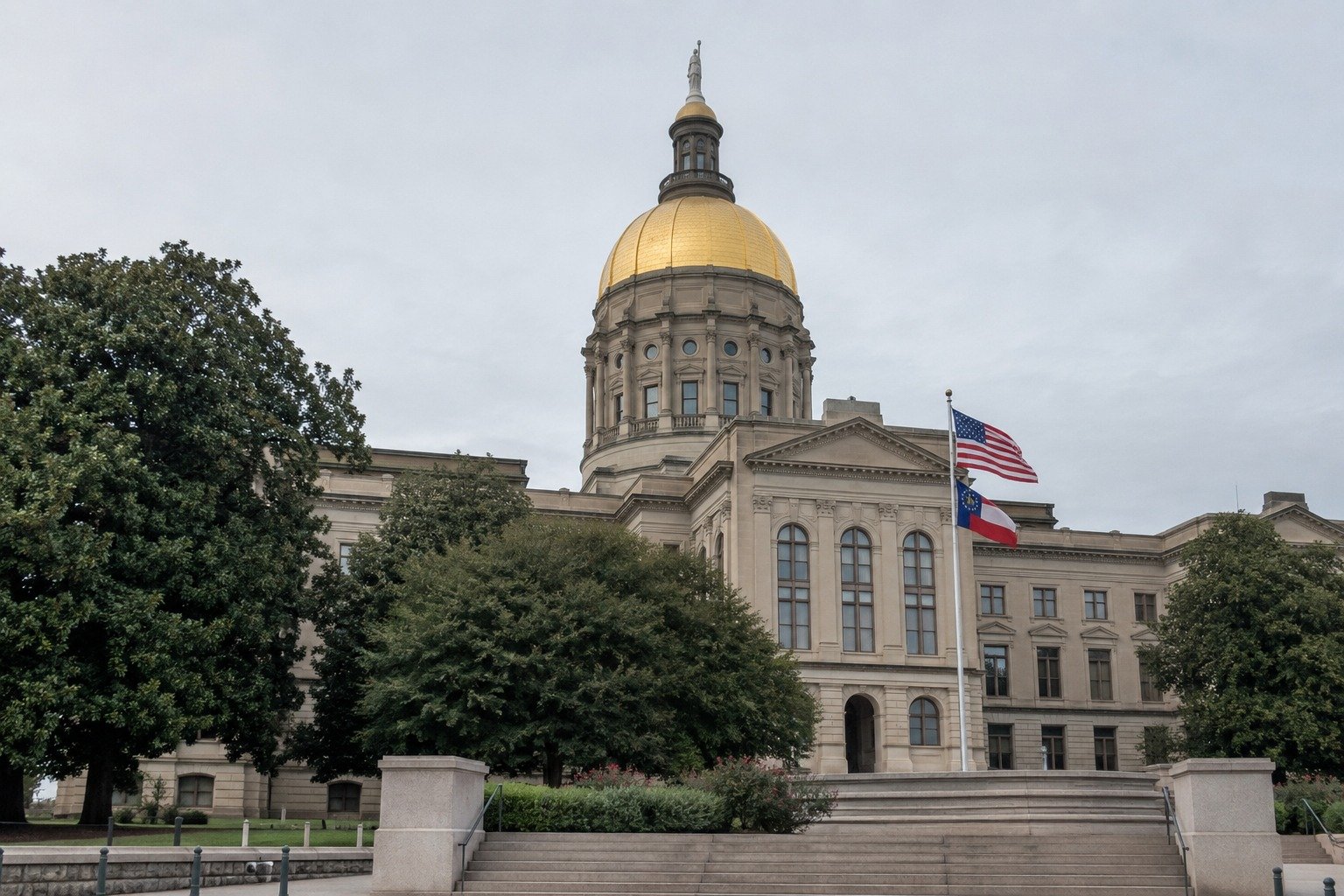
Georgia’s top Republican lawmakers have refused to do what their own governor asked of them. Gov. Brian Kemp called for a special legislative session to redraw the state’s congressional and legislative maps ahead of the 2028 elections. House Speaker Jon Burns answered with a letter making the legislature’s position clear: lawmakers will not take up redistricting right now.
It is a striking moment of intraparty friction in a state that has become a national battleground. The push to redraw maps did not come from Democrats or outside groups. It came from a Republican governor, backed by pressure from President Donald Trump, and it was the Republican-controlled legislature that said no.
Why Kemp Wanted New Maps
The call for a special session was part of a broader national strategy. Trump has leaned on Republican-controlled states to redraw their congressional districts mid-decade, hoping to lock in friendlier maps and protect or expand the party’s narrow margins before the next round of elections. Several states have faced similar pressure, and Georgia, with its competitive districts and rapidly shifting suburbs, was seen as a prime target.
Redistricting mid-decade is unusual. Maps are typically redrawn once every ten years, after the census. Redrawing them now, outside that cycle and purely for partisan advantage, is exactly the kind of move that draws legal challenges and accusations of gerrymandering.
The Supreme Court Decision That Changed the Math
In his letter to the governor, Speaker Burns pointed to a specific reason for caution: the Supreme Court’s recent decision in Louisiana v. Callais. That ruling weakened key protections under the Voting Rights Act, the federal law that for decades has guarded against maps drawn to dilute the voting power of minority communities.
Burns argued that with the legal ground shifting underneath the maps, the state needs to move carefully before redrawing anyone’s district. In other words, the rules that govern how districts can legally be shaped are in flux, and Georgia’s Republican leadership is not willing to gamble on new maps that could be thrown out in court or trigger a fresh wave of litigation.
A Setback for Kemp and Trump
The refusal is a real setback for both Kemp and Trump. The national redistricting push depended on Republican-led states falling in line, and Georgia’s legislature breaking from that effort sends a signal to other states weighing the same move. When the pressure came, the answer from the legislature’s own leadership was no.
It also underscores how much the Voting Rights Act still shapes the redistricting fight, even in a weakened form. Lawmakers are clearly worried that aggressive new maps drawn in this legal environment could backfire, exposing the state to challenges that drag on for years.
What This Means for Georgians
For now, Georgia voters will keep the districts they currently have heading toward 2028. That matters because district lines decide which communities are grouped together, whose votes carry weight, and which races are competitive. A mid-decade redraw could have reshaped representation for millions of people without a single new vote being cast.
But the fine print is important. Lawmakers said no for now, not forever. They left the door open to revisit redistricting later. The fight over who draws the lines, and who that math leaves out, is not over. It is just paused.
Stay informed on the stories that matter most. Follow Your Daily Updates on Facebook and bookmark yourdailyupdates.news for breaking news and analysis.