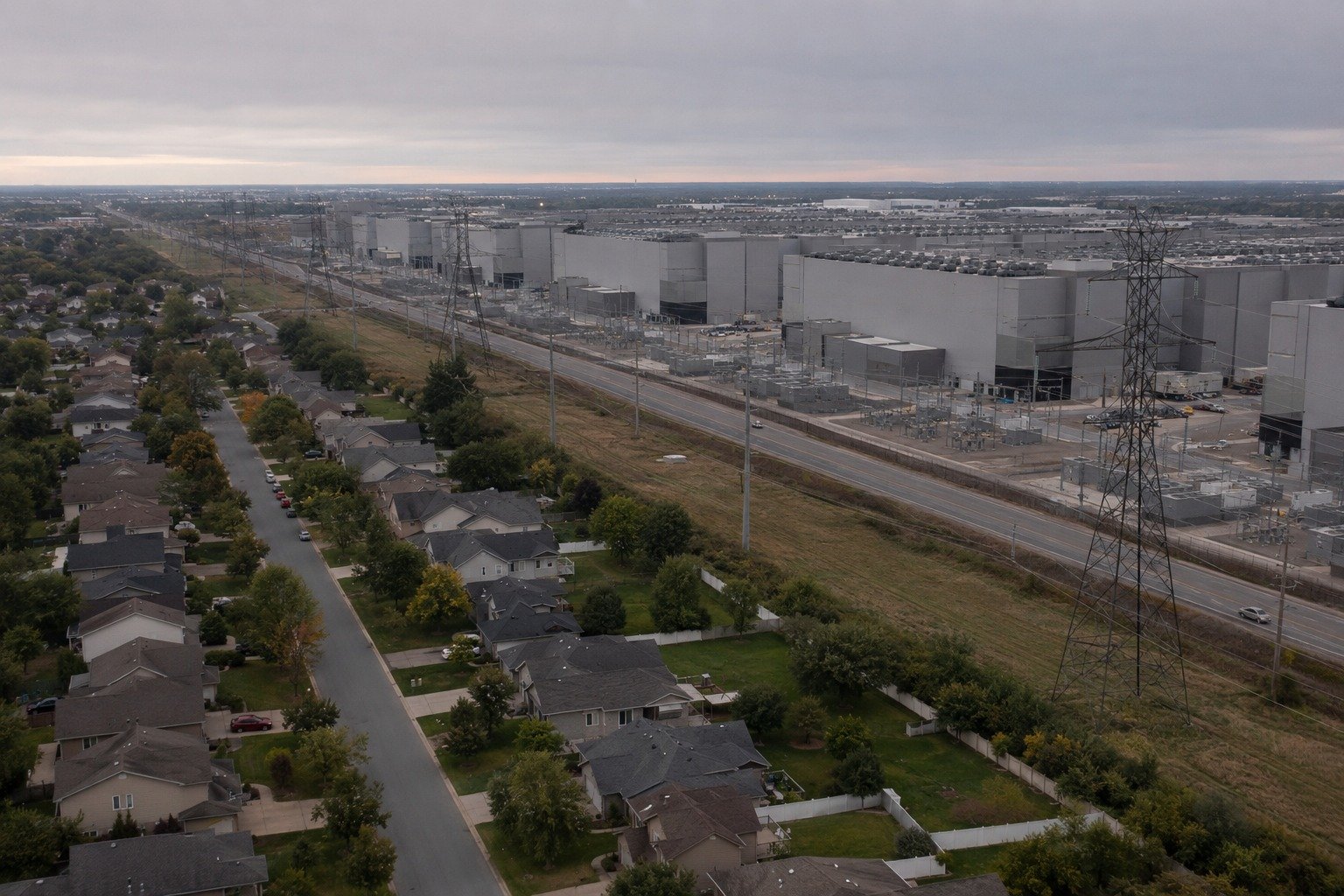
Americans rarely agree on much these days. But a brand-new Gallup poll has uncovered one issue that unites people across party lines: nobody wants a sprawling AI data center built next to their home. Seven in 10 U.S. adults say they oppose having one of these massive computing facilities constructed near where they live, and nearly half say they “strongly oppose” the idea.
The findings, drawn from telephone interviews conducted with 1,000 adults across all 50 states between March 2 and March 18, 2026, land at a moment when the artificial intelligence boom is driving a nationwide construction surge. Tech giants are racing to build the enormous server farms that power AI tools — and that race is colliding head-on with the communities being asked to host them.
An Issue That Crosses Party Lines
What makes this poll stand out is how little partisanship factors into it. According to Gallup, 56% of Democrats expressed a “not in my backyard” attitude toward AI data centers, compared with 48% of independents and 39% of Republicans. The opposition spans the political spectrum — a rare thing in 2026.
Only 27% of those surveyed said they would welcome a data center in their area, and just 7% said they “strongly favor” one. The margin of sampling error for the poll is plus or minus 4 percentage points at the 95% confidence level. In other words, this isn’t a fluke — it reflects a broad, durable wariness about what these facilities mean for everyday neighborhoods.
Why People Are Pushing Back
The concerns are concrete. Half of the opponents pointed to the sheer volume of resources these centers consume. Roughly 18% specifically cited water use — the cooling systems that keep thousands of servers from overheating can draw enormous amounts of it. Another 18% raised concerns about energy, as a single large data center can demand as much electricity as a small city, straining local power grids.
Beyond resources, about 16% of opponents mentioned pollution, including noise from cooling fans and generators along with air and water concerns. Roughly one in five worried about quality of life: heavier traffic, rapid population growth, and the simple preference that nearby land be used for something other than a windowless industrial complex. For many, it comes down to property values and the fear that a quiet neighborhood could be transformed overnight.
The Case in Favor
Supporters of these projects make an economic argument that’s hard to dismiss. Data centers can bring construction jobs, permanent technical positions, and a significant boost to the local tax base. Companies building them often promise hundreds of millions — sometimes billions — in investment, money that cash-strapped towns and counties can use for schools, roads, and services.
The industry’s position is straightforward: as AI use explodes, the infrastructure has to be built somewhere. The cloud isn’t really a cloud — it’s a physical network of buildings full of humming machines. And every one of those buildings ends up in someone’s community. The question the country now faces is who agrees to live alongside them, and on what terms.
What This Means for Americans
This debate is coming to more towns than ever. As permits get filed and bulldozers arrive, local councils and state legislatures are being forced to weigh the promise of jobs and revenue against the strain on water, power, and the character of a place people call home. For homeowners, it could mean a real choice between economic opportunity and the neighborhood they know — and the Gallup numbers suggest most would rather keep the neighborhood.
Stay informed on the stories that matter most. Follow Your Daily Updates on Facebook and bookmark yourdailyupdates.news for breaking news and analysis.