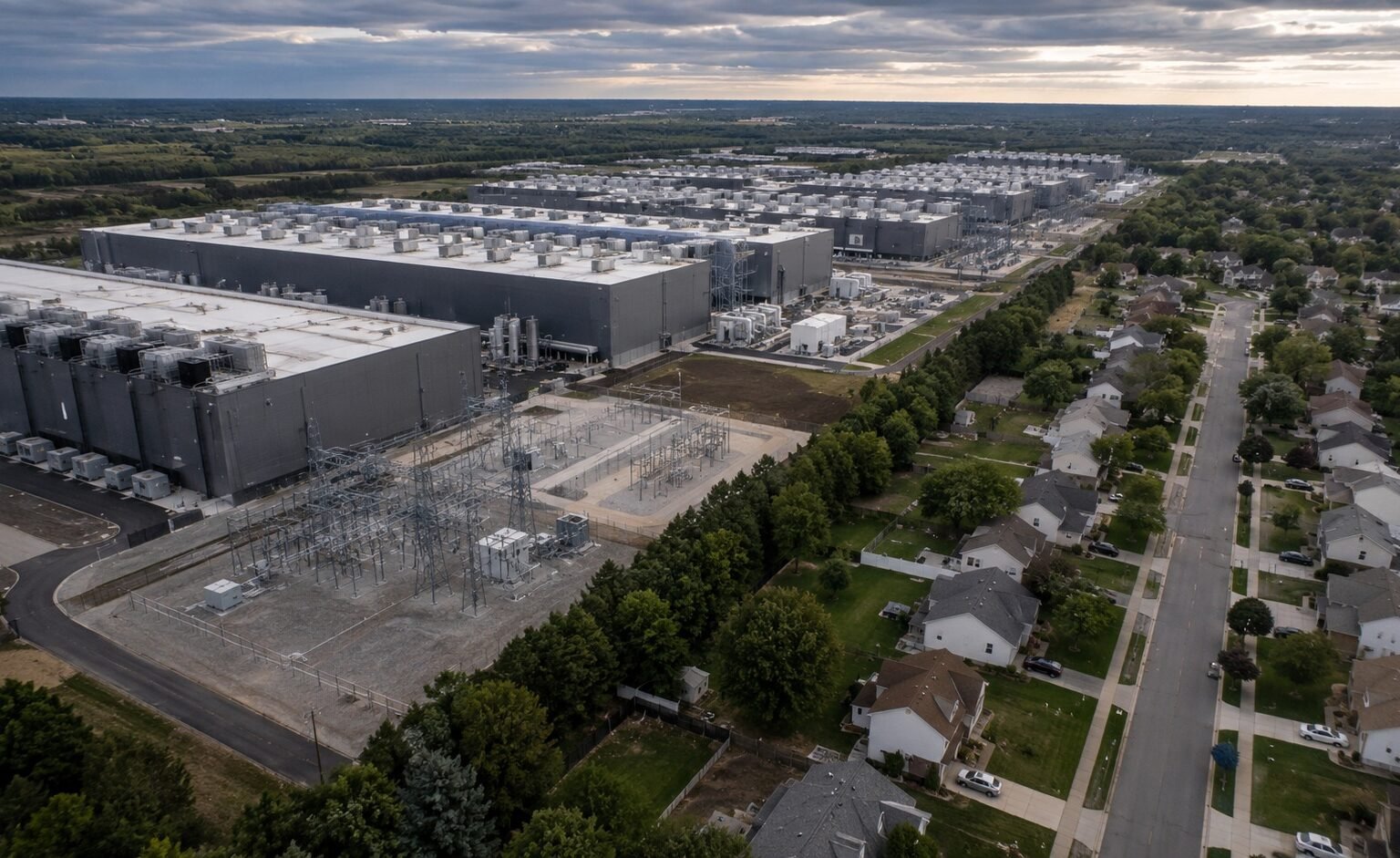
Most Americans do not want a giant artificial intelligence data center built anywhere near where they live, according to a new Gallup poll that puts hard numbers on a backlash that has been building in communities across the country. Seventy-one percent of adults said they would oppose a large AI-workload data center being constructed within 10 miles of their home, and a striking share of that opposition is intense.
The survey, released in mid-May, polled more than 1,200 adults across all 50 states. It found that 43% were not just opposed but strongly opposed to having such a facility nearby. Only 22% said they would support one. For an industry that the country’s biggest technology companies are racing to expand, those are sobering figures.
More Feared Than a Nuclear Plant
The most arresting finding in the poll is the comparison Gallup drew with other large facilities. Opposition to a nearby AI data center (71%) ran higher than opposition to a nearby nuclear power plant, which stood at 53%. In other words, more Americans now say they would resist a warehouse full of computer servers in their community than would resist a nuclear reactor.
That is a remarkable shift. For decades, nuclear plants were the classic example of a project nobody wanted in their backyard, weighed down by fears about safety and radiation. The fact that a data center now clears that bar tells you how quickly public anxiety about the AI build-out has hardened.
Why Communities Are Pushing Back
The reasons for the resistance are not hard to understand once you look at what these facilities actually demand. Large AI data centers are enormous, often spanning hundreds of acres of windowless buildings packed with servers. They consume staggering amounts of electricity to run and even more water to keep their equipment cool, putting pressure on local utilities and, in many cases, on residential power and water bills.
Communities have watched their electricity rates tick upward as data centers come online and strain the grid. They have seen the noise, the truck traffic, and the industrial sprawl arrive, often with little say in the matter. And in exchange, the long-term, good-paying jobs that towns are frequently promised tend not to materialize in the numbers pitched. Once built, these facilities are largely automated and require only a small staff to operate.
The result is a familiar imbalance. The costs of the AI boom — higher bills, heavier infrastructure burdens, environmental strain — land on local residents, while the profits flow to the tech giants headquartered somewhere else entirely. The Gallup numbers suggest a public that has started to notice exactly who is being asked to absorb that trade-off.
A Fight Over Who Gets a Say
The poll lands at a moment when data center construction is accelerating nationwide, driven by the computing demands of AI models. Tech companies are scrambling to secure land, power, and water, and they often arrive in smaller communities armed with promises of tax revenue and investment. Local officials, eager for the economic development, sometimes fast-track approvals before residents fully grasp what is coming.
That dynamic is exactly what the Gallup findings call into question. When 71% of people say they would oppose one of these projects near their home, it raises a pointed issue about local control: Will residents get a genuine voice in whether these facilities get built, or will the projects keep moving forward over their objections?
What This Means for Americans
For ordinary families, this is not an abstract debate about technology policy. It shows up on the utility bill, in the strain on the local water supply, and in the character of the neighborhood. The Gallup poll is a clear signal that Americans are increasingly unwilling to quietly shoulder the downsides of the AI expansion so that distant corporations can post bigger profits. The open question is whether lawmakers and local governments will treat that sentiment as something to answer to — or something to steamroll.
Stay informed on the stories that matter most. Follow Your Daily Updates on Facebook and bookmark yourdailyupdates.news for breaking news and analysis.