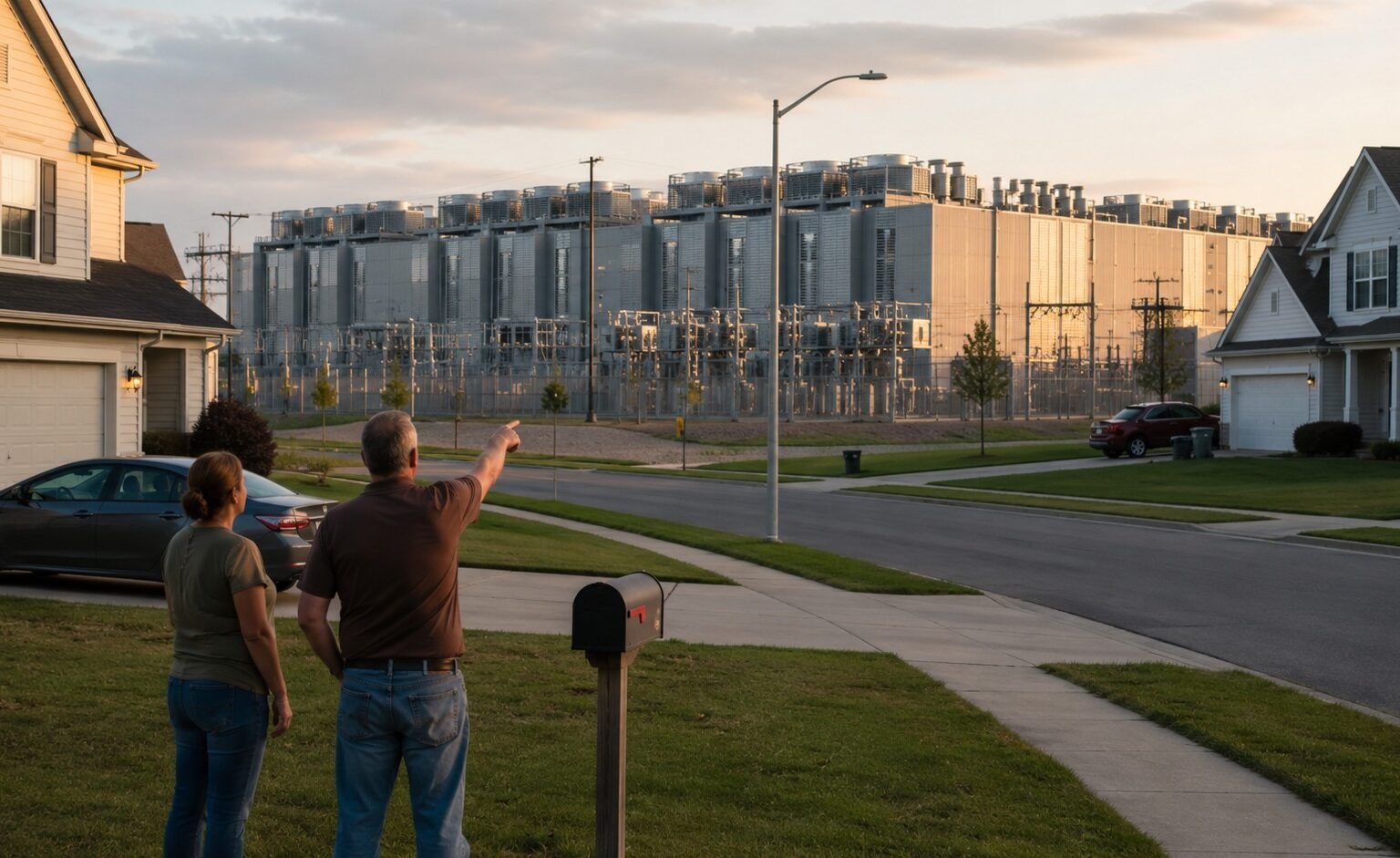
A Gallup poll released this spring just confirmed what tech executives have been quietly tracking for months: Americans want AI data centers anywhere except next door. Seven in ten adults — 71% — say they oppose the construction of artificial intelligence data centers in their local communities, with nearly half describing themselves as strongly opposed.
The poll, conducted March 2–18 by Recon MR for Gallup, surveyed 1,000 adults across all 50 states and Washington, D.C. It is the first time Gallup has measured public sentiment on AI data center construction — and the results are remarkable. Just 7% of respondents said they strongly favor the projects. The number who only somewhat favor them is also small. The mainstream American position is now opposition.
More Opposed Than Nuclear Power
To grasp how steep the rejection is, Gallup asked the same respondents about a nuclear power plant. Just 53% said they would oppose a nuclear facility in their area. The AI data center number — 71% — is eighteen points higher. That places opposition to AI data centers above a technology that has historically been one of the most politically radioactive infrastructure debates in the country.
The contrast says something about how quickly public opinion on AI has hardened. Two years ago, AI was largely viewed as an abstract software question. Today, a quarter of the country has watched their neighborhoods become the staging ground for a building boom funded by tens of billions in private capital — and they are not happy about it.
The Specific Complaints
The reasons cited by opponents are not abstract. Roughly half of those who oppose construction pointed to the staggering resource consumption these facilities require. Eighteen percent named excessive electricity use. Another 18% named water consumption — many large AI data centers can use millions of gallons per day for cooling. Sixteen percent flagged pollution concerns, including noise pollution, air pollution, and water contamination.
Residents in Virginia — long the country’s biggest data center hub — have spent the past two years organizing against expansion. Loudoun County, the unofficial capital of the global cloud, has seen pushback against new construction near schools and historic districts. In Georgia, similar grassroots groups have emerged near new hyperscale builds. The complaints tend to follow a pattern: rising electric bills, depressed property values, lights that don’t go off, and a constant hum from cooling systems that residents say carries for miles.
The Politics Are Shifting
Until recently, AI data centers were treated by both parties as economic wins — large capital investments, property tax revenue, construction jobs. That consensus is fracturing. State lawmakers in Virginia, Texas, and Ohio have introduced bills to limit where new facilities can be sited, require environmental disclosures, or force operators to disclose energy and water draw to local utilities. Federal lawmakers from both parties have raised questions about strain on the electrical grid.
The industry, meanwhile, is racing forward. Big Tech companies have committed enormous sums to AI infrastructure over the next several years. Hyperscale operators argue the centers are economic engines and that fears about water and energy use are overstated. They also point out that without the centers, the AI tools millions of Americans now use daily simply cannot function. That argument has not been winning.
What This Means for Americans
The fight over AI data centers is, in plain terms, a fight over who controls what gets built in the place you live. Tech companies and the developers who back them have generally argued they should be able to build wherever local zoning allows. Residents — backed now by a clear majority of public opinion — are arguing for veto power. Expect more state-level legislation in the next year and more local zoning fights heading into the next round of permits. If you live in a state with a growing tech footprint, this is no longer hypothetical.
Stay informed on the stories that matter most. Follow Your Daily Updates on Facebook and bookmark yourdailyupdates.news for breaking news and analysis.