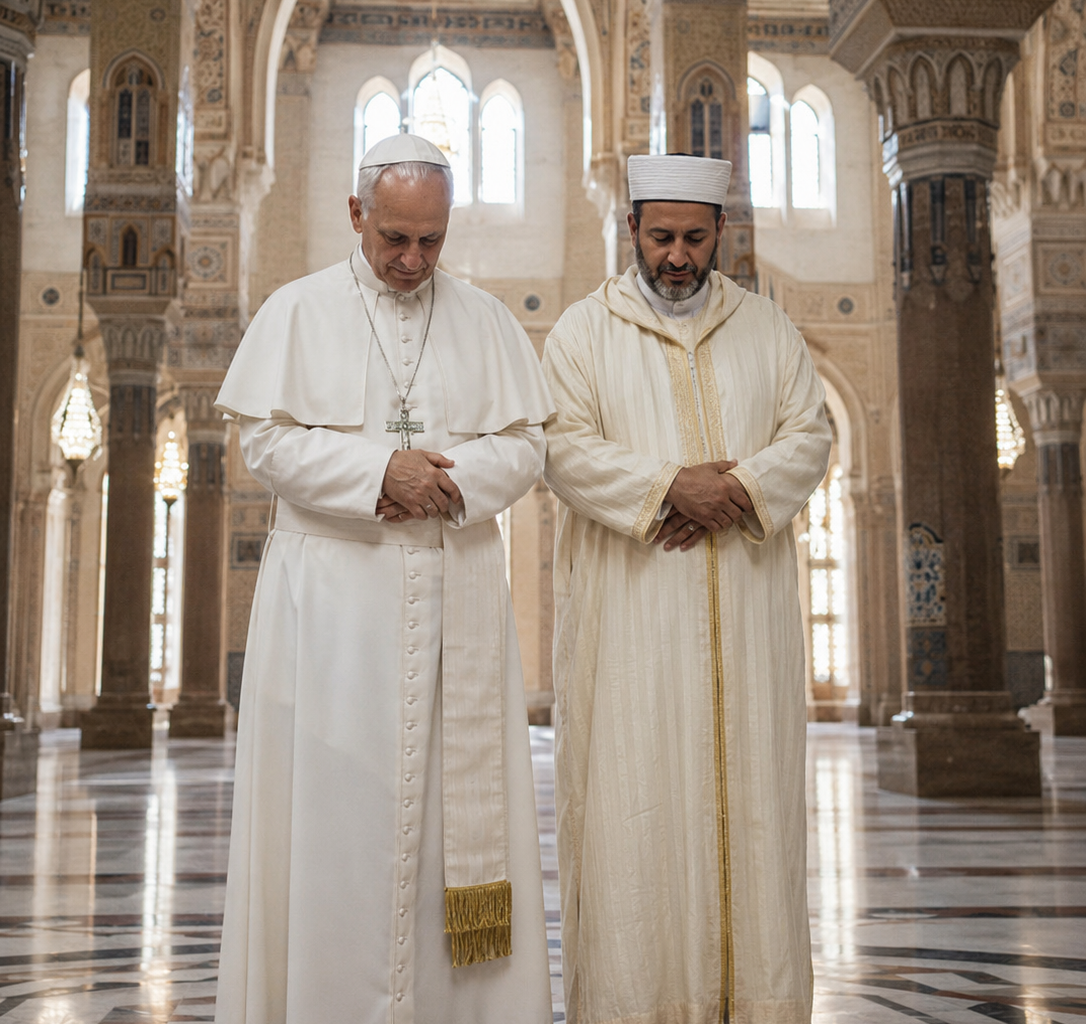
Pope Leo XIV, the first American-born pontiff in Catholic Church history, made an unprecedented gesture on April 13, 2026 — removing his shoes and stepping barefoot into the Grand Mosque of Algiers, one of the world’s largest mosques, where he prayed in silence beside the imam for over 30 seconds. It was the first papal visit to Algeria in the Church’s 2,000-year history.
A Historic First on Multiple Fronts
The Grand Mosque of Algiers, completed in 2019, is the third-largest mosque in the world by capacity, capable of holding over 100,000 worshippers. Algeria — a predominantly Muslim North African nation — had never hosted a papal visit, making Leo XIV’s arrival itself a historic milestone before he ever removed his shoes.
Leo XIV’s papacy has been defined by a willingness to break from precedent. As the first Augustinian pope in Church history and the first American to hold the office, he has already signaled a more outward-facing approach to the Church’s global relationships — and the Algeria visit made that signal impossible to ignore.
What Happened Inside the Mosque
The Algeria stop was part of an 11-day, four-country tour of Africa — a region the Vatican has increasingly prioritized as Catholicism’s fastest-growing demographic base. But the mosque visit quickly overshadowed everything else on the itinerary.
Photographs showed the pope — flanked by Vatican officials and Algerian religious leaders — standing shoeless on the mosque’s marble floor, bowing his head in silent prayer alongside the grand imam. The image traveled around the world within hours. For many observers, it was the most striking image of any papal trip in recent memory.
On the flight home, Leo XIV addressed the moment directly. He told reporters he wanted to send a clear message to Catholics everywhere: Islam should not be feared. He pointed specifically to Algeria and Lebanon as two countries where Christians and Muslims have long managed to share daily life, calling them models for peaceful coexistence that the Church should actively promote.
“Christians and Muslims can live together in peace,” he said aboard the papal aircraft. He urged Catholics globally to be “less fearful of Islam” and described the mosque visit not as a compromise of faith, but as a genuine expression of it.
Supporters and Critics React
The response was immediate and deeply divided. Supporters within the Church and in interfaith circles called the gesture long overdue — a powerful symbolic act at a time when religious tensions continue to simmer in parts of Europe, the Middle East, and sub-Saharan Africa. Several Muslim scholars praised the pope for entering the mosque as a sign of genuine respect rather than merely meeting religious leaders in a neutral venue.
Critics — including prominent conservative Catholic commentators and some clergy — pushed back hard. They argued the visit blurred the line between religious tolerance and theological equivalence, and expressed concern that Leo XIV was downplaying both fundamental doctrinal differences and the ongoing persecution of Christian minorities in Muslim-majority countries. Some questioned whether his remarks on the flight home went too far — framing Christianity’s relationship with Islam as one where fear, rather than honest theological disagreement, is the primary barrier.
What This Means for American Catholics
For American Catholics — who make up roughly 20 percent of the U.S. population — this moment raises real questions about the direction of the Church under its first American pope. Leo XIV is not governing from a distance. He is making the kind of bold, visible gestures that define papacies and set their legacy. Whether American Catholics see this as courageous leadership or a departure from tradition will depend largely on where they already stand on questions of religious pluralism and interfaith dialogue.
More broadly, this moment lands at a time when religion and politics are deeply intertwined in American life. A pope telling Catholics to “stop being afraid of Islam” will resonate very differently across the pews — and that divide mirrors the one already playing out in newsrooms, households, and communities across the country. What’s undeniable is that this pope is not playing it safe.
Stay informed on the stories that matter most. Follow Your Daily Updates on Facebook and bookmark yourdailyupdates.news for breaking news and analysis.