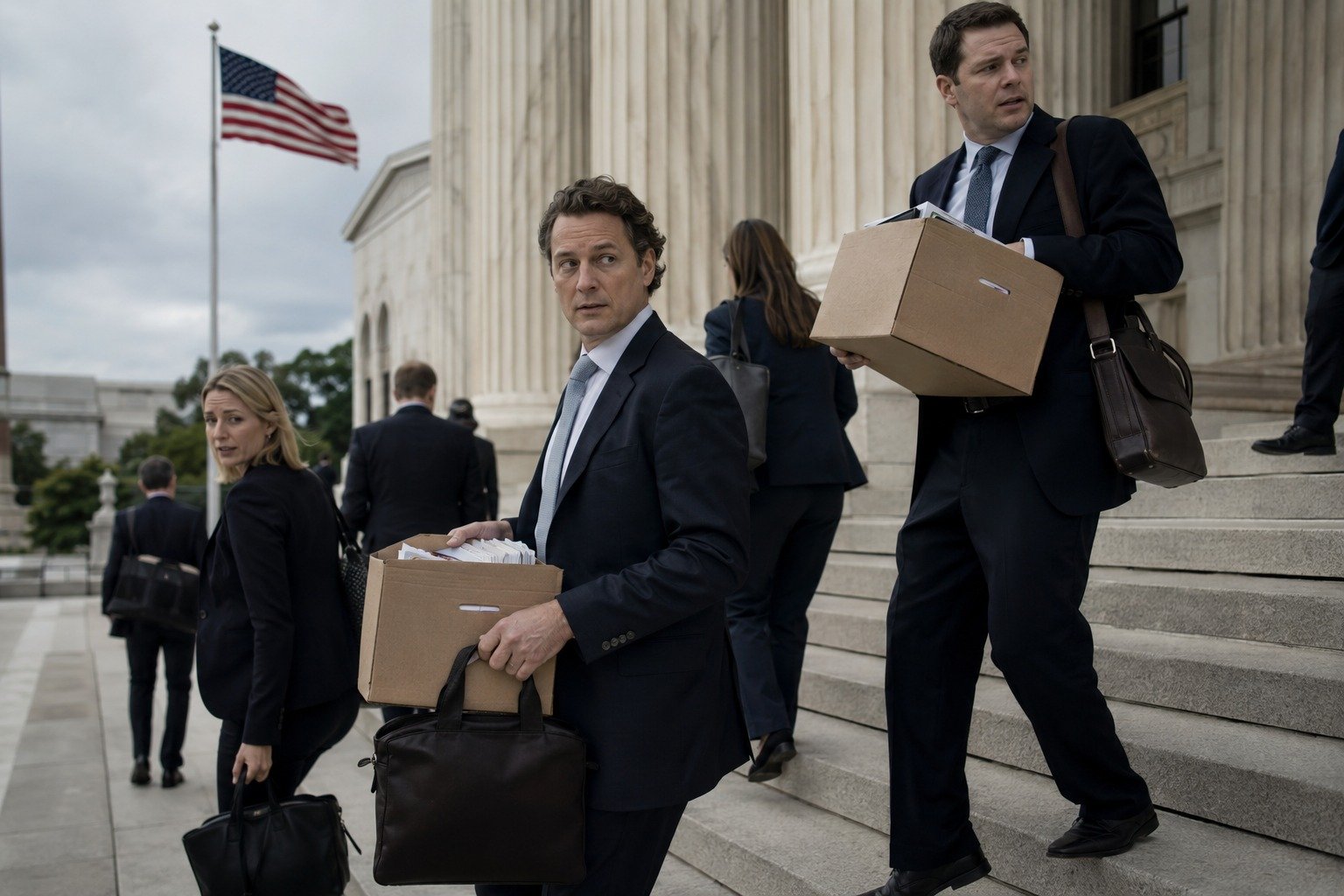
More than 10,000 government lawyers have left the federal workforce since January 2025, according to reporting compiled by The Independent, The New York Times, PBS, CBS, and Government Executive. The scale of the departures – roughly one in five federal attorneys who were on the job at the end of 2024 – is now reshaping how the federal government handles its day-to-day legal work.
A Year of Historic Turnover
Turnover is normal whenever a new administration takes office. Political appointees come and go, and some career staff retire or move to the private sector. What sets the past year apart is the sheer volume. By early 2026, an estimated one in five federal attorneys who were employed at the end of 2024 had departed – a pace of attrition that legal observers across the political spectrum describe as without modern precedent.
The Justice Department absorbed the largest share of the losses. The DOJ alone is estimated to have shed more than 6,400 employees during the administration’s first year, draining decades of accumulated institutional experience from an agency that employed roughly 108,000 people. Some left through resignations, others through retirements, and a portion through firings tied to reorganizations and shifting priorities.
The Divisions Hit Hardest
The departures were not spread evenly. Certain divisions were hollowed out far more than others. The DOJ’s Civil Rights Division – the unit responsible for enforcing federal voting, housing, employment, and anti-discrimination law – has reportedly lost around 75 percent of its attorneys. A division that once carried hundreds of lawyers now operates with a fraction of that number.
The Federal Programs Branch, which is tasked with defending the administration’s policies when they are challenged in court, has seen roughly 63 percent of its lawyers walk out the door. That is a striking figure given that this branch is on the front line of nearly every major legal fight the government faces. When lawsuits pile up faster than experienced attorneys can handle them, cases move more slowly and outcomes grow harder to predict.
Two Very Different Readings
The reaction to these numbers splits sharply, and both sides make arguments worth hearing. Supporters of the shake-up frame it as a long-overdue housecleaning. They argue that the federal legal bureaucracy had grown bloated and resistant to change, and that a leaner workforce gives any new administration the ability to set its own priorities without inheriting an entrenched layer of staff committed to the old way of doing things. From this view, fewer lawyers can mean less red tape and a government more responsive to the people who elected its leaders.
Critics see something more troubling. They warn that losing this much courtroom experience all at once leaves agencies dangerously understaffed and slows the government’s ability to handle the cases already sitting on its docket. Institutional knowledge – the kind built over years of handling complex litigation – cannot be replaced overnight. When it walks out the door in bulk, they argue, the public ultimately pays the price in delayed enforcement and weaker representation in court.
What This Means for Americans
For ordinary citizens, the effects of a thinned-out federal legal workforce are not always visible, but they are real. The government’s lawyers are the ones who prosecute fraud, defend federal laws, enforce civil rights protections, and represent the public interest in disputes that can take years to resolve. When the bench of experienced attorneys shrinks this dramatically, the work does not disappear – it simply gets harder to do well, and slower to finish. Whether that proves to be a temporary disruption or a lasting setback will likely take years to become clear.
What is not in dispute is the scale. A workforce this size does not turn over quietly, and the consequences – in courtrooms, agencies, and enforcement offices across the country – will be felt long after the headlines fade. Reasonable people will disagree on whether this is a necessary reset or a loss the country cannot easily replace.
Stay informed on the stories that matter most. Follow Your Daily Updates on Facebook and bookmark yourdailyupdates.news for breaking news and analysis.