A job for anyone who wants one. That is the promise behind a sweeping new bill just reintroduced in Congress, where Senator Cory Booker and Representatives Bonnie Watson Coleman and Ilhan Omar have brought back the Federal Jobs Guarantee Development Act of 2026. The legislation, filed in the House as H.R.7566, would test one of the boldest ideas in modern economic policy: that the federal government should ensure a job is available to every adult who wants to work.
But it is important to be precise about what this bill actually does. It is not yet law, and it would not immediately guarantee a job to every American nationwide. Instead, it establishes a three-year pilot program run through the Department of Labor in up to 15 high-unemployment communities and regions across the country — a real-world test of whether a jobs guarantee can work before any larger rollout is considered.
What the Bill Would Do
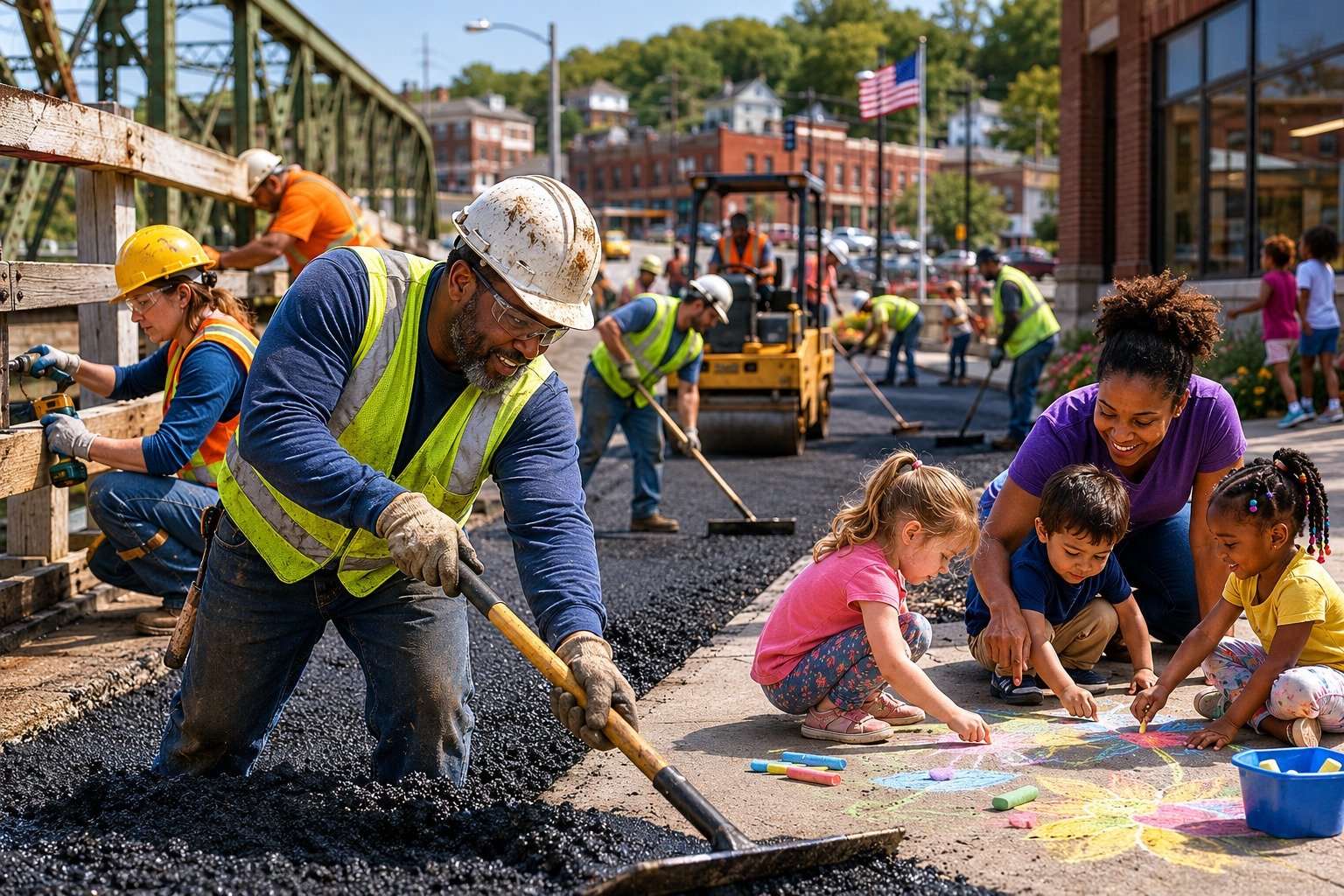
The Federal Jobs Guarantee Development Act would direct the Department of Labor to select up to 15 sites facing persistent high unemployment, chosen based on local need and local assets. In those communities, any adult who wants to work would be guaranteed a job. The jobs would not be make-work. They would target the kind of work the private market consistently leaves undone — child and elder care, repairing roads and bridges, upgrading aging water systems, and revitalizing neighborhoods that have been economically written off for decades.
The compensation package is a central feature. The jobs would pay a living wage, with a minimum that phases in to $17 an hour. Workers would receive health insurance comparable to the coverage Members of Congress get for themselves, along with paid family leave and paid sick leave. Participating communities would be required to build an online portal listing high-impact local jobs, sourced by both local governments and federal agencies based on their own priorities.
The Idea Behind It
The concept of a federal jobs guarantee is not new — it has roots stretching back to the New Deal and was championed by figures from Franklin Roosevelt to Martin Luther King Jr. But this particular bill, first introduced in 2018, was the first modern legislative attempt to put the idea into a concrete, testable program. Its sponsors argue that in the richest country on earth, no one who is willing and able to work should be left without the means to earn a living.
The bill also includes an evaluation component, authorizing a rigorous study of the program’s effects across a range of metrics — unemployment rates, private-sector wages, spending on social safety-net programs, and even incarceration rates. The legislation additionally expands the Work Opportunity Tax Credit to encourage private employers to hire workers coming out of the pilot, creating a bridge from the guaranteed jobs into the broader labor market.
The Debate Ahead
Supporters frame the bill as a direct answer to the towns and regions America’s economy left behind — places where factories closed, jobs vanished, and recovery never came. They point to crumbling infrastructure and unmet caregiving needs as evidence that there is plenty of necessary work going undone, and plenty of people ready to do it.
Critics are expected to raise familiar objections: that the program would be expensive, that it expands the federal government’s role in the labor market, and that guaranteed public jobs could compete with private employers. Because the bill is structured as a limited pilot rather than a nationwide mandate, its backers argue it is precisely the kind of careful, evidence-gathering approach that should defuse those concerns — proving out the costs and benefits in a handful of communities before anyone commits to scaling it up.
What This Means for Americans
For workers in struggling communities, the bill represents a potential lifeline — a guarantee that a living-wage job with real benefits would be there when the private market fails to provide one. For the rest of the country, it is a test case that could reshape the national conversation about work, poverty, and the responsibilities of government. Whether it advances in this Congress or not, it forces a question that is hard to dodge: in a country this wealthy, should a job that pays the bills be something everyone who wants one can count on?
Stay informed on the stories that matter most. Follow Your Daily Updates on Facebook and bookmark yourdailyupdates.news for breaking news and analysis.