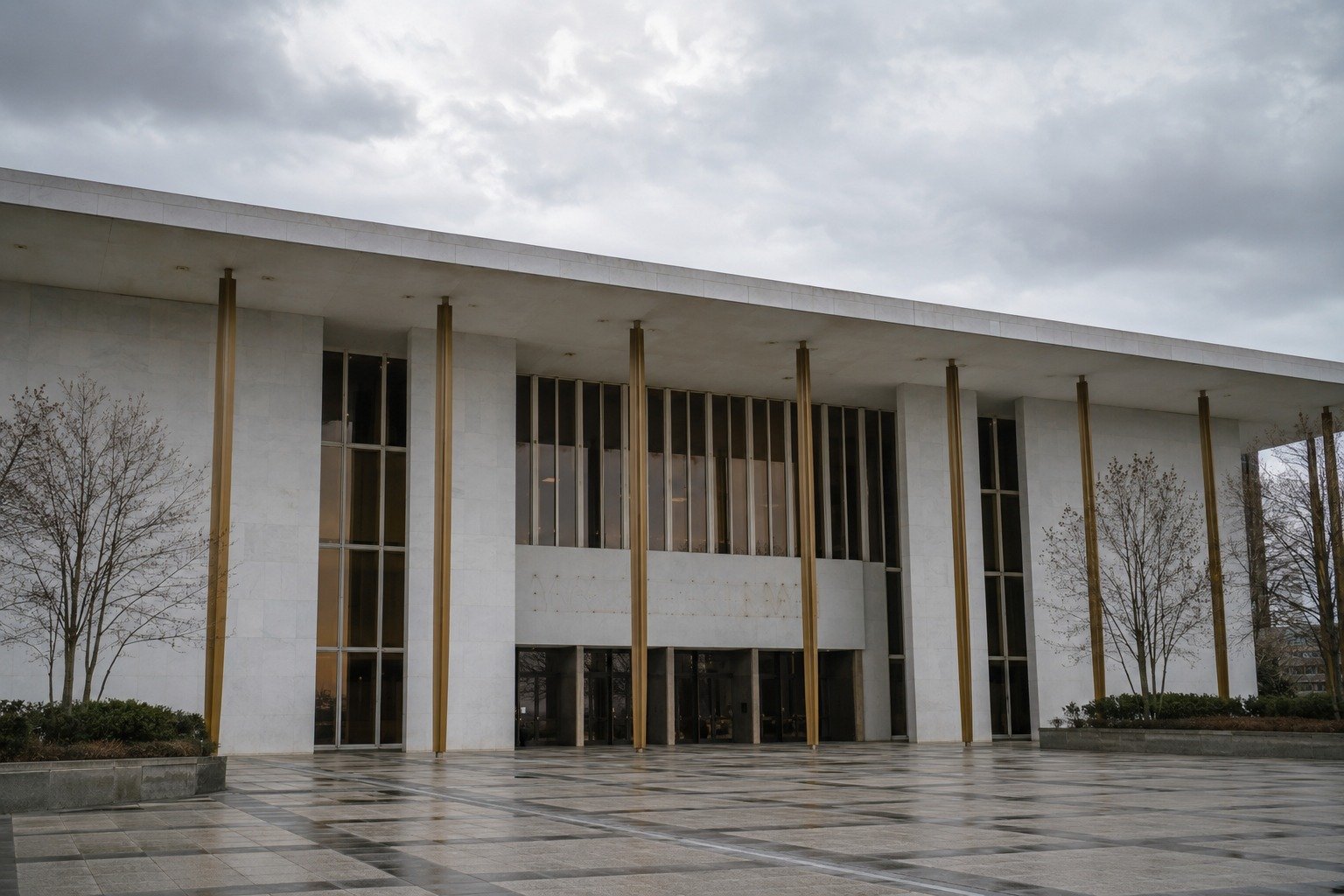
Donald Trump’s name is officially gone from the John F. Kennedy Center for the Performing Arts. On June 13, 2026, the U.S. Department of Justice certified in federal court that the former president’s name had been removed from all physical signage on the building and grounds, complying with a judge’s order that found the renaming unlawful.
This was not a voluntary decision. It was court-ordered compliance, the end result of a legal fight the administration waged all the way to the deadline and lost.
How the Kennedy Center Got Its Name in the First Place
The Kennedy Center is not just another federal building. Congress created it and Congress named it, dedicating the national cultural institution to President John F. Kennedy. That detail turned out to be the legal hinge on which the entire dispute turned.
When the president moved to attach his own name to the center, it set off a legal challenge over a fundamental question: who actually has the authority to rename a building that Congress itself christened? The answer, according to the court, was clear.
What the Judge Ruled
U.S. District Judge Christopher Cooper ruled that the renaming was unlawful and ordered the name removed. His reasoning was direct and difficult to argue around: Congress gave the Kennedy Center its name, and only Congress can change it. The president did not have the power to rename a national arts institution by decree.
The administration did not accept the ruling quietly. The Justice Department asked an appeals court to pause Cooper’s order while it pursued an appeal. But the night before the removal deadline, the appeals court refused that request, leaving the order fully in force with the clock running out.
By the deadline, the signage was down. The Justice Department then filed a formal certification with the court confirming that the name had been stripped from every piece of physical signage on the building and grounds.
The Fight May Not Be Over
While the name is gone for now, the legal battle has not fully closed. The appeals court left open the possibility that the name could be restored if the Justice Department ultimately prevails on its appeal. In other words, the removal reflects where the law stands today, not necessarily where it will stand once the appellate process runs its course.
Supporters of the court’s decision see it as a textbook example of the separation of powers working exactly as intended: a coequal branch of government checking an executive action that exceeded its authority. Critics of the ruling frame it as judicial interference. The certification filing, however, makes the present reality plain. The name is down, and it came down because a court said it had to.
What This Means for Americans
Beyond the specific building, this case is about limits on power. It is a concrete instance of a federal court enforcing the boundaries of executive authority and an administration being compelled to comply. For Americans watching how the guardrails of government hold up under pressure, the outcome offers a clear data point: the courts drew a line, and at least for now, that line held.
The question going forward is whether it stays that way once the appeal is decided.
Stay informed on the stories that matter most. Follow Your Daily Updates on Facebook and bookmark yourdailyupdates.news for breaking news and analysis.