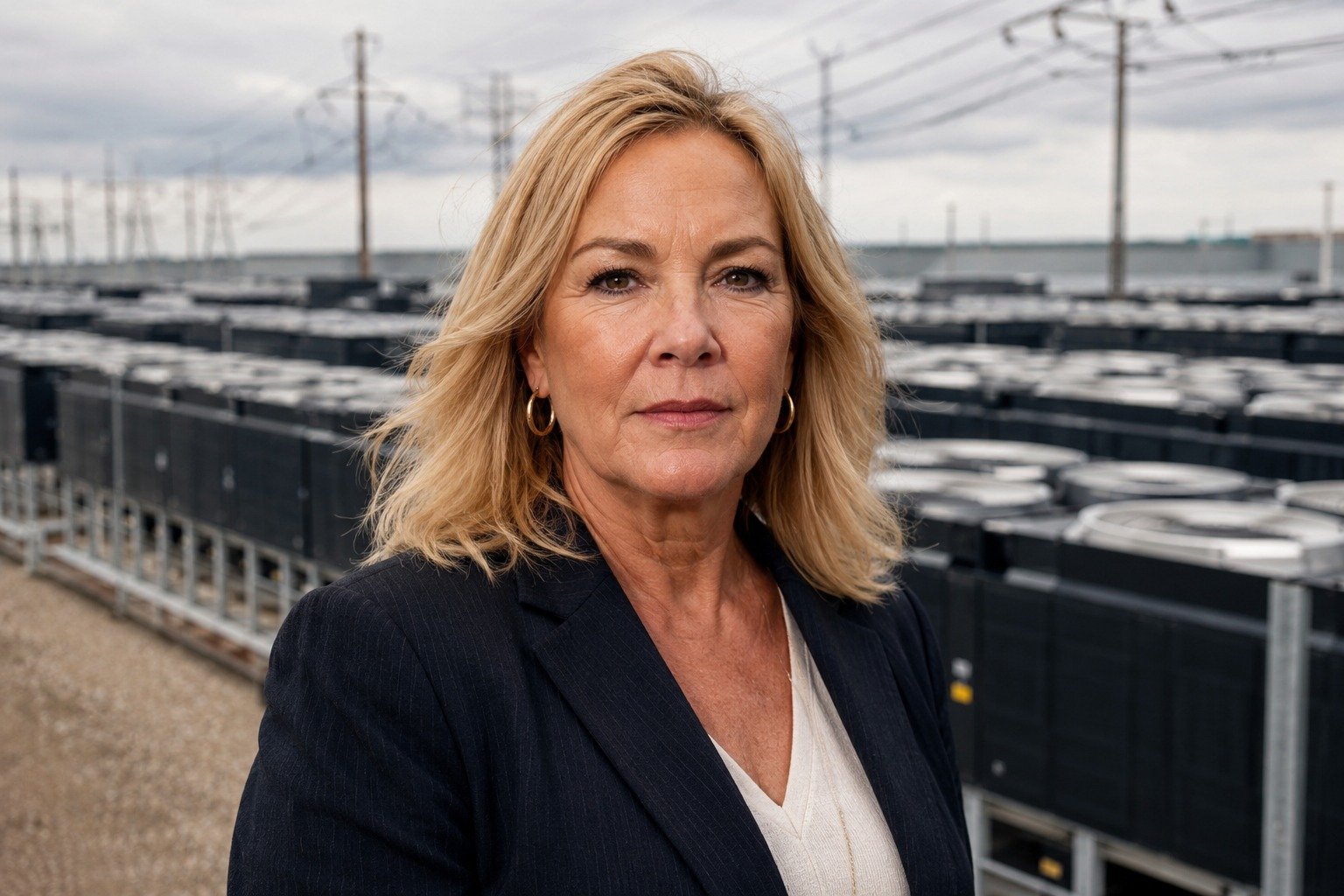
The woman who took on a California utility over poisoned drinking water and won one of the largest direct-action lawsuit settlements in American history has a new target: the AI data centers spreading across the country. Erin Brockovich has launched a nationwide, crowdsourced map that tracks these facilities and lets ordinary residents flag concerns about the ones rising near their homes. Within weeks, the project drew thousands of reports.
The numbers tell the story. After the interactive map went live, it collected more than 1,800 reports from 47 states in its first week alone. That figure has since climbed to 2,716 submissions and counting, with the single largest cluster of reports coming out of Texas, a state that has become a magnet for large-scale computing infrastructure.
Who Is Erin Brockovich And Why This Matters
Brockovich became a household name after the 2000 film starring Julia Roberts dramatized her real-life investigation into contaminated groundwater in Hinkley, California. That case put a spotlight on what happens when industrial operations move into a community faster than anyone stops to ask hard questions about the consequences. Decades later, Brockovich is applying the same playbook to a very modern problem.
The explosion of artificial intelligence has triggered a building boom of enormous proportions. Data centers, the warehouse-sized buildings packed with servers that power AI tools, search engines, and cloud services, are going up at a record pace. They are often built quietly, on the edges of towns, and many residents say they only learn the full scope of a project after the permits are already signed.
The Concerns Communities Are Raising
According to the reports flowing into the map, the number one worry by a wide margin is water. The largest data centers can consume staggering amounts to keep their servers cool. Some of the biggest facilities use roughly 5 million gallons a day, an amount comparable to the daily water use of an entire town of 10,000 to 50,000 people. In drought-prone regions, that demand sets off alarms.
The second most common concern is electricity. These facilities draw immense amounts of power, and residents worry about the strain on local grids, rising utility costs, and what happens when a single data center demands as much energy as a small city. Right behind that, people are raising questions about their own health, the long-term effects of living next to constant industrial activity, and the secrecy that often surrounds how these projects get approved in the first place.
The map lets residents do more than vent. They can pin a location, upload photos, and submit firsthand accounts of construction, noise, traffic, and environmental changes near their homes. The result is a growing public record built not by a corporation or a government agency, but by the people living next door to these facilities.
Transparency Versus Progress
Brockovich frames the effort as a fight for transparency, giving communities a way to see what is being built next to them before the concrete is poured. Supporters call it a long-overdue check on an industry that has been expanding faster than local governments can track, much less regulate.
Critics push back. Data centers, they argue, bring jobs, tax revenue, and major investment to communities that often need it. More fundamentally, they provide the raw computing power that the entire modern economy now runs on, from hospitals to banks to the AI tools millions of people use every day. Slowing that growth, they warn, carries its own costs.
What This Means For Americans
For the average person, this is no longer an abstract tech debate. Whether you live near a planned facility or simply pay a water and power bill, the questions Brockovich is raising hit close to home. As thousands of reports pile up on a single public map, communities now have a tool to compare notes, organize, and demand answers, and that alone may change how the next wave of data centers gets approved.
Stay informed on the stories that matter most. Follow Your Daily Updates on Facebook and bookmark yourdailyupdates.news for breaking news and analysis.