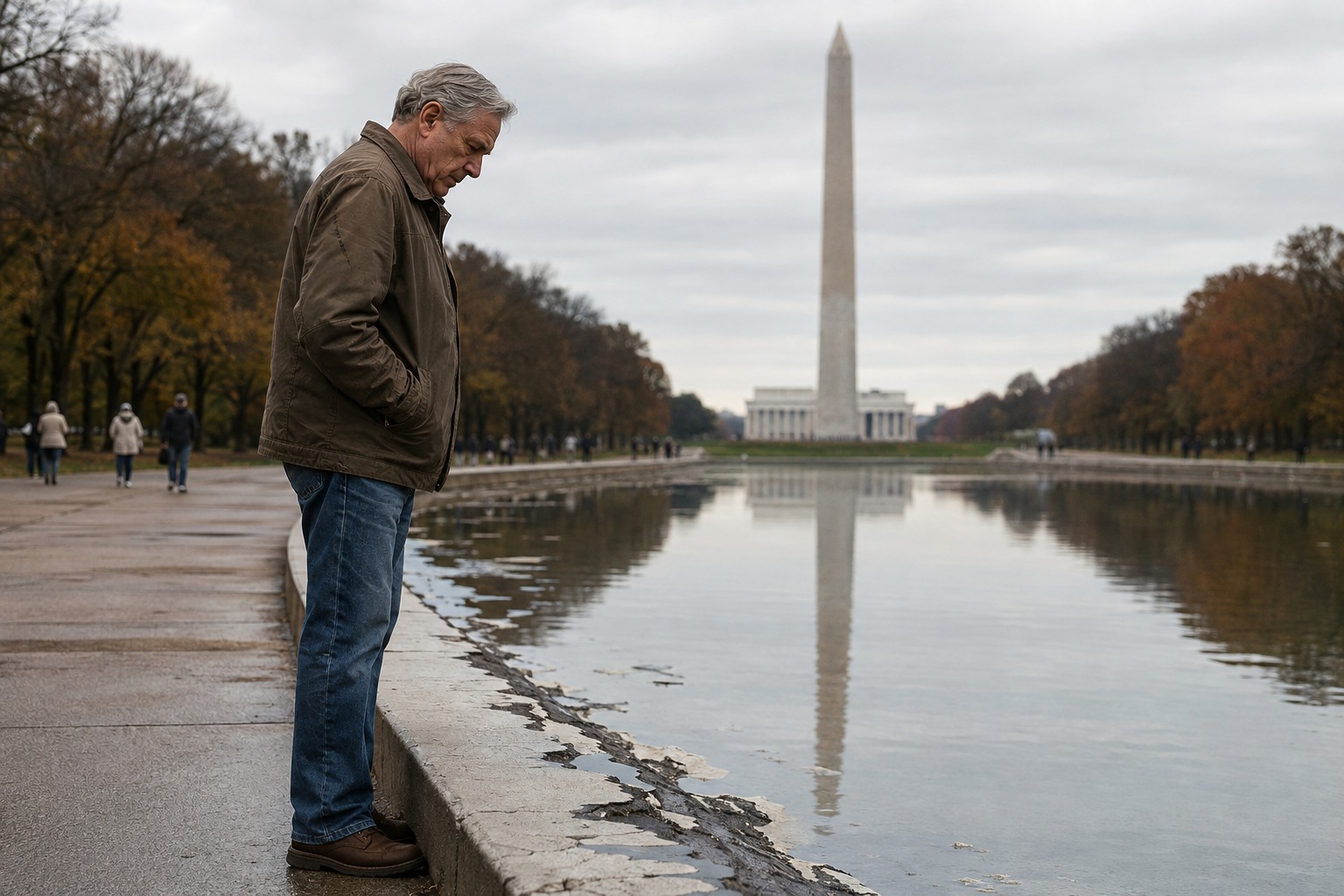
The Justice Department is walking away from its own prosecution of David Hearn, a 67-year-old three-time Olympian who was detained for roughly five hours and charged with vandalism after touching peeling coating on the Lincoln Memorial Reflecting Pool. On July 31, 2026, federal prosecutors filed a motion to dismiss the case — conceding, in their own filing, that the damage was the product of “flawed installation by the contractor” and a “rush to complete the project,” not the act of a vandal.
It is a striking admission. The government did not lose in front of a jury, and no judge threw the charge out. The prosecutors themselves backed down — and in doing so, effectively acknowledged that an ordinary man was detained and dragged toward a criminal trial for a problem the government and its contractor created.
Who Is David Hearn?
Hearn is not a household name, but he is a serious athlete. A canoe and kayak competitor from Bethesda, Maryland, he represented the United States as a three-time Olympian, including at the 1996 Atlanta Games. At 67, he is exactly the kind of quiet, rule-following citizen who never expects to end up in federal custody — which is part of what makes his case so unsettling.
On June 19, 2026, Hearn was at the Lincoln Memorial Reflecting Pool, one of the most visited public spaces in the country. According to the case against him, he touched coating that was already peeling along the pool. That contact became the basis for a vandalism charge and a detention that stretched to about five hours.
Five Hours, a Charge, and a Trial Date
Being held for five hours is not a minor inconvenience. It is most of a working day spent in government custody over a surface that was already deteriorating. But the consequences did not end when Hearn was released. He was charged, and a trial was scheduled for September 28 — meaning he faced months of legal uncertainty, potential legal costs, and the weight of a criminal accusation hanging over his name.
All of it rested on the premise that Hearn had damaged federal property. The Justice Department’s own motion to dismiss undercuts that premise entirely.
The Government’s Own Words
In the motion filed July 31, prosecutors attributed the damage to “flawed installation by the contractor” and to the “rush to complete the project” ahead of the America 250 celebration — the national commemoration of the country’s 250th anniversary. In plain terms: the coating was peeling because the work was done badly and quickly, not because a visitor destroyed it.
The filing also conceded that the government could not prove vandalism beyond a reasonable doubt — the standard every criminal case must meet. When prosecutors admit they cannot clear that bar, the honest move is exactly the one they made: drop the case. The harder question is why the charge was ever brought against Hearn in the first place.
Accountability Runs in the Wrong Direction
Cases like this expose a familiar imbalance. When a government project is rushed and a contractor cuts corners, the fallout often lands on an individual with no power over any of it. Hearn did not install the coating. He did not set the deadline tied to America 250. He did not choose the contractor. Yet he is the one who spent hours in detention and months facing prosecution.
The dismissal is the right outcome, but it does not erase what came before it. There is no motion that gives Hearn back the five hours he lost or the months he spent under a criminal cloud. And there is no indication yet that anyone responsible for the “flawed installation” or the “rush to complete the project” will face the kind of scrutiny that was aimed at a 67-year-old man who touched a peeling surface.
What This Means for Americans
Every American who visits a national monument should be able to do so without fear that a government contractor’s shoddy work will become their legal problem. Hearn’s case is a reminder that prosecutorial power can be pointed at ordinary people for things they did not do — and that it often takes a formal admission, months later, to set the record straight. The real accountability question is not whether Hearn was innocent. His own government has now conceded that. It is who answers for the rushed, faulty work that started all of this.
Stay informed on the stories that matter most. Follow Your Daily Updates on Facebook and bookmark yourdailyupdates.news for breaking news and analysis.