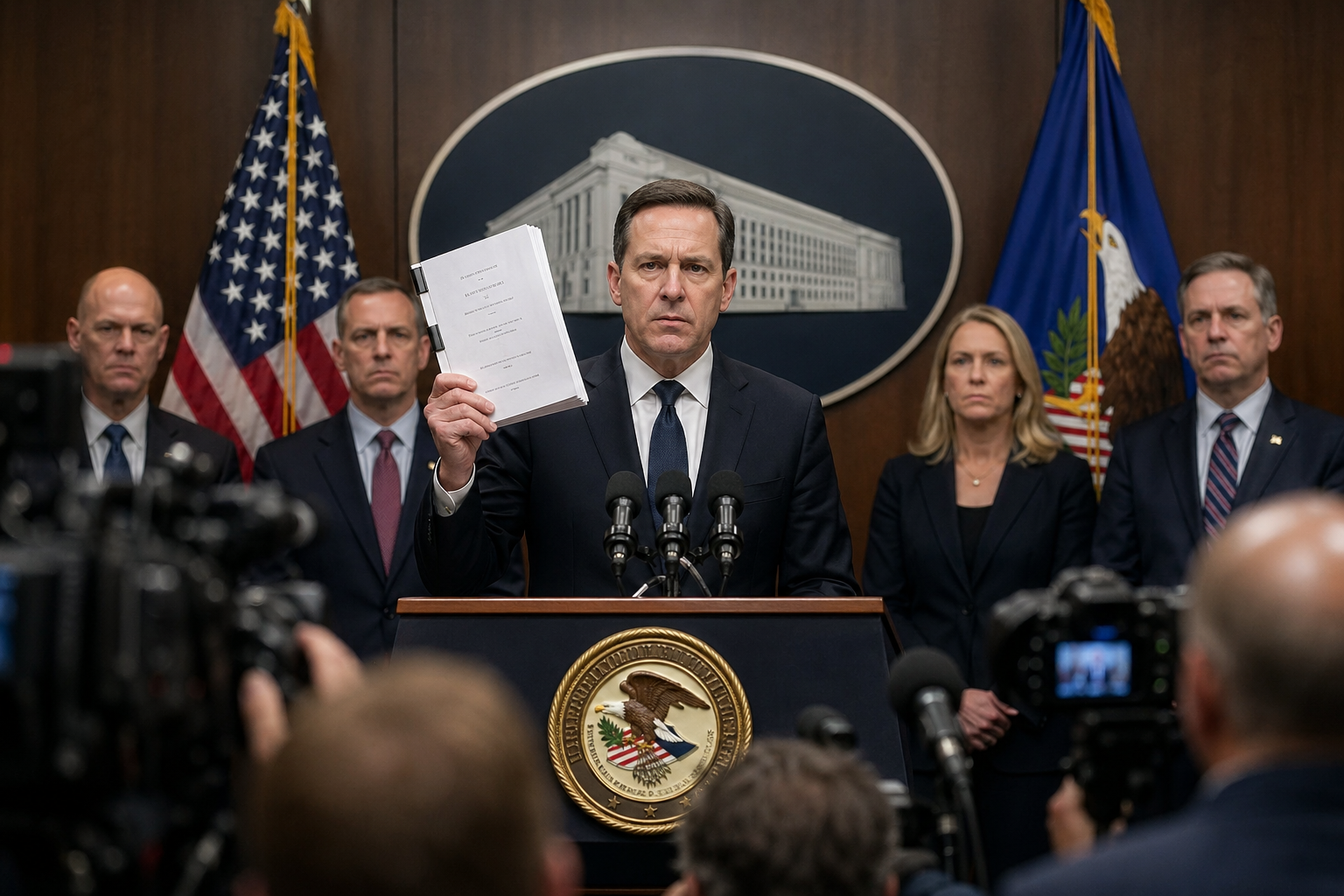
The Department of Justice has indicted the Southern Poverty Law Center on federal fraud charges, alleging the organization secretly paid an embedded informant over $270,000 — an operative who attended planning meetings for the 2017 Charlottesville “Unite the Right” rally and may have helped coordinate transportation for participants.
A Watchdog Under Indictment
The SPLC has long positioned itself as the nation’s premier watchdog against hate groups and extremism. Founded in 1971, it has been cited by major media outlets, referenced by law enforcement agencies, and brought in hundreds of millions in donations as a self-described fighter of racism and white supremacy. Its “hate group” designations have shaped political discourse for decades.
But questions about the organization’s methods have mounted for years. Former SPLC employees have accused leadership of self-dealing and creating a hostile work environment. Critics have long alleged that the SPLC profits from the very outrage and fear it claims to combat. The new indictment takes those criticisms out of the realm of opinion and into federal court.
The Informant at the Center of It All
According to the federal indictment, the SPLC maintained a paid informant — identified in court documents as “F-37” — for nearly a decade, from 2015 to 2023. F-37 was embedded inside the white supremacist movement the SPLC claimed to be fighting. Federal prosecutors allege that F-37 attended planning sessions for the 2017 rally in Charlottesville at the SPLC’s direction and may have helped coordinate transportation for participants.
One woman was killed and dozens were injured when a car plowed into a crowd of counter-protesters at that rally. It became one of the most polarizing events in recent American history. The indictment alleges F-37 was participating in online leadership chats that helped plan the event while the SPLC publicly presented itself as the nation’s leading voice against extremism.
The Fundraising Explosion That Followed
Here is where the indictment becomes most explosive. In October 2017, just weeks after Charlottesville, the SPLC launched a major fundraising campaign built around the violence. The results were staggering. SPLC donations exploded from $50 million in 2016 to $132 million in 2017 — a 164 percent increase in a single year. Federal prosecutors now allege the organization was cashing in on a tragedy its own paid operative may have helped enable.
The SPLC Fires Back
The SPLC has pushed back hard, calling the charges politically motivated. In a statement, the organization insisted it conducts legitimate intelligence work on extremist groups and denied any wrongdoing. Legal experts note that prosecutors will need to prove SPLC leadership knew what F-37 was doing at Charlottesville and chose to fundraise off the aftermath anyway. The case is expected to proceed slowly, with both sides filing extensive pretrial motions.
For conservative critics who have spent years arguing the SPLC operates more as a fundraising machine than a legitimate civil rights organization, the indictment feels like validation. For supporters, it is being framed as a politically motivated attack on a vital institution. Either way, a federal indictment is not an opinion — it is a legal proceeding with evidence behind it.
What This Means for Americans
If the government’s case holds up, it would fundamentally rewrite the legacy of one of America’s most powerful liberal nonprofits. Millions of Americans donated to the SPLC believing their money went toward fighting extremism. The indictment raises a deeply uncomfortable question: were those donations funding the infrastructure that made Charlottesville possible? At minimum, it demands a full reckoning with how the SPLC built its empire — and who ultimately paid the price.
Stay informed on the stories that matter most. Follow Your Daily Updates on Facebook and bookmark yourdailyupdates.news for breaking news and analysis.