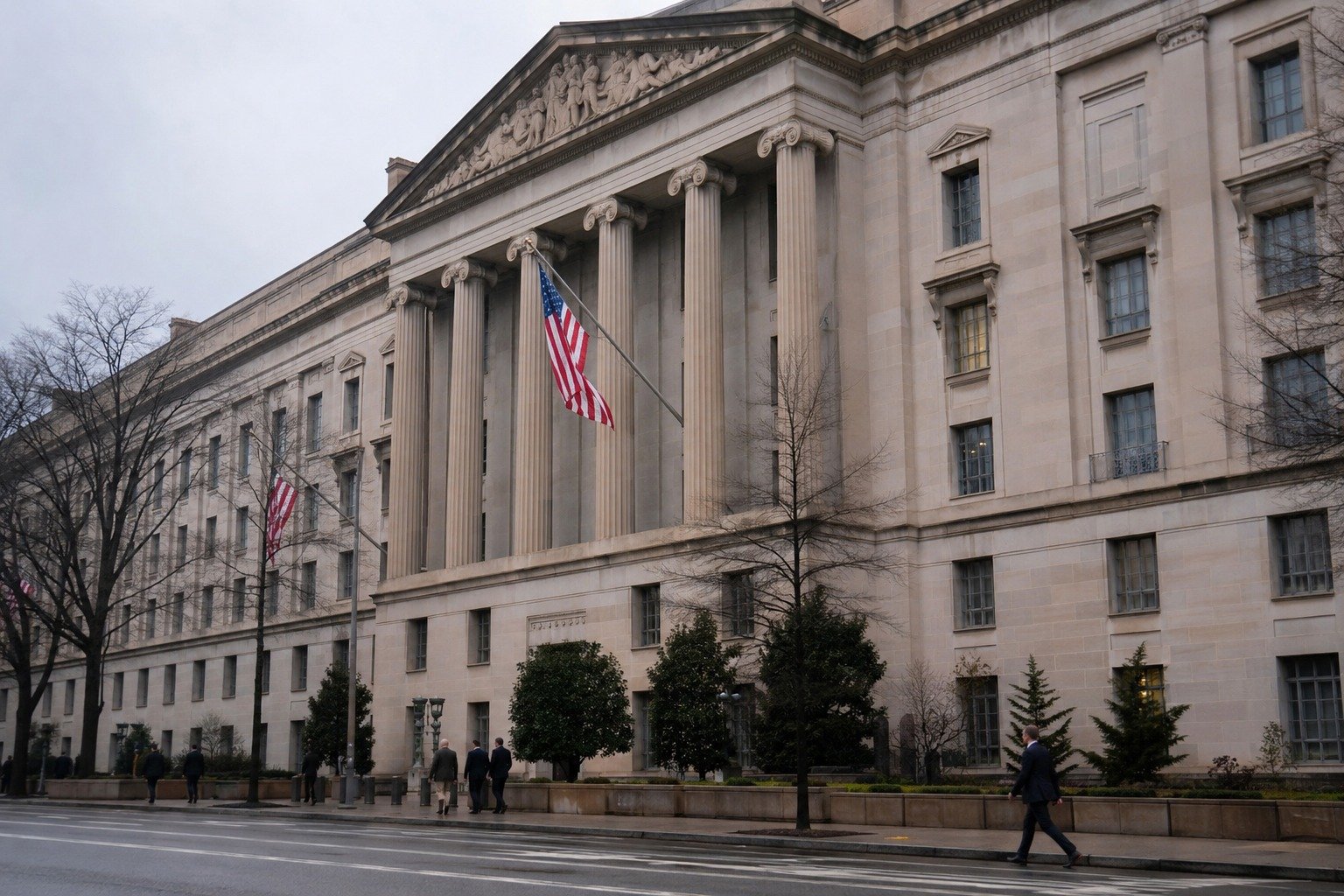
It is now official, and for the first time it is in writing. A Justice Department attorney has told two federal courts that the $1.776 billion “Anti-Weaponization Fund” has “not been set up and is now not going forward,” marking the clearest signal yet that one of the Trump administration’s most contested spending plans is dead.
The filings, submitted in federal courts in Alexandria, Virginia, and Washington, D.C., represent the first time the administration has committed the fund’s demise to paper. Days earlier, Acting Attorney General Todd Blanche told a House Appropriations subcommittee the same thing, saying the department was “not moving forward with the fund” — though at the time he declined to put that commitment in writing.
What the Fund Was Supposed to Do
The Anti-Weaponization Fund was announced just last month as part of a settlement between President Trump and the Internal Revenue Service. The stated purpose was to compensate people who claimed they had been wrongly targeted by the federal government under the Biden administration. The price tag was steep: nearly $1.8 billion in taxpayer money.
From the start, the fund drew sharp questions. Critics wanted to know exactly who would be eligible to collect, how claims would be judged, and what guardrails would prevent the money from becoming a political slush fund. The answers, lawmakers argued, were never clear.
How It Fell Apart
The plan unraveled quickly once members of Congress began pressing a single, simple question: who, exactly, would get the cash? Scrutiny intensified over whether the money could flow to Trump allies and to defendants charged in connection with the January 6 attack on the Capitol. Within days, the administration began backing away.
In its court filings, the Justice Department now argues that the lawsuits challenging the fund are moot — because, the government says, there is no longer a live dispute for the courts to resolve. Senior officials wrote that the two sets of plaintiffs who sued over the fund lack the legal standing to do so, and that with the fund abandoned there is nothing left to litigate.
A Mixed Message From the Top
There is one notable wrinkle. Even as government lawyers told the courts the fund was finished, President Trump told reporters he was not certain it was truly dead, and said he still favored compensating January 6 defendants. That leaves an unusual gap between what the Justice Department has filed in court and what the president is signaling publicly.
For now, the legal record is the more concrete of the two. A court filing carries weight that an off-the-cuff remark does not, and the department’s written statement that the fund is “not going forward” is the document the courts will act on.
What This Means for Americans
At its core, this was a question about taxpayer money — nearly $1.8 billion of it — and who would have controlled where it went. The decision to abandon the fund means that money will not be paid out, at least not through this mechanism. It also underscores the role congressional oversight can play: it was lawmakers demanding accountability over eligibility that helped force the reversal. For taxpayers, the episode is a reminder that large spending commitments can collapse when they cannot withstand basic public questions about who benefits.
Stay informed on the stories that matter most. Follow Your Daily Updates on Facebook and bookmark yourdailyupdates.news for breaking news and analysis.