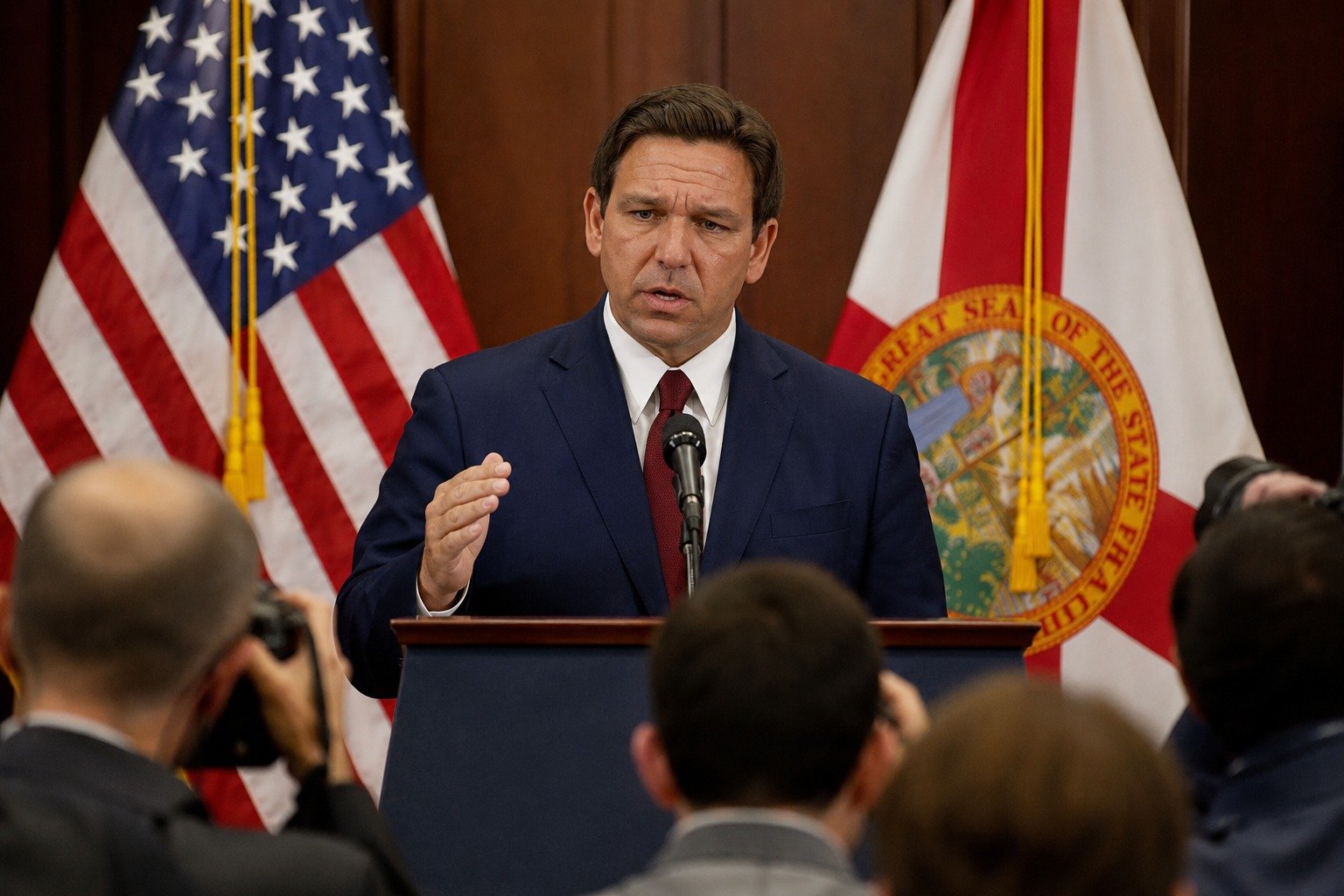
A federal appeals court has struck down the centerpiece of Florida Governor Ron DeSantis’s war on “woke” education. On July 7, 2026, the 11th U.S. Circuit Court of Appeals ruled 2-1 that the higher-education provisions of Florida’s Stop WOKE Act violate the First Amendment, keeping the law’s restrictions on college and university classrooms frozen while the legal battle continues.
What the Court Decided
The panel affirmed a lower court’s preliminary injunction blocking the university provisions of the 2022 law, formally known as the Individual Freedom Act. Writing for the majority, Judge Britt Grant – an appointee of President Trump – called the measure a “breathtaking assertion of power to ban unpopular ideas.” She was joined by Judge Charles Wilson, a Clinton appointee, forming a bipartisan majority against the statute.
Crucially, the ruling did not erase the entire law. It struck the provisions governing what professors may teach in Florida’s public universities, while leaving other parts of the statute in place. Because the decision affirms a preliminary injunction rather than issuing a final judgment, the higher-education restrictions remain blocked and unenforceable as the case proceeds.
Background: The Stop WOKE Act
Signed in 2022, the Stop WOKE Act was one of DeSantis’s signature culture-war measures. It restricted how concepts related to race, gender, and privilege could be discussed in Florida workplaces and public universities, and it exposed professors to consequences for teaching certain ideas about systemic inequality. Supporters framed it as a shield against mandatory ideological instruction. Critics called it exactly what the court described – a government attempt to dictate which ideas are acceptable in the classroom.
The lawsuit was brought by university professors who argued the law chilled academic freedom and forced them to self-censor. Lower courts had already sided with them, and this appellate ruling now cements that position at a higher level while the litigation plays out.
Reactions and What Comes Next
Free-speech advocates and higher-education groups hailed the decision as a landmark defense of the First Amendment on college campuses. That the strongest language came from a Trump-appointed judge underscored that the ruling was grounded in constitutional principle rather than partisan politics.
The fight is not necessarily over. Florida can ask the full 11th Circuit to rehear the case en banc, or petition the U.S. Supreme Court to take it up. For now, however, the university provisions stay blocked, and Florida’s professors retain the freedom to teach the full, and sometimes uncomfortable, history of race and gender in America.
What This Means for Americans
At its core, this case is about who gets to decide what students can learn. When a state can penalize professors for teaching ideas lawmakers dislike, the reach of government extends into every lecture hall. The court’s message was blunt: the government does not get to ban unpopular ideas. That principle protects not only Florida’s educators but the free exchange of ideas that public universities everywhere depend on.
Stay informed on the stories that matter most. Follow Your Daily Updates on Facebook and bookmark yourdailyupdates.news for breaking news and analysis.