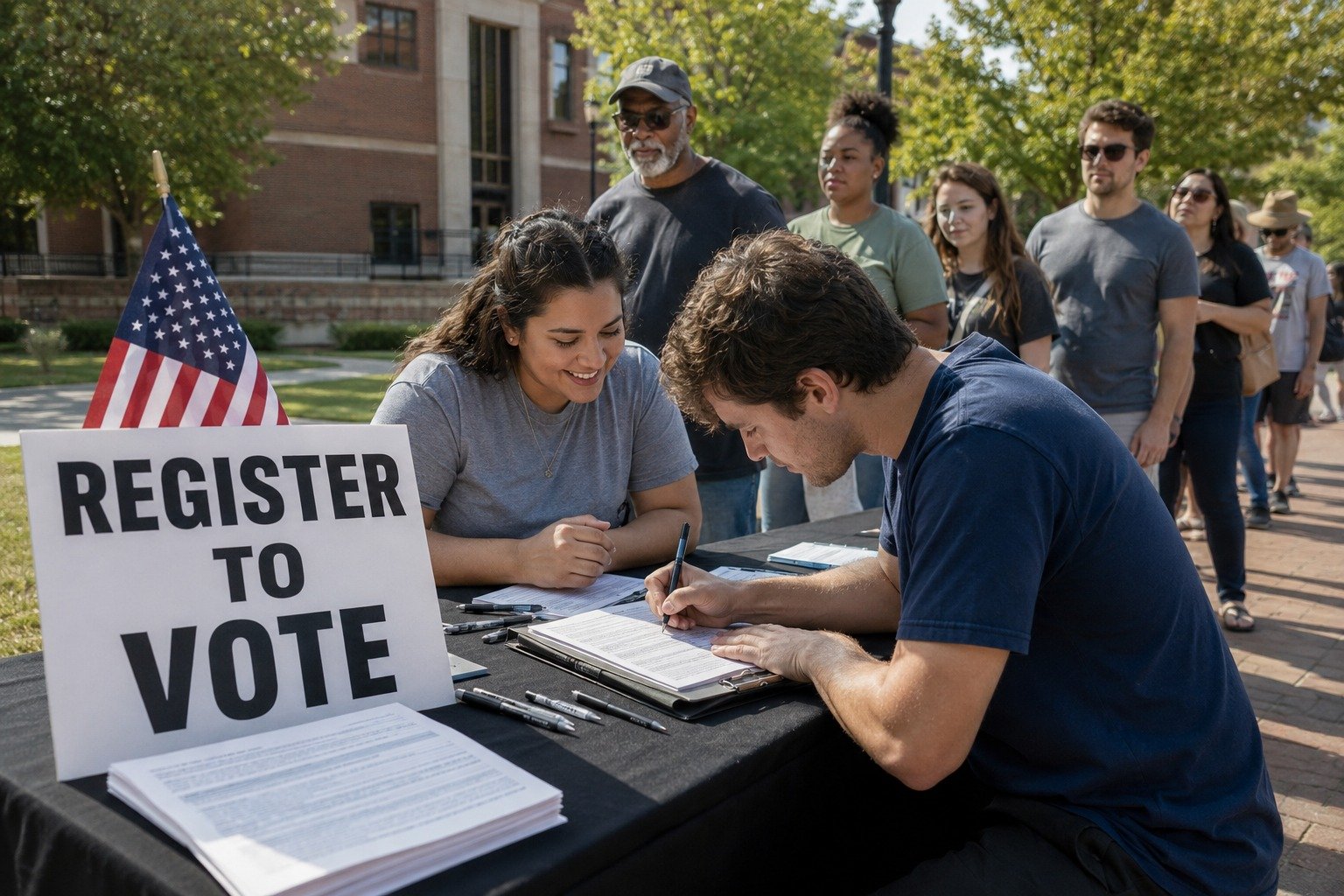
For the first time in roughly 15 years, Democrats out-registered Republicans among new voters in Oklahoma — a small but notable shift in one of the most reliably Republican states in the country. The edge is narrow, and it changes nothing about who holds power in the state today. But it is the kind of early signal that campaigns and political analysts tend to watch closely.
In May, Democrats signed up 64 more new voters than Republicans did, according to figures from the Oklahoma State Election Board. On its own, 64 voters is a rounding error in a state with roughly 2.4 million registered voters. What makes it worth a second look is the pattern around it: May was not a one-off. It capped a six-month stretch in which Democratic new-voter registrations have been quietly outpacing Republican ones.
What the Numbers Actually Say
It is important to be precise here, because numbers like these are easy to overstate. This is a story about who is registering right now — not about who is ahead. Republicans still hold a commanding lead in Oklahoma overall. They make up about 53% of the state’s registered voters, compared with roughly 25% for Democrats and about 20% who register as independents. That is a deep, structural advantage built up over more than a decade, and a 64-voter monthly edge does not come close to denting it.
In other words, nobody is flipping Oklahoma blue. The state’s overall partisan balance is not in question. What has changed is the direction of the flow at the margins — the new names being added to the rolls each month — and for the past six months, that flow has tilted, slightly, toward Democrats.
Where the Shift Is Happening
The movement is concentrated in Oklahoma’s population centers: Oklahoma City, Tulsa, and Lawton. These are the parts of the state with the most residents, the most new arrivals, and the most active registration drives — and they are where the Democratic new-voter edge has shown up most consistently.
That geography matters. Population growth and registration activity in cities often run ahead of the rest of a state, which is part of why urban registration trends are watched as a leading indicator. A shift that starts in the largest metros does not guarantee anything statewide, but it is frequently where broader changes first become visible.
Why Registration Trends Get Attention
New-voter registration is one of the earliest and least ambiguous measures of where political energy is moving. It comes before polling shifts, before fundraising surges, and well before any votes are cast. A single month can be noise. A six-month streak in a state’s biggest cities is harder to wave away.
None of this tells us why the shift is happening — whether it reflects organizing efforts, demographic change, dissatisfaction with the status quo, or simple statistical drift that will reverse next quarter. Registration data shows what is happening, not the motive behind it. But the consistency of the trend is exactly the sort of thing that prompts both parties to pay attention.
What This Means for Oklahomans
For most Oklahoma voters, the practical impact of a 64-voter monthly margin is essentially zero today. Republicans control the state’s politics, and one quiet trend in the registration rolls does not change that. What this development offers is information, not a verdict: a data point suggesting that the people choosing to register in the state’s largest cities are, for now, tilting in a different direction than they have in years.
Whether it amounts to anything is the open question. It could be a blip that fades by summer’s end. Or it could be the first faint sign of a longer shift. Either way, it is worth knowing — and worth watching as the months ahead fill in the rest of the picture.
Stay informed on the stories that matter most. Follow Your Daily Updates on Facebook and bookmark yourdailyupdates.news for breaking news and analysis.