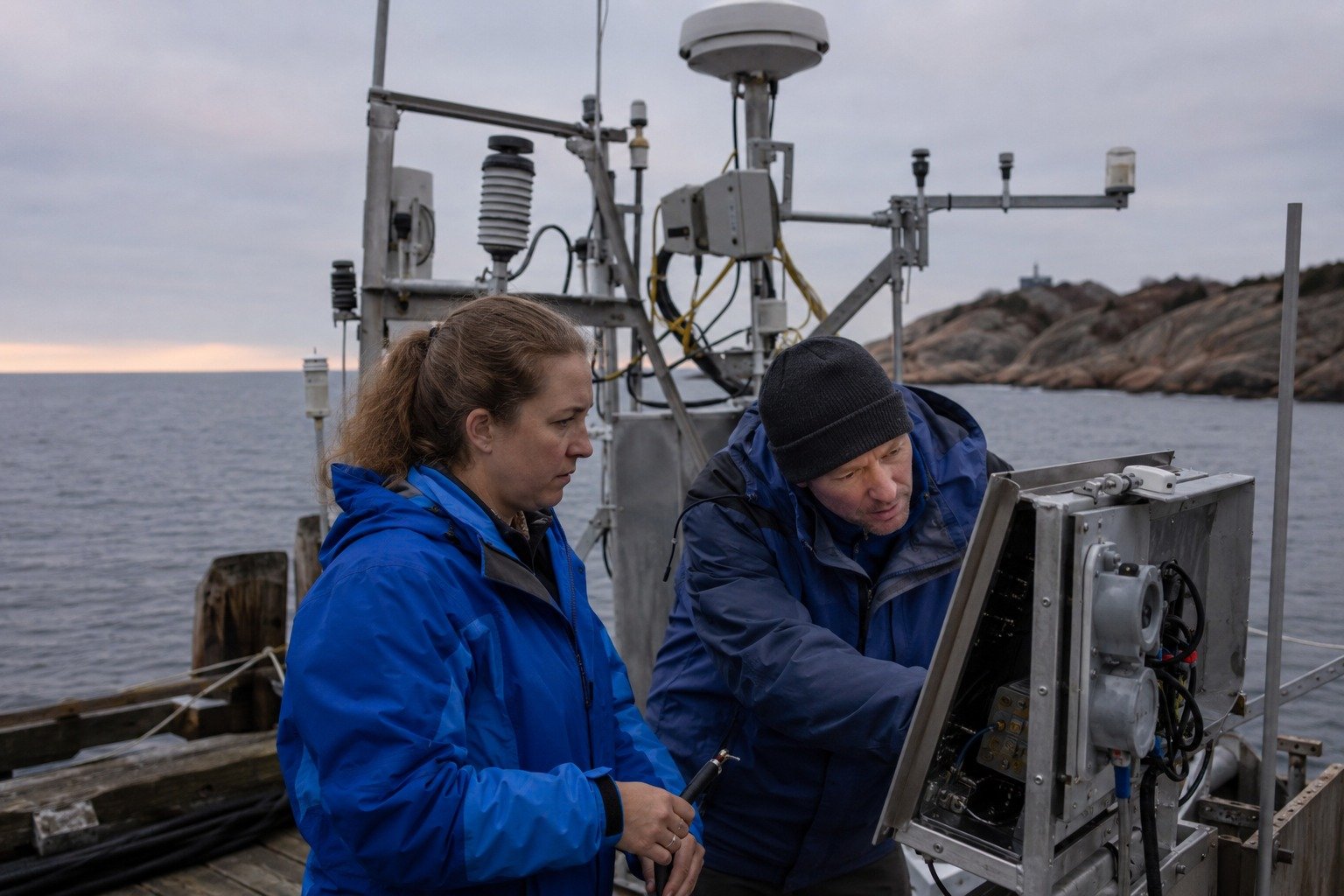
A group of congressional Democrats has vowed to fight the Trump administration’s decision to wind down the Ocean Observatories Initiative, a roughly $370 million network of more than 900 deep-sea instruments that has fed scientists round-the-clock data on the seas around the United States for the better part of a decade.
The lawmakers say they intend to press for answers, demand congressional hearings, and look for ways to restore funding before the equipment is pulled from the water and the data stream goes dark. The fight sets up another clash between Capitol Hill and the administration over how aggressively to cut federal science spending.
What the Network Does
The Ocean Observatories Initiative was built about a decade ago and is run through the National Science Foundation. It is one of the largest ocean-monitoring systems on the planet, designed to deliver continuous, real-time readings from some of the most remote and scientifically important stretches of water in the world.
Its instruments track ocean currents, marine heat waves, fish habitats, and the kind of coastal flooding that regularly hits East Coast communities. The hardware is spread across waters off Oregon, Washington, Alaska, and North Carolina, as well as a stretch of the North Atlantic between Greenland and Iceland known as the Irminger Sea — a region that plays an outsized role in shaping weather patterns across the Northern Hemisphere.
For researchers, that round-the-clock data has become a backbone for forecasting and climate study. Supporters of the program argue that once the instruments are removed, rebuilding that capability would be far more expensive and time-consuming than maintaining it.
Why the Cuts Are Happening
Backers of the decision say the system is simply too expensive to keep running, and that federal spending needs to be trimmed wherever possible. With pressure mounting to rein in the budget, programs with large price tags and specialized audiences have become frequent targets.
The administration has framed the move as part of a broader effort to control costs, describing it as a review rather than an abrupt shutdown. Officials have signaled that spending on long-running research infrastructure is being reexamined across multiple agencies.
The Pushback
Opponents counter that pulling the instruments leaves a major blind spot — one they warn could cost far more later when storms, floods, and fishing disruptions hit without early warning. They argue that ocean data is not a luxury but a public-safety tool that feeds directly into the forecasts coastal residents rely on.
The Democrats pledging to fight say the decision should not be finalized without a full public debate and a clear accounting of what would be lost. They are expected to push for hearings where agency officials would have to explain the timeline, the savings, and what, if anything, would replace the monitoring once it stops.
The contrast with other parts of the world has sharpened the argument. As the United States moves to scale back, the European Union has been expanding its own ocean-observation efforts, adding buoys, satellite tracking, and shared research data across member states. Critics of the cuts point to that divergence as evidence the U.S. is stepping back at exactly the wrong moment.
What This Means for Americans
For people living along the coasts, the stakes are practical. The data these instruments collect helps shape flood warnings, fishing forecasts, and storm preparation. If the network goes quiet, the question becomes who fills the gap — and whether anyone does. That uncertainty is at the heart of the fight now playing out in Washington, and it is unlikely to be resolved quietly.
Stay informed on the stories that matter most. Follow Your Daily Updates on Facebook and bookmark yourdailyupdates.news for breaking news and analysis.