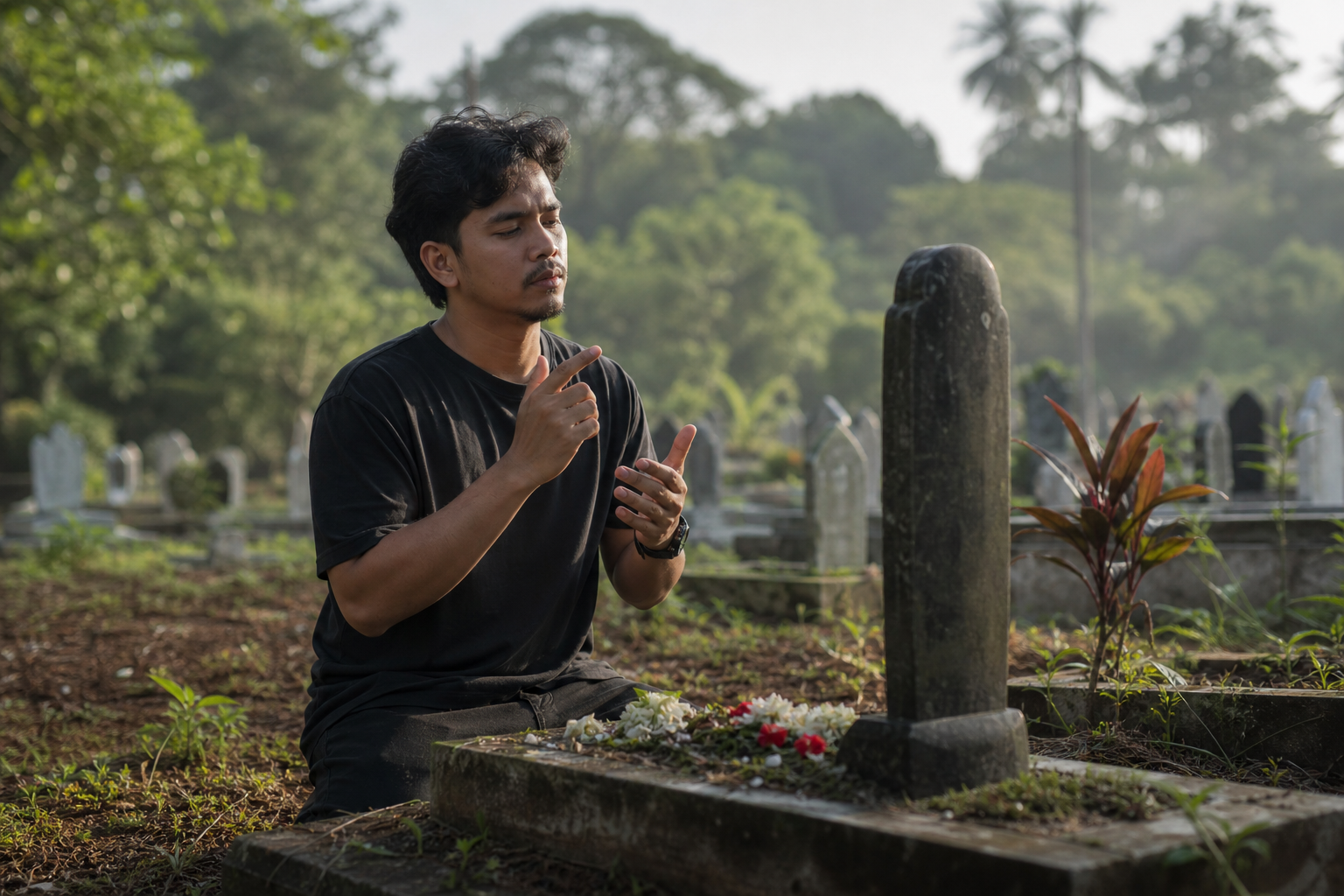
Hafizi Hamdan is deaf. Every Friday, he makes the same trip — to his mother’s grave in Malaysia, where he kneels at her headstone and does what he has always done. He talks to her. In sign language.
His mother died of ovarian cancer. In the time since, the house went quiet in a way that had nothing to do with sound. Hafizi has described their relationship as close — the kind where there was always something to say. For him, her death didn’t end that. It just changed where the conversation happens.
Six Seconds That Traveled the World
His aunt filmed one of those Friday visits. The clip is six seconds long. In it, Hafizi prays at the headstone, then begins to sign — slow, deliberate hand movements directed at the stone. He pauses. He waves goodbye. He stands and walks away. There are no words in the video. There don’t need to be.
That six seconds has now been seen millions of times across social media. It spread the way things spread when they hit something true — not because it was dramatic, but because it was precise. The grief in the video is specific and quiet. It doesn’t perform. It just is.
In interviews following the clip’s viral spread, Hafizi spoke about what the visits mean to him. He said his mother’s absence left the house in a different kind of silence than the one he had always known. He still makes the trip every week. He still has plenty to tell her. The grave is just where he goes to do it.
The Recognition That Made It Spread
What the clip captured isn’t unusual in the strictest sense — people visit graves. People talk to the dead. That impulse is ancient and nearly universal. What made Hafizi’s video travel so far is something more specific: the image of a person using the only language available to him, directing it at someone who can no longer receive it, and doing it anyway. Every week. Without stopping.
For deaf individuals, sign language isn’t an accommodation — it’s the primary language, the one that carries the full weight of thought and feeling and memory. Watching Hafizi sign at his mother’s grave is watching someone refuse to let death close a conversation. The fact that she can’t see his hands doesn’t appear to factor into his calculation.
What This Means for Anyone Who Has Lost Someone
Most people have someone they still want to talk to. A parent, a friend, a person who knew them before everything changed. The problem grief creates isn’t just sadness — it’s the specific frustration of having things left to say with nowhere to say them. Hafizi didn’t solve that problem in any permanent way. He just found a place to go and kept going back.
That’s what the six seconds shows. Not a miracle. Not a resolution. Just a man who found a way to keep doing something that mattered to him, every week, without making a production of it — until his aunt happened to film it, and the rest of the world recognized something it couldn’t quite name.
Stay informed on the stories that matter most. Follow Your Daily Updates on Facebook and bookmark yourdailyupdates.news for breaking news and analysis.