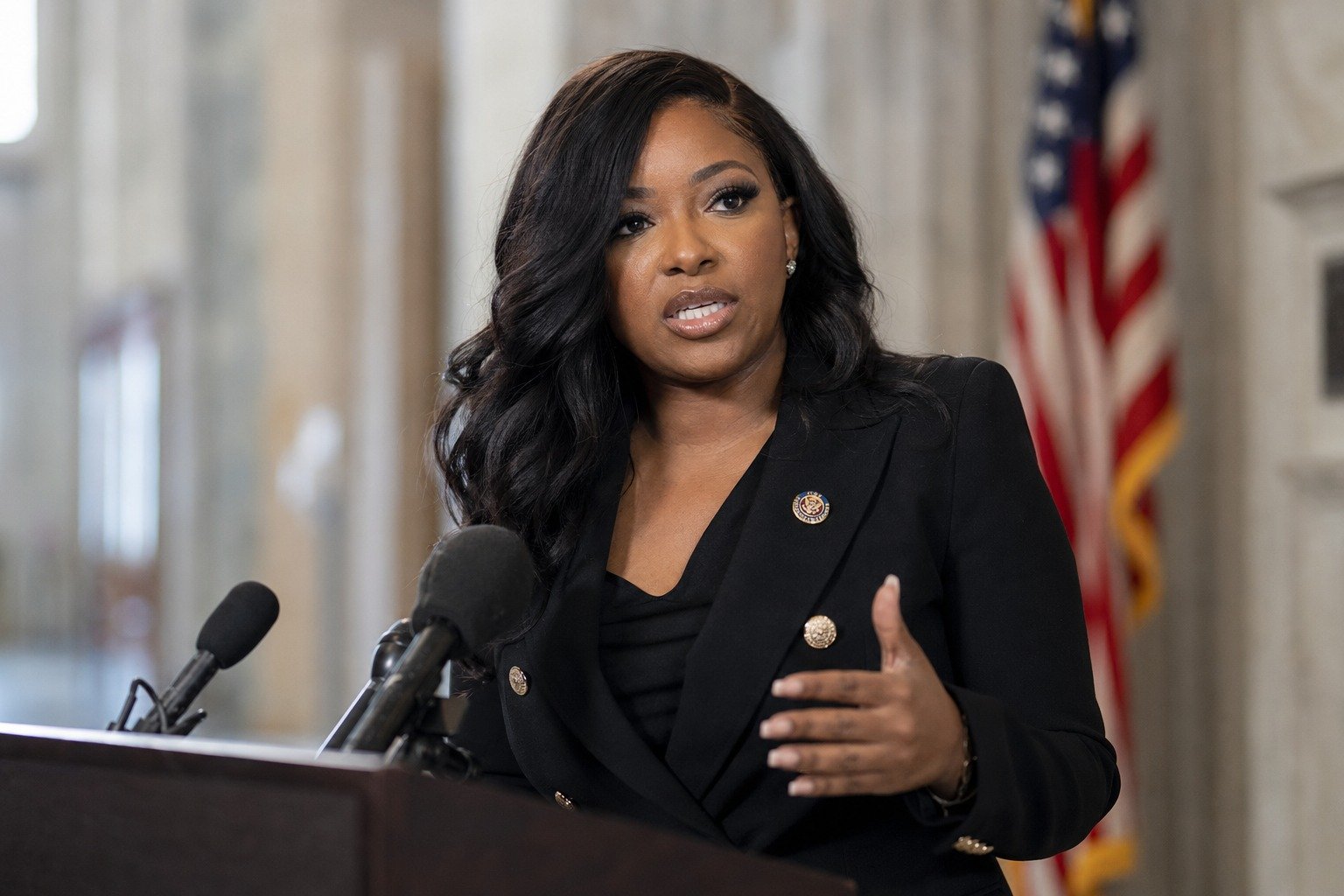
Rep. Jasmine Crockett is trying to shut off a $1.7 billion spigot before any more of it flows. The Texas Democrat has introduced the STOP TRUMP Act, a bill built to block taxpayer money from being used to compensate the people who stormed the U.S. Capitol on January 6 — and to demand that any money already paid out be returned.
The measure, introduced in May, carries a deliberately pointed name: the “Stop Taxpayer-funded Reimbursement for Unlawful Misconduct by Presidents Act.” Its target is a Justice Department settlement that would establish a roughly $1.7 billion compensation fund for January 6 defendants. Crockett’s bill would cut off the federal money behind it.
What the Bill Would Actually Do
At its core, the STOP TRUMP Act would prohibit the use of federal funds — including the federal Judgment Fund — for any settlement that benefits the president, his immediate family, businesses or entities affiliated with him, or his political appointees. The Judgment Fund is an obscure but powerful tool: a standing federal account the government taps to quietly pay legal settlements and judgments, often without a fresh vote from Congress.
Crockett’s bill wouldn’t stop at future payments. It is written to void settlements already on the books that fit that description and to require the money to be paid back — a clawback provision aimed at recovering funds that have already been disbursed. In plain terms, the proposal seeks two things at once: no taxpayer-funded reward for the rioters going forward, and the return of anything already handed out.
Why the Judgment Fund Matters
The reason the Judgment Fund is central to this fight is that it operates largely out of public view. Because it is a permanent appropriation, money can leave it without the kind of high-profile congressional debate that a fresh spending bill would trigger. Crockett’s argument is that an account designed to settle the government’s ordinary legal liabilities should never become a quiet pipeline for politically charged payouts that benefit the president and people connected to the Capitol attack.
Framing the settlement as a use of public money — rather than a private matter — is what gives the bill its accountability edge. Every dollar in that fund is a taxpayer dollar, and Crockett is betting that voters across the political spectrum will balk at the idea of those dollars compensating people convicted in connection with January 6.
An Introduced Bill, Not a Law
One crucial caveat runs through this entire story: the STOP TRUMP Act is a newly introduced bill, not enacted law. Introducing legislation is the first step in a long process, and this measure has not passed the House, the Senate, or been signed into anything binding. The clawback Crockett is calling for exists in the text of the proposal — it is not currently in effect.
The political math also matters. Crockett is a member of the House minority, which means her bill faces steep odds of even reaching a floor vote, let alone becoming law. As a practical matter, minority-party legislation like this often functions as a statement of principle and a marker for a future fight as much as a realistic path to enactment.
What This Means for Americans
Even if the bill never reaches the president’s desk, it forces a direct question into the open: should public money ever be used to compensate the people who stormed the Capitol, and the officials connected to the administration that wants the fund created? Crockett’s challenge is less about the immediate vote count and more about whether taxpayers should be on the hook at all. For ordinary Americans, the underlying issue is simple — it is their money, and the debate is over who decides where it goes and who benefits.
Stay informed on the stories that matter most. Follow Your Daily Updates on Facebook and bookmark yourdailyupdates.news for breaking news and analysis.