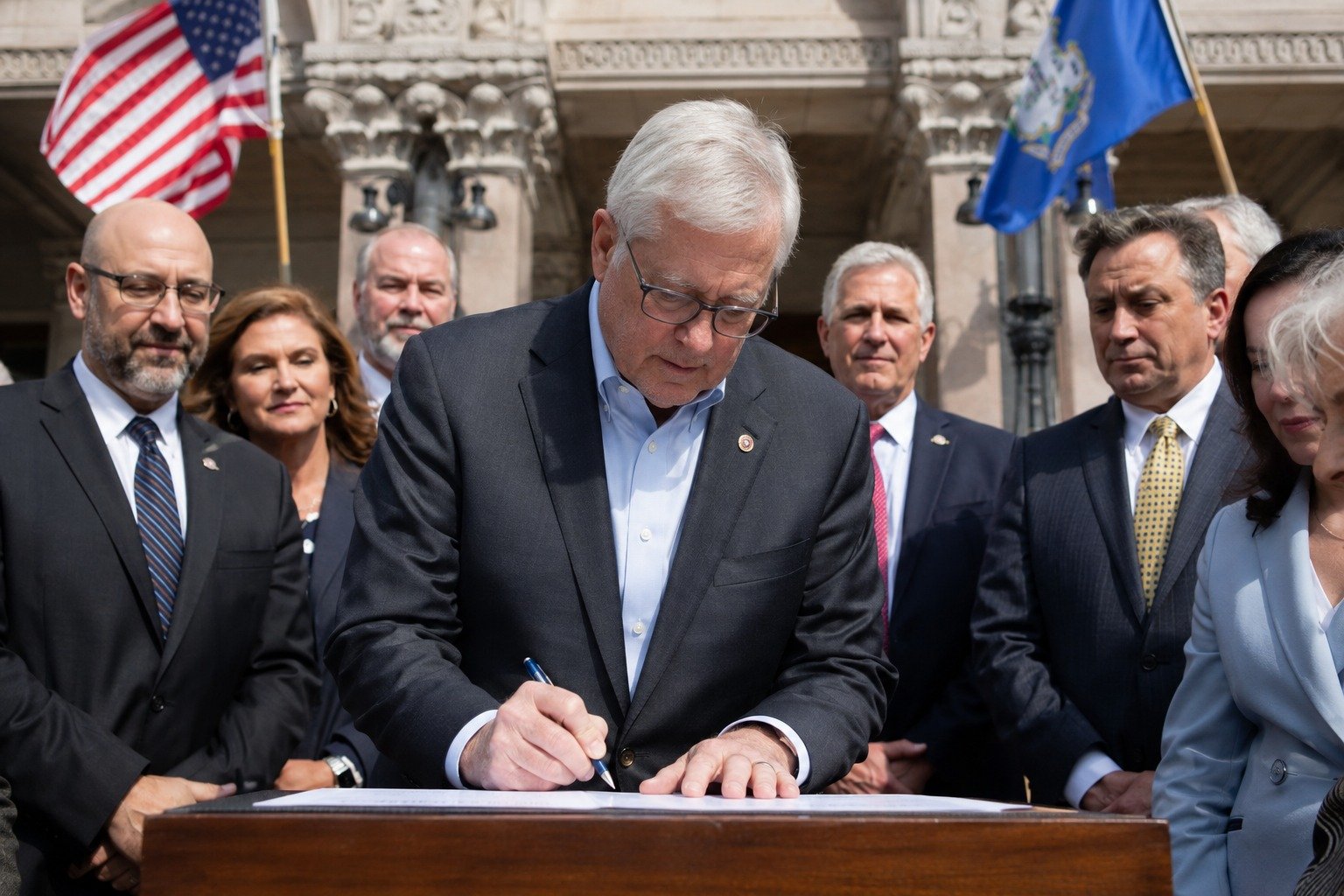
Connecticut Gov. Ned Lamont has signed SB 397 into law, enacting one of the most sweeping state-level restrictions on how federal immigration agents and other law enforcement officers can operate inside the state. The governor signed the bill outside the state Supreme Court in Hartford, calling it a measure to protect residents in their most vulnerable moments.
What the Law Does
At the heart of the legislation is the creation of “protected areas.” Under the new law, schools, hospitals, social service agency facilities, and houses of worship are designated as places where a person can no longer be arrested solely for a civil offense – such as an immigration violation – without a judicial warrant. The idea is to keep enforcement actions away from the everyday institutions families rely on for education, medical care, and community life.
But the bill reaches well beyond those protected zones. It bars law enforcement officers from wearing masks while on duty, a provision aimed at ensuring officers can be identified. It allows Connecticut residents to sue federal agents in state court for violating their constitutional rights. It grants the state inspector general authority to investigate incidents in which federal agents use deadly force. And it limits how long automated license-plate-reader data can be retained – capping it at 21 days – while prohibiting that data from being used for immigration enforcement.
A Sharply Divided Vote
The measure cleared the legislature along largely partisan lines. The state House passed it 91-53, with four Democrats joining every Republican in opposition. The Senate approved it on a party-line vote. The split underscored how contentious the bill became as it moved through the Capitol.
“The people of Connecticut should not fear for their safety when visiting hospitals, schools, and religious and government buildings,” Lamont said at the signing.
The Constitutional Fight Ahead
Republicans have raised a fundamental legal objection. House Minority Leader Vincent Candelora and other GOP lawmakers argued that the Constitution’s Supremacy Clause prevents a state from regulating federal officers in the way the law attempts. They also warned that the measure could expose local and state police to new liability, complicating their work and inviting lawsuits.
Supporters counter that the law is a constitutional safeguard against federal overreach, designed to protect residents’ rights without obstructing legitimate law enforcement. They frame the protected-areas provision as a commonsense limit that keeps civil immigration enforcement out of sensitive spaces. Critics, meanwhile, predict the law will draw a court challenge and could hamper cooperation between state and federal authorities.
What This Means for Americans
For Connecticut residents, the immediate effect is a new set of legal protections around the places they visit most often – and a new path to sue if they believe their rights were violated. For the rest of the country, the law is a test case. If it survives the expected legal challenge, other states could follow with similar “protected areas” measures. If the courts strike it down on Supremacy Clause grounds, it could set a limit on how far states can go in regulating federal enforcement. Either way, the outcome will shape the boundary between state and federal power for years to come.
Stay informed on the stories that matter most. Follow Your Daily Updates on Facebook and bookmark yourdailyupdates.news for breaking news and analysis.