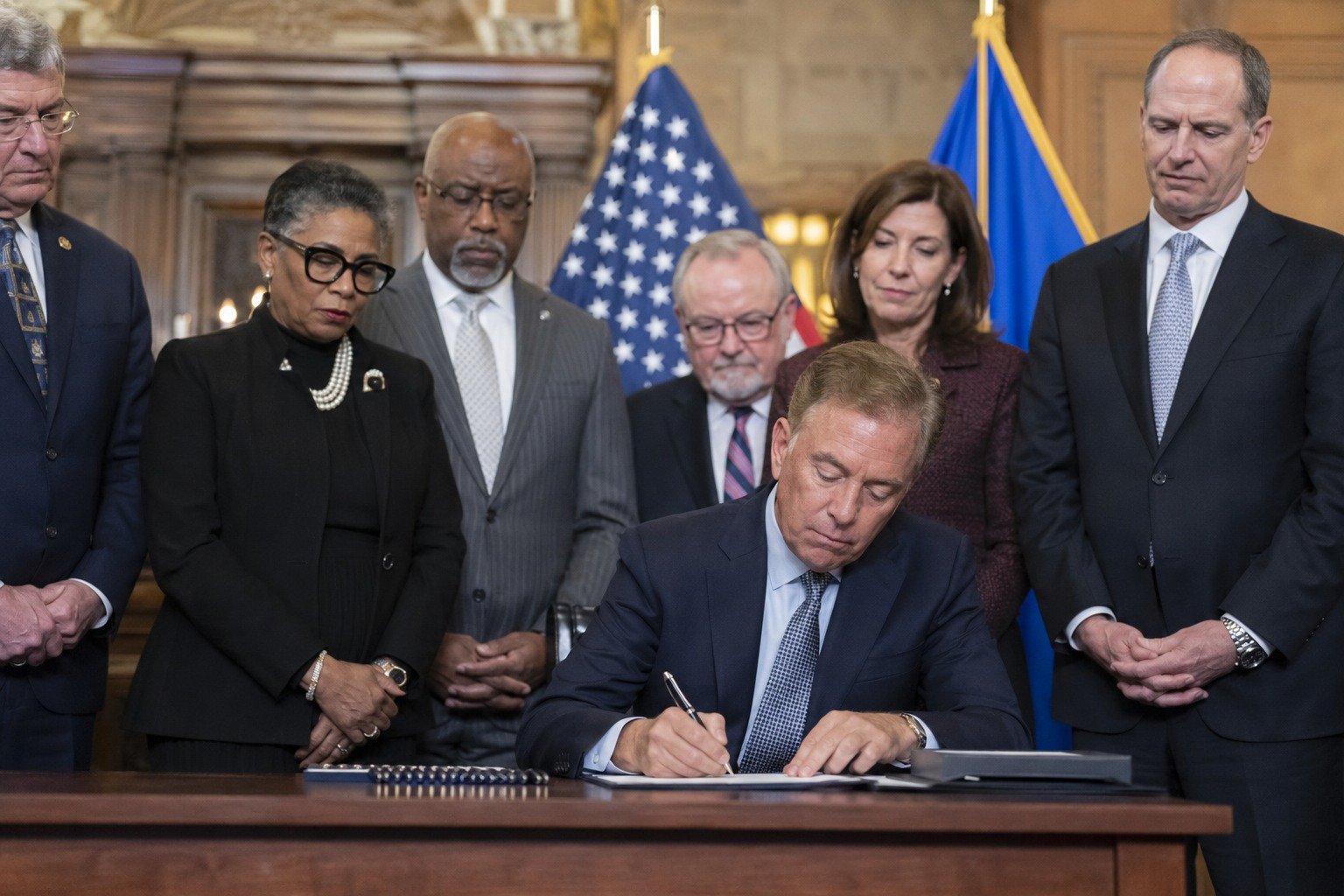
Connecticut has a new law on the books that redraws the boundaries of where federal immigration agents can operate inside the state. Governor Ned Lamont signed Senate Bill 397 – formally titled “An Act Concerning Democracy and Government Accountability” – and one of its central provisions blocks Immigration and Customs Enforcement from making warrantless arrests in schools, hospitals, churches, and courthouses.
The measure is one of the most direct attempts by a state to limit federal immigration enforcement on its own soil, and it has already triggered a legal fight with Washington.
What the Law Actually Does
At its core, SB 397 designates certain locations as off-limits for warrantless immigration arrests. Schools, hospitals, houses of worship, and courthouses are treated as protected ground – places lawmakers argue people should be able to enter to learn, seek medical care, worship, or pursue their legal rights without fear of being detained on the spot. The section restricting warrantless arrests in those locations is scheduled to take effect in October.
But the law reaches beyond location limits. It also creates a path for individuals who believe their rights were violated during an enforcement action to file a lawsuit against the agents involved. And it requires federal, state, and local officers to show their faces and wear visible badges or name tags while carrying out immigration enforcement – a response to growing concern over masked, unidentified agents operating in communities.
Why It Matters
Immigration enforcement has historically been understood as a federal responsibility. The question SB 397 raises is how far a state can go in setting the terms for how that federal authority is exercised within its borders. Supporters frame the law as a transparency and accountability measure – a way to keep enforcement visible and to give people a remedy if their rights are violated.
Critics see it very differently. They argue that a state simply cannot dictate how federal agents do their jobs, and that carving out protected zones could effectively shield people who are in the country illegally from lawful arrest. To them, the law is an overstep that interferes with federal operations rather than reforming them.
The Legal Fight
The disagreement is no longer just rhetorical. The Trump administration has filed a lawsuit challenging the law, setting up a direct clash between Connecticut and the federal government over who ultimately controls immigration enforcement inside state lines. Connecticut officials have signaled they intend to defend the statute.
The outcome could carry weight well beyond Connecticut. If the law survives the challenge, other states may follow with similar protected-zone rules. If it is struck down, it would reinforce the principle that immigration enforcement remains firmly under federal control – and limit how much room states have to push back.
What This Means for Americans
For residents of Connecticut, the immediate effect is a set of new rules about where and how immigration agents can act, along with new legal tools for anyone who believes their rights were crossed. For the rest of the country, the case is a test of the line between protecting local communities and preserving federal law enforcement authority – a debate that touches courts, schools, and hospitals everywhere. However the lawsuit ends, it will help define how much say states have over enforcement within their own borders.
Stay informed on the stories that matter most. Follow Your Daily Updates on Facebook and bookmark yourdailyupdates.news for breaking news and analysis.