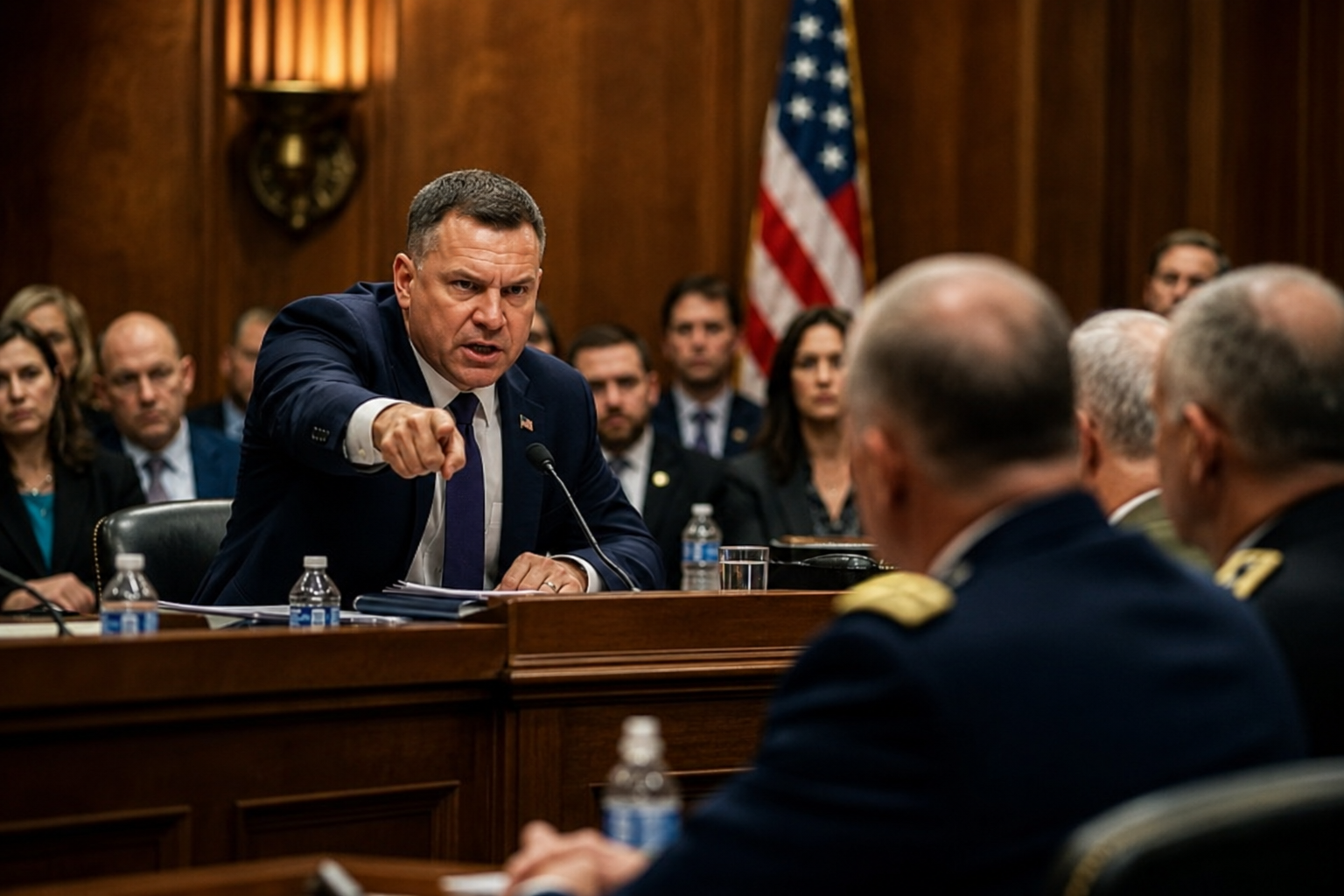
A sitting U.S. congressman went on national television and accused Defense Secretary Pete Hegseth of committing war crimes — then pointed out that the last people to run a comparable military operation were Nazi submarine captains who were tried at Nuremberg and executed. That’s where things stand with the Trump administration’s Caribbean drug interdiction campaign, which has now killed at least 186 people with almost no public scrutiny.
The Accusation
Rep. Seth Moulton (D-MA), a decorated Iraq War veteran and Harvard-educated Marine officer, appeared on CNN with anchor Erin Burnett this week. When asked directly whether he believed Hegseth was guilty of war crimes, Moulton didn’t hedge. “Absolutely,” he said. His reasoning is straightforward and legally specific: under international law, you cannot lawfully strike a vessel without first verifying that it poses a genuine threat. The U.S. military’s Caribbean operation — officially known as Operation Southern Spear — has involved striking small boats based on the assumption they carry drug traffickers. There is no reliable method of confirming who is actually aboard before a strike is ordered.
That’s the crux of Moulton’s legal argument. If the targets cannot be positively identified as combatants or criminals, then killing them violates the laws of armed conflict. Fishermen, civilians, and crew members who happen to be on the water at the wrong time could be among the dead — with no accountability and no way to verify who was actually hit.
The Nuremberg Comparison
Moulton’s most striking claim was the historical parallel. He argued that what Hegseth has authorized is structurally identical to the unrestricted submarine warfare conducted by Nazi Germany during World War II — operations that targeted vessels without distinguishing between military and civilian ships. Allied nations prosecuted German submarine commanders for exactly this at the Nuremberg trials. Those commanders were convicted of war crimes and executed. Moulton’s point is not rhetorical: it’s a direct legal argument that the same conduct cannot be war crimes when the Nazis do it and legal precedent when America does it.
The comparison carries weight coming from Moulton specifically. He isn’t a pacifist lawmaker making an anti-military argument — he’s a combat veteran who served four tours in Iraq, commanded a Marine rifle platoon, and has spent years on the House Armed Services Committee. When he says the operation looks like something prosecuted at Nuremberg, that’s a different level of credibility than a civilian making the same claim.
The Administration’s Defense
The Trump administration has pushed back hard. Officials maintain that Operation Southern Spear is a lawful and necessary counter-narcotics campaign targeting drug trafficking organizations that threaten American border security and communities. Hegseth has rejected any suggestion of wrongdoing, framing the operation as decisive military leadership against a genuine national security threat. Administration allies argue the operation has disrupted major drug shipments and that the legal authorities for the strikes are sound.
What neither the administration nor its critics have fully addressed publicly is the intelligence basis for each individual strike — specifically, how the military determines that a target vessel is carrying drugs before authorizing lethal force. That information gap is exactly what Moulton is pointing to. If the targeting process cannot reliably distinguish drug runners from fishermen, the legal foundation of the entire operation is shaky regardless of how the administration characterizes its intent.
What This Means for Americans
The 186 people killed in Caribbean drug boat strikes are not household names, and the operation has received remarkably little media attention relative to its scale. But the legal and precedent-setting questions it raises affect every American. If the U.S. military can conduct a lethal campaign in international waters with minimal oversight, no public debate, and no verified targeting process — and if that conduct is shielded from accountability by calling it counter-narcotics — that’s a significant expansion of executive war powers. Moulton is essentially asking Congress and the public to decide: does that concern you? If the Nuremberg standard means anything, it should.
Stay informed on the stories that matter most. Follow Your Daily Updates on Facebook and bookmark yourdailyupdates.news for breaking news and analysis.