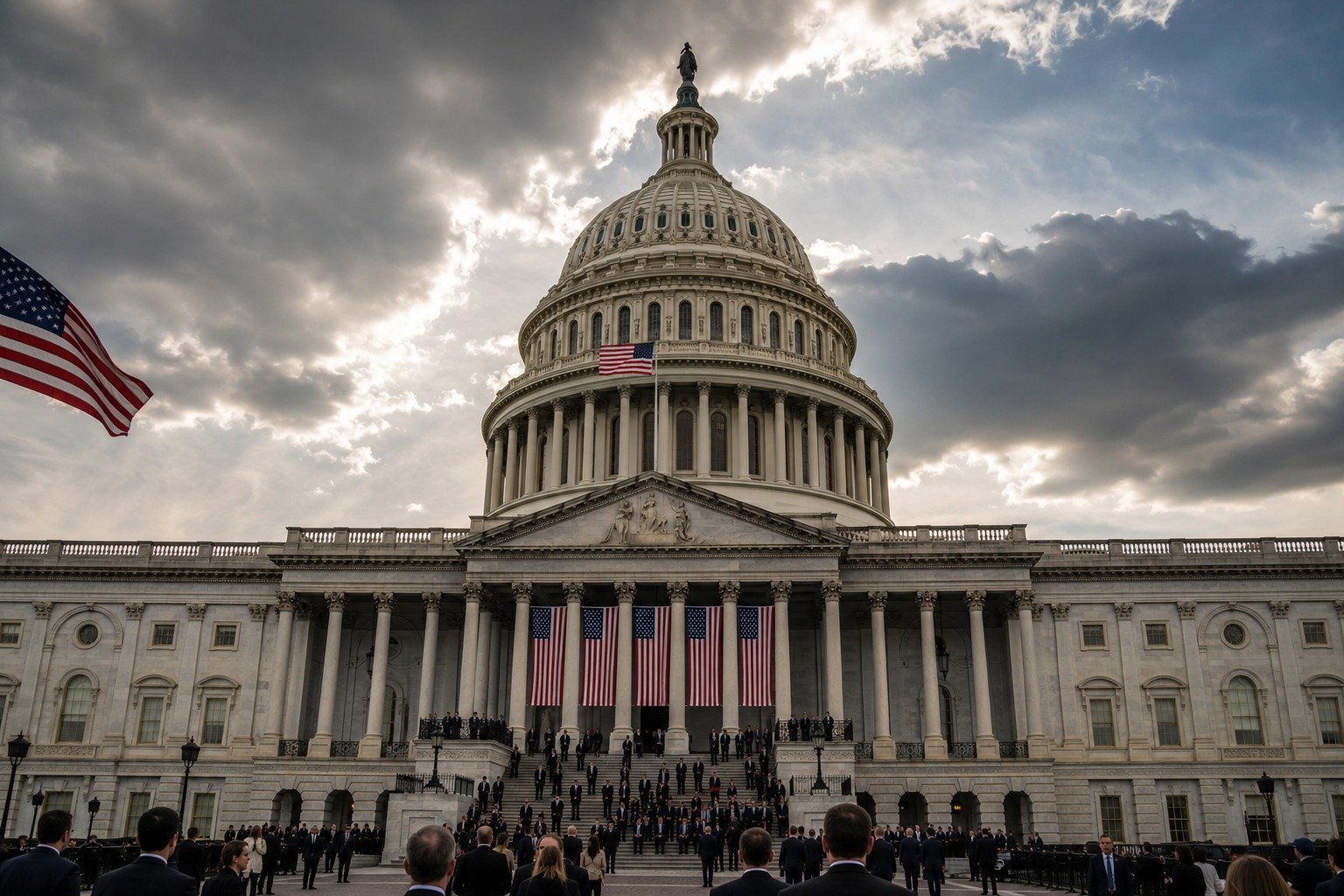
Congressional Democrats have formally moved to impeach President Donald Trump — and this time, some lawmakers want Vice President JD Vance removed from office alongside him. At least three separate impeachment resolutions have been introduced in the House this Congress, making 2026 one of the most aggressive years for impeachment efforts since Trump first took office.
What Democrats Have Actually Filed
The effort is not a single unified movement — it’s a series of individual resolutions filed by Democratic members of Congress. H.Res.353, H.Res.537, and H.Res.939 are the three primary articles of impeachment introduced so far this Congress. Each resolution targets different aspects of Trump’s conduct in office.
The charges range broadly: alleged abuse of presidential power, what Democrats describe as attacks on the federal judiciary, and conduct related to Trump’s military threats against Iran. Some of the resolutions are narrowly focused on a single incident; others attempt to build a broader case against the administration’s overall governance approach. The resolutions are not coordinated under a single Democratic leadership push — individual members have filed them independently, reflecting frustration within the caucus that leadership has not moved more aggressively.
The Push to Include Vance
Several Democratic lawmakers have gone even further than targeting Trump alone. Some have called for Vice President JD Vance’s removal as well — either through impeachment proceedings or by invoking the 25th Amendment, which allows the Cabinet and Vice President to remove a president deemed unable to discharge his duties. The calls to include Vance reflect a belief among some Democrats that the current administration’s problems are systemic, not limited to any one individual at the top.
It’s worth noting that impeaching a Vice President is constitutionally permitted but extraordinarily rare — it has never been done in American history. The logistical and political hurdles of pursuing dual impeachments simultaneously would be massive even if Democrats held the majority, which they currently do not.
The Political Reality: Why It’s Going Nowhere (For Now)
Republicans control the House of Representatives, and that single fact makes any impeachment vote a near-mathematical impossibility. For articles of impeachment to pass, a simple majority of the House must vote in favor — meaning Democrats would need to flip a significant number of Republican members, something that shows no signs of happening. Even if articles somehow passed the House, removing a president from office requires a two-thirds supermajority in the Senate, a threshold that would demand massive defections from the Republican caucus. No such coalition exists.
Democrats pushing these resolutions are well aware of the arithmetic. Their argument is different: they believe Congress has a constitutional and moral obligation to register its opposition to executive conduct it considers unlawful, regardless of whether removal is politically achievable. The vote itself, they argue, creates a public record — a statement that the Democratic minority formally views Trump’s actions as impeachable offenses, even if the majority disagrees.
What Republicans and the White House Are Saying
The Trump White House and Republican leadership have largely dismissed the impeachment push as political theater — a fundraising tool for Democrats rather than a serious constitutional exercise. Republican members have argued that the resolutions are designed to generate media attention and energize a Democratic base still frustrated by the results of the 2024 election, not to achieve any genuine legislative or constitutional outcome. Speaker allies have indicated there is no intention of bringing any impeachment resolution to the House floor for a vote.
What This Means for Americans
For most Americans, the immediate practical impact of these resolutions is minimal — they are not going to result in Trump or Vance leaving office. But the debate they’re generating is real, and it reflects a deep and ongoing disagreement about the boundaries of presidential power, the role of Congress as a check on the executive branch, and what accountability looks like when the opposition party holds no meaningful legislative leverage. Whether you support the effort or see it as political posturing, this is a conversation that will define the remaining years of the Trump administration.
Stay informed on the stories that matter most. Follow Your Daily Updates on Facebook and bookmark yourdailyupdates.news for breaking news and analysis.