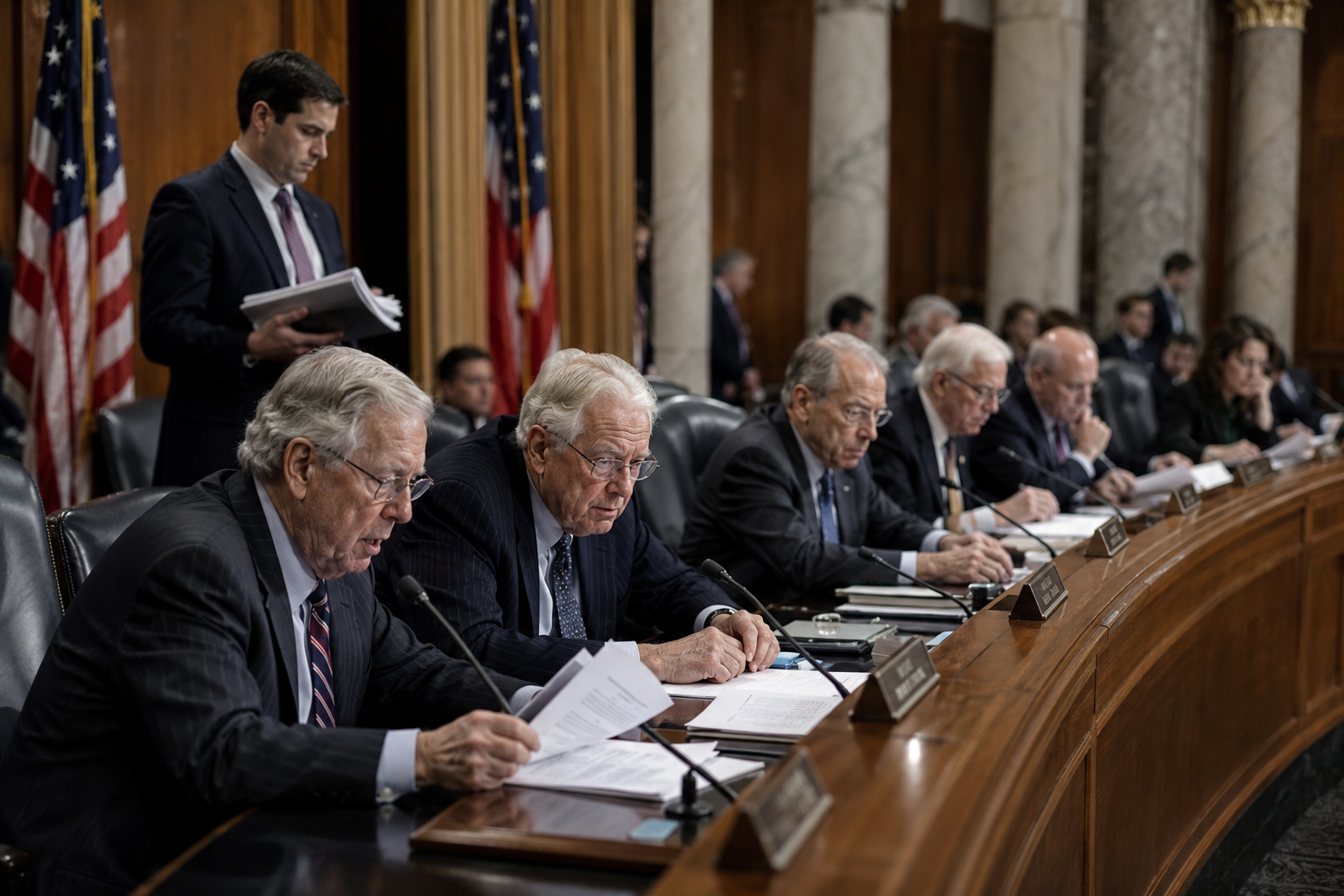
One in four members of Congress is currently over the age of 70 — and not a single one of them is required to pass any mental fitness test to hold office. That means lawmakers with life-and-death authority over war, the economy, healthcare, and your constitutional rights face zero cognitive accountability. Zero. It’s a gap that has fueled growing outrage among Americans who watch their own aging family members navigate cognitive decline, while their elected officials face no such scrutiny.
The Amendment That Would Have Changed Everything
Rep. Marie Gluesenkamp Perez, a Democrat representing Washington’s 3rd Congressional District, introduced an amendment that would have required basic cognitive testing for members of Congress aged 70 and older. The proposal was direct and limited in scope: if you want to continue legislating — drafting laws, casting votes, sitting on powerful committees — you must demonstrate that you are mentally fit to do so. It wasn’t a punishment. It was a baseline standard. The House voted it down.
The Floor Fight
The debate on the House floor was immediate and heated. Opponents of the amendment — many of them the older lawmakers it would have directly applied to — called it discriminatory, arguing that age-based requirements violate equal protection principles and set a dangerous precedent for who gets to serve in government. Supporters countered that the amendment wasn’t about age discrimination; it was about basic accountability to constituents who deserve to know their representative is mentally capable of doing the job. The vote split along generational lines as much as partisan ones, with younger members broadly supportive and older members largely opposed.
The Numbers Behind the Debate
There are currently 120 sitting members of Congress over the age of 70. That’s roughly one in four. Several have faced public scrutiny in recent years over visible signs of cognitive decline — moments captured on camera that went viral and sparked national conversations about fitness for office. Despite these incidents, Congress has no formal mechanism to evaluate whether its own members are mentally capable of serving. The institution that sets rules for everyone else has set no rules for itself on this front.
The Broader Debate It Sparked
The failed vote has reignited a national conversation that isn’t going away. Critics of the status quo point out that airline pilots, air traffic controllers, surgeons, and even truck drivers face age-related cognitive testing requirements before they’re allowed to keep performing high-stakes jobs. Members of Congress — who vote on military force, nuclear agreements, and the federal budget — face no equivalent standard. Defenders of the current system argue that elections serve as the accountability mechanism: if voters want younger or sharper representatives, they can vote accordingly.
What This Means for Americans
For millions of Americans — especially those who have watched a parent or grandparent struggle with cognitive decline — the disconnect is stark and personal. The people writing laws that govern nursing home care, Medicare, and Medicaid face no standard for their own cognitive fitness. Whether you believe this is a matter of constitutional principle or basic common sense, the failed amendment has made one thing undeniably clear: Congress has no interest in holding itself to the same accountability standards it applies to everyone else. That reality is now front and center in a national conversation that voters aren’t likely to drop anytime soon.
Stay informed on the stories that matter most. Follow Your Daily Updates on Facebook and bookmark yourdailyupdates.news for breaking news and analysis.