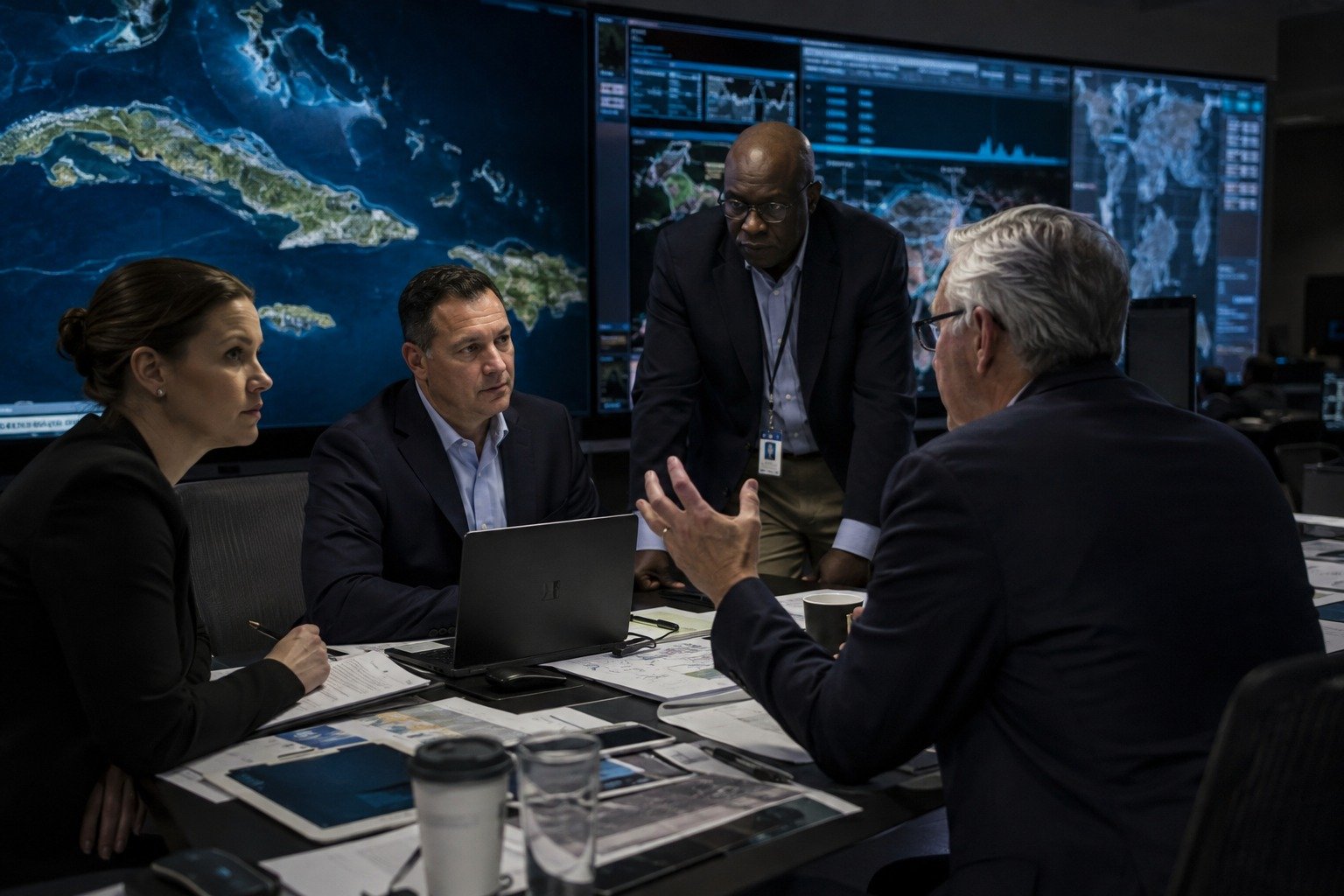
The Central Intelligence Agency has quietly assembled a dedicated task force aimed squarely at Cuba, according to a New York Times report published August 5, 2026. Officials familiar with the effort described its purpose in blunt terms: to rush more financial, human, and technical resources at the island, with the explicit goal of “creating fissures among the Cuban political elite.”
It is, by the account of the reporting, a covert program built to pressure and destabilize the leadership in Havana from the inside. And it does not stand alone. It is the sharpest escalation yet in a months-long campaign the Trump administration has directed at Cuba throughout 2026.
A Campaign Building for Months
The task force did not appear out of nowhere. CIA Director John Ratcliffe traveled to the region in mid-May to personally convey Washington’s demands to Cuban officials. Since then, both Politico and the Associated Press have separately reported an expanding covert and intelligence buildup focused on the island, corroborating the broad outlines of an intensifying American effort.
The pressure has come from several directions at once. The administration has tightened an energy and fuel squeeze on an economy already gripped by crisis, leaving ordinary Cubans facing blackouts and shortages. It has imposed fresh sanctions on GAESA, the sprawling military-run conglomerate that dominates much of Cuba’s economy. And it has stepped up surveillance flights near the island.
Layered on top of all of it is the rhetoric. President Trump has publicly floated what he described as a “friendly takeover” of Cuba, an extraordinary phrase from a sitting American president about a sovereign neighbor 90 miles off the Florida coast.
What the Task Force Is – and Isn’t
It is worth being precise about what has actually been reported. This is covert-program reporting, sourced to the New York Times and to anonymous officials. It is not an operation the U.S. government has publicly confirmed, and the stated aims described in the reporting are intelligence-gathering and the sowing of divisions among Cuba’s leadership.
According to that reporting, it is not a declared regime-change operation or an invasion plan. That distinction matters. The line between resourcing intelligence work and actively engineering the collapse of a foreign government is exactly the kind of line that tends to blur once a covert program is up and running – and exactly the kind of thing that has historically escaped public scrutiny until long after the fact.
The Risks of a Familiar Playbook
For anyone with a sense of history, a secret U.S. effort to splinter Cuba’s government carries heavy echoes. The United States and Cuba have a long, fraught record stretching from the Bay of Pigs through decades of embargo and covert activity. A new push to fracture Havana’s ruling class revives a Cold War-era approach that has produced mixed results and lasting resentment across Latin America.
The risks are real: blowback against U.S. interests, miscalculation that could spiral into open confrontation, and the possibility that a covert campaign hardens the very leadership it aims to divide. Cuban officials have long used the specter of American interference to justify crackdowns and rally domestic support – and an actual, reported American program hands them that argument.
What This Means for Americans
Covert programs are, by design, run out of public view. But they are still carried out in the name of the American people and funded with American tax dollars. When an intelligence agency stands up a task force explicitly built to destabilize another country’s government, the questions of who authorized it, what its limits are, and who is providing oversight are not abstractions – they are the basic checks that separate accountable policy from unaccountable escalation. So far, those answers are in short supply.
Stay informed on the stories that matter most. Follow Your Daily Updates on Facebook and bookmark yourdailyupdates.news for breaking news and analysis.