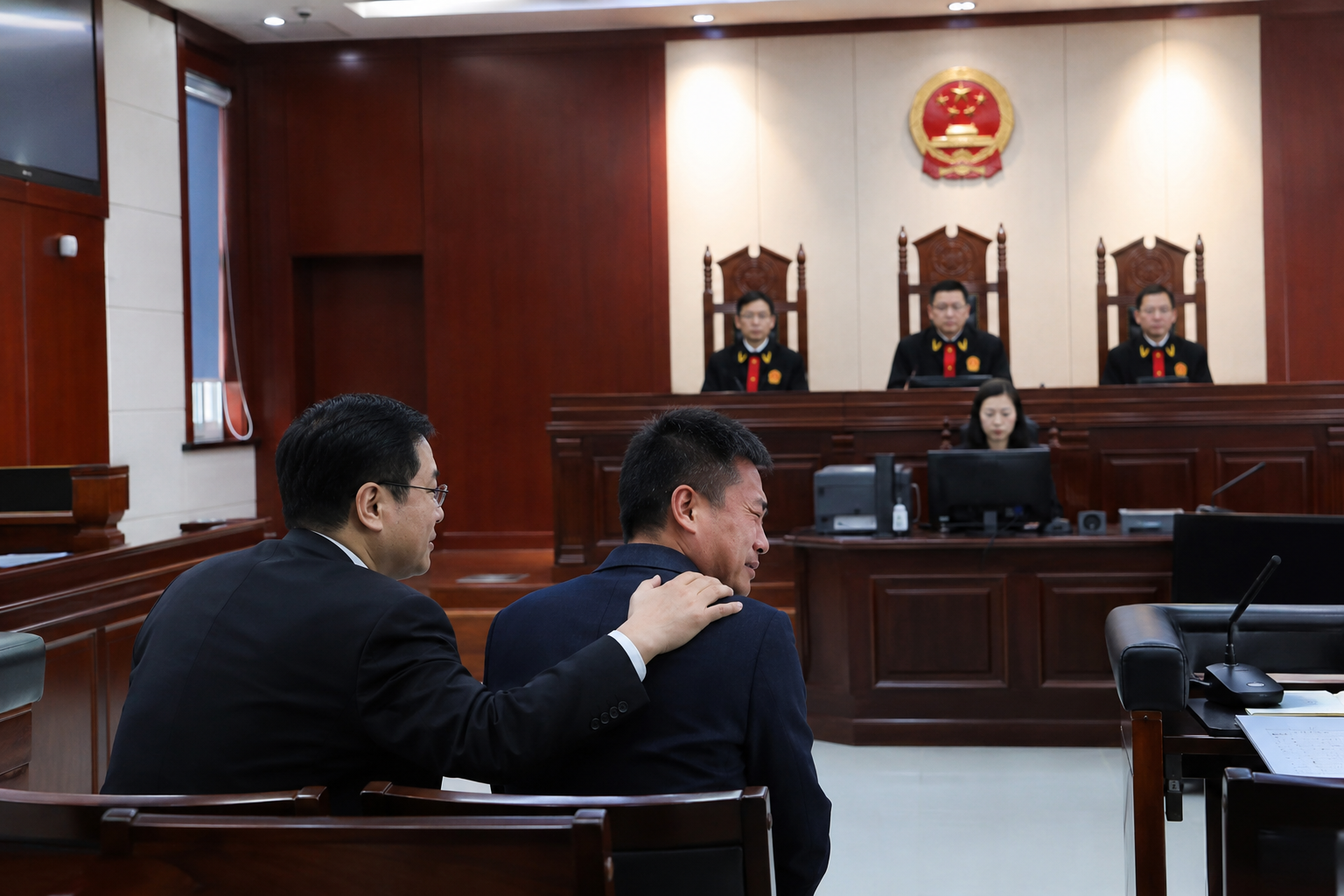
A tech worker in Hangzhou, China just won a landmark ruling that could rewrite the rules of AI-era employment. The Hangzhou Intermediate People’s Court ruled that companies cannot legally terminate workers simply because artificial intelligence has become capable of doing their job. The decision came after the employee was fired, sued his employer, won, watched the company appeal — and won again.
What Chinese Labor Law Actually Says
Chinese labor law sets specific conditions under which an employer can dismiss a worker: documented poor performance, genuine economic hardship, or a major shift in operations that makes the original employment contract impossible to fulfill. The court ruled clearly that “we implemented an AI system” satisfies none of those conditions. A business decision to automate — no matter how economically rational — does not, by itself, create a legal basis for termination.
The ruling lands at a complicated moment for China. The country’s government has been pushing industries to adopt artificial intelligence at an aggressive pace, positioning AI leadership as a core element of national economic strategy. This court decision now puts two priorities — rapid AI adoption and worker protections — on a direct collision course.
How It Happened
The worker at the center of the case had been hired specifically to evaluate and improve the accuracy of AI language models — essentially, a human quality-control layer on top of the AI systems. As those models improved, the company determined his role had become redundant. Rather than terminating him outright, they offered a transfer to a different, unrelated position at 40% of his original salary. He refused. The company fired him. He filed suit.
The initial court sided with him. The company appealed to the Hangzhou Intermediate People’s Court, expecting the ruling to be overturned. Instead, the appeals court upheld it — reinforcing that the burden is on the employer to demonstrate a legally recognized reason for dismissal. “We chose to use AI instead” does not clear that bar.
For companies in China that have already made or are planning AI-driven workforce changes, the implications are significant. They can still automate operations. They can still restructure. But if those changes eliminate jobs, they must either find comparable alternative roles for displaced workers or pay legally mandated severance. They cannot point to an algorithm and walk away clean.
The Debate It’s Igniting
Labor advocates in China have called the decision a turning point — the first time a major court has explicitly ruled that AI adoption cannot serve as a blanket justification for job cuts. They argue that without legal guardrails, companies will continue using automation as cover for layoffs that have more to do with cost-cutting than with genuine operational necessity.
Business groups and economists have pushed back hard. China’s technology sector is already in a fierce global race against American and European competitors who face no such legal restrictions. If Chinese companies must prove a higher legal standard before eliminating AI-displaced roles, the argument goes, they will fall behind competitors who can move faster and carry less cost.
What This Means for American Workers
This ruling happened in China, but it’s answering a question heading directly at every working American. There is currently no U.S. law that prevents a company from replacing a worker with AI, no legal requirement to offer a comparable role, and no minimum severance tied to automation-driven layoffs. That gap is growing more visible as AI systems move from experimental to operational across industries — from finance to healthcare to logistics to customer service.
This Chinese court just demonstrated that governments can draw a legal line between “adopting AI” and “using AI as a pretext to cut workers.” Whether American courts or lawmakers will follow — or even try — is the question workers in every AI-vulnerable field should be asking right now.
Stay informed on the stories that matter most. Follow Your Daily Updates on Facebook and bookmark yourdailyupdates.news for breaking news and analysis.