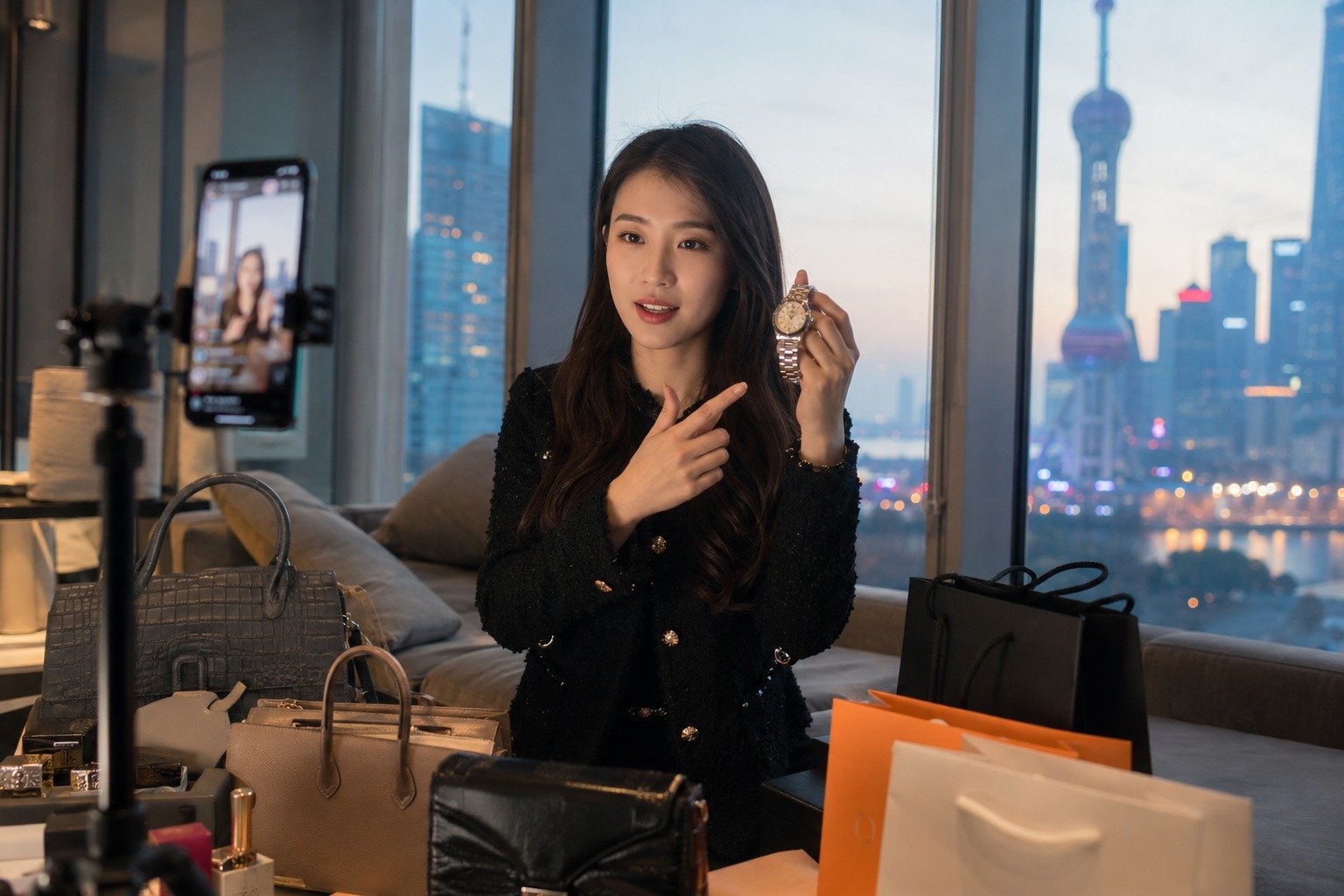
Some of China’s most recognizable luxury influencers have suddenly disappeared from the internet, their accounts wiped and their millions of followers left staring at empty pages. It is not a glitch, and it is not a coincidence. It is the result of a sustained government campaign aimed squarely at the people who built their fame on flaunting extreme wealth online.
What the “Qinglang” Campaign Actually Does
The effort is run by the Cyberspace Administration of China, the country’s powerful internet regulator. In April 2024, the agency launched a campaign it calls “Qinglang,” a term that translates roughly to “clean and bright.” The stated goal is to clean up online content the government considers harmful, and one of its central targets is the culture of conspicuous wealth display.
It is important to be precise about what this is and what it is not. China did not pass a law making it a crime to be rich or to post photos of nice things. There is no statute that sends someone to prison for showing off a handbag. Instead, this is a regulatory crackdown enforced through the platforms themselves. Under government direction, social media services such as Douyin (China’s version of TikTok), Weibo, and Xiaohongshu suspend or ban accounts, delete posts, and quietly remove influencers who cross the line. The pressure is real, but it operates through platform enforcement rather than the criminal courts.
The Influencers Who Vanished
The accounts that went dark were not minor figures. Wang Hongquanxing, an influencer so known for his opulent posts that he earned the nickname “China’s Kim Kardashian,” disappeared along with his 4.3 million Douyin followers. He had once claimed he never stepped out of the house in an outfit worth less than the equivalent of about $1.38 million.
He was not alone. An influencer known as Bo Gongzi built a following by showing off Porsches, Hermes bags, and other rare and expensive accessories. Another creator, nicknamed “Sister Abalone” after the pricey shellfish, became known for lavish meals and displays of luxury properties. One by one, these high-profile accounts were pulled offline, sending a clear message to anyone building a brand on the same formula.
A Wider Crackdown in 2026
What began as a series of targeted actions against individual celebrities has hardened into something far broader. In 2026, the campaign expanded to include large-scale account deletions, new credential and gatekeeping requirements for certain types of creators, and tax penalties aimed at influencers who underreported income. The combined effect is a more structural, systematic squeeze on the entire wealth-display ecosystem, not just a handful of famous names.
Why Now? The Economic Backdrop
The timing is not random. China’s economy has slowed, and the strain has fallen hardest on the middle class and on young people facing an intensely competitive job market. Against that backdrop, endless streams of influencers bragging about million-dollar wardrobes and luxury apartments can sharpen public frustration. The argument behind the crackdown is that toning down these displays helps ease the sense of relative deprivation that a struggling population feels when wealth is paraded so openly.
Supporters and Critics
Reaction has split. Supporters frame the move as a reasonable response to hard economic times, arguing that there is little public value in glorifying extreme wealth when so many are struggling to get by. Critics see something more troubling: a government deciding what ordinary people are allowed to show about their own lives, and using platform controls to enforce it. To them, the campaign looks less like social responsibility and more like censorship dressed up in the language of fairness.
What This Means for Americans
For American readers, the story is a window into how differently online speech can be governed. In the United States, an influencer flaunting wealth is free to do so, for better or worse. In China, the same behavior can now get an account erased overnight. It is a reminder of how much control a government can exert over the internet when it chooses to, and a live example of the ongoing global debate over where the line sits between curbing inequality and controlling expression.
Stay informed on the stories that matter most. Follow Your Daily Updates on Facebook and bookmark yourdailyupdates.news for breaking news and analysis.