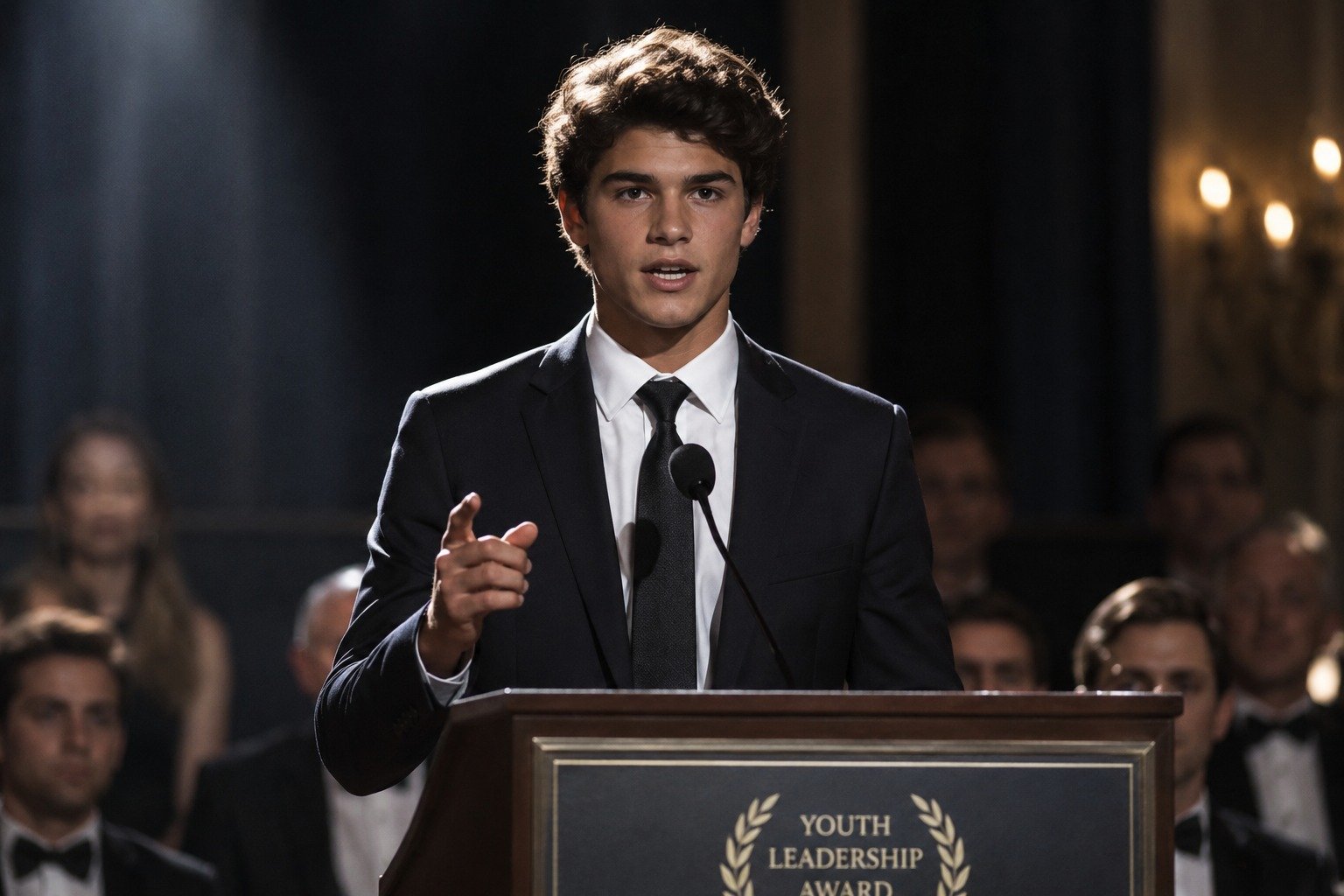
A high school senior walked up to accept a $10,000 CBS-funded scholarship at the News Emmys — and immediately used the podium to call out CBS News for betraying the journalist the award is named after. It was one of those moments you don’t expect to see at an industry awards ceremony, and exactly the kind of moment that makes people stop scrolling.
Santiago Campos, the 2026 recipient of the Mike Wallace Memorial Scholarship, didn’t hold back. Standing at the 47th News & Documentary Emmy Awards, he told the room directly that the “recent direction” of CBS News “stains the legacy of Mike Wallace” — a journalist known for fearless, confrontational reporting that held powerful institutions accountable for decades. Wallace was the kind of journalist who made powerful people uncomfortable. That was the job.
Campos criticized what he called corporate elites tightening their grip over the flow of information, and questioned what happens to journalism when outlets hesitate to report uncomfortable truths. It’s a concern that’s been raised across the political spectrum in recent years — from conservatives who argue mainstream outlets are editorially captured by one side, to media critics on the left who say corporate consolidation has hollowed out investigative journalism. Campos landed somewhere in the middle: demanding accountability journalism from an institution that helped fund his education.
CBS News has undergone significant changes in recent years amid broader ownership and editorial shifts. The network has faced scrutiny over editorial decisions and leadership transitions that have drawn criticism from journalists and media watchers alike. Whether those changes represent a departure from the Wallace standard — fearless, adversarial, institution-challenging reporting — is a matter of debate. Campos made clear which side of that debate he’s on.
He made his case for the kind of bold, unfiltered journalism Wallace became famous for — and used the moment to demand it from the very network writing his check. In an era when most people playing the long game in journalism know to keep their heads down and build relationships, Campos did the opposite. He used the biggest platform he’s likely had in his life to make a statement that will almost certainly follow him into whatever career he builds next.
Scott Pelley, the CBS News veteran who presented the scholarship, applauded the speech. That detail matters. Pelley is himself a journalist who has navigated the tension between editorial independence and corporate pressure during his years at 60 Minutes and the CBS Evening News. His willingness to applaud a student publicly criticizing the network that just handed him a check suggests the sentiment isn’t entirely without support inside CBS’s own walls.
Campos’ winning submission covered immigration enforcement and its impact — told through the lens of his own family’s experience. That’s the kind of personal, ground-level reporting that the Mike Wallace Memorial Scholarship was designed to encourage. Wallace didn’t win his reputation by covering events from a safe distance. He got close to the story. Campos, it seems, learned that lesson.
Love him or not — it takes a certain kind of nerve to cash a check from someone and then tell them, in front of the entire industry, that they’ve lost their way. Whether CBS News agrees with the assessment, takes it as a motivating critique, or quietly moves on, Campos made one thing clear: he’s not interested in playing it safe. For a teenager who just stepped onto one of journalism’s most visible stages, that might be exactly the right foot to start on.