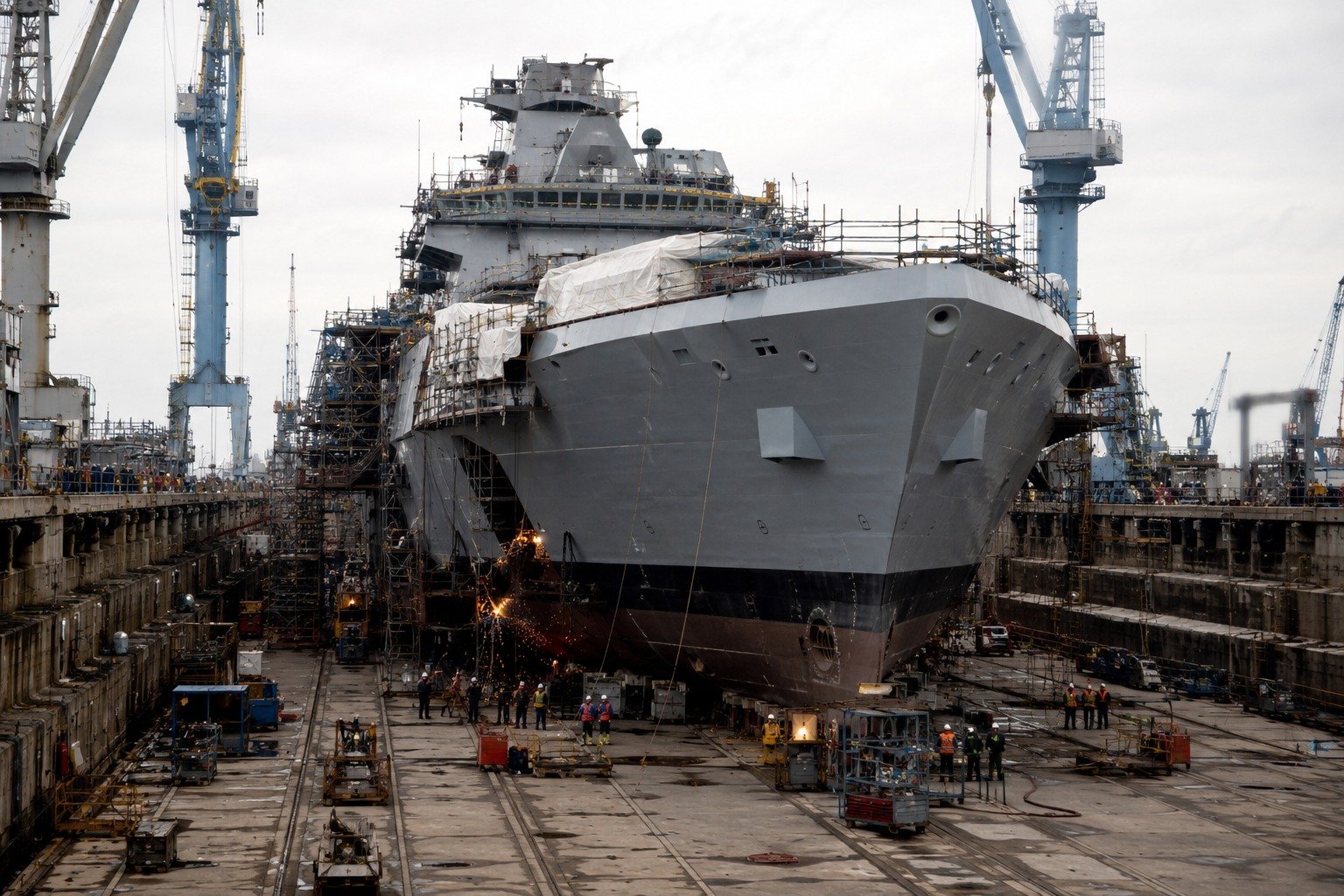
The Congressional Budget Office has thrown a spotlight on the true price of one of the most ambitious shipbuilding efforts in modern naval history. In a report released on August 5, 2026, the CBO projected that the Navy’s planned nuclear-powered “Trump-class” battleship program – informally dubbed the “Golden Fleet” – will cost dramatically more than the Navy’s own estimates, with the gap running to 50 percent or more per ship.
These are projections, not final invoices. The program is still in an early, not-yet-built stage. But independent cost analysis at this phase is exactly how expensive programs get scrutinized before the money is committed – and the CBO’s math paints a far pricier picture than the one the Navy first presented.
The First Ship Alone Could Cost $23.4 Billion
According to the CBO, the lead ship of the class – the USS Defiant – is projected to cost about $23.4 billion. That is roughly $8 billion, or about 52 percent, above the Navy’s initial estimate of around $15.4 billion for the first hull.
The overrun is not projected to be a one-time problem confined to the first-of-its-kind ship. The CBO estimates that each subsequent vessel in the class would run close to $18 billion apiece, compared with the Navy’s projection of roughly $10.2 billion per ship. In other words, the budget office sees a persistent gap between what the Navy says these ships will cost and what it believes they will actually cost.
A Quarter-Trillion-Dollar Program – and Possibly More
Scaled across the full fleet, the numbers grow enormous. The CBO projects that the planned 15-ship program would cost an estimated $275 billion through 2056. That figure covers the currently planned fleet size over a roughly three-decade build-out.
A larger fleet would cost even more. The Senate Budget Committee has floated the possibility of expanding the program to 20 or 25 nuclear-powered ships. Under that scenario, the projected total could climb to as much as $455 billion. It is important not to confuse the two figures: the $275 billion estimate applies to the planned 15-ship fleet, while the $455 billion figure describes a hypothetical, larger fleet – not the same program at a higher price.
And even those projections may prove conservative. The CBO cautioned that if the ships grow in size during design and construction, a displacement increase could add roughly another 16 percent to the cost of each hull. Warship designs frequently gain weight as new systems and requirements are added, which makes that warning particularly relevant for a class that has not yet been built.
Why the Gap Matters
The distance between the Navy’s early sales pitch and the CBO’s independent estimate is the heart of the story. Early cost figures shape the political decisions that launch a program – the votes, the appropriations, the momentum. Once a shipbuilding effort is underway, it becomes extraordinarily difficult to stop, and the cost overruns that follow are absorbed by taxpayers over decades.
That is why budget watchdogs are raising questions now, before the checks are written. A nuclear-powered battleship program is among the most expensive commitments a government can make. When the independent estimate of the first ship comes in 52 percent above the official number, it is a signal worth examining closely – not after the fleet is built, but while lawmakers still have the ability to ask hard questions.
What This Means for Americans
Every dollar spent on a defense program is a dollar drawn from the same federal budget that funds everything else. A projected $275 billion program – potentially reaching $455 billion for a larger fleet – is a generational financial commitment. If the CBO’s projections hold, the difference between the Navy’s estimates and reality would run into the tens of billions of dollars, money that comes from taxpayers. The point of scrutiny at this stage is simple: to make sure the public knows the real projected cost before the program becomes too big to stop.
Stay informed on the stories that matter most. Follow Your Daily Updates on Facebook and bookmark yourdailyupdates.news for breaking news and analysis.