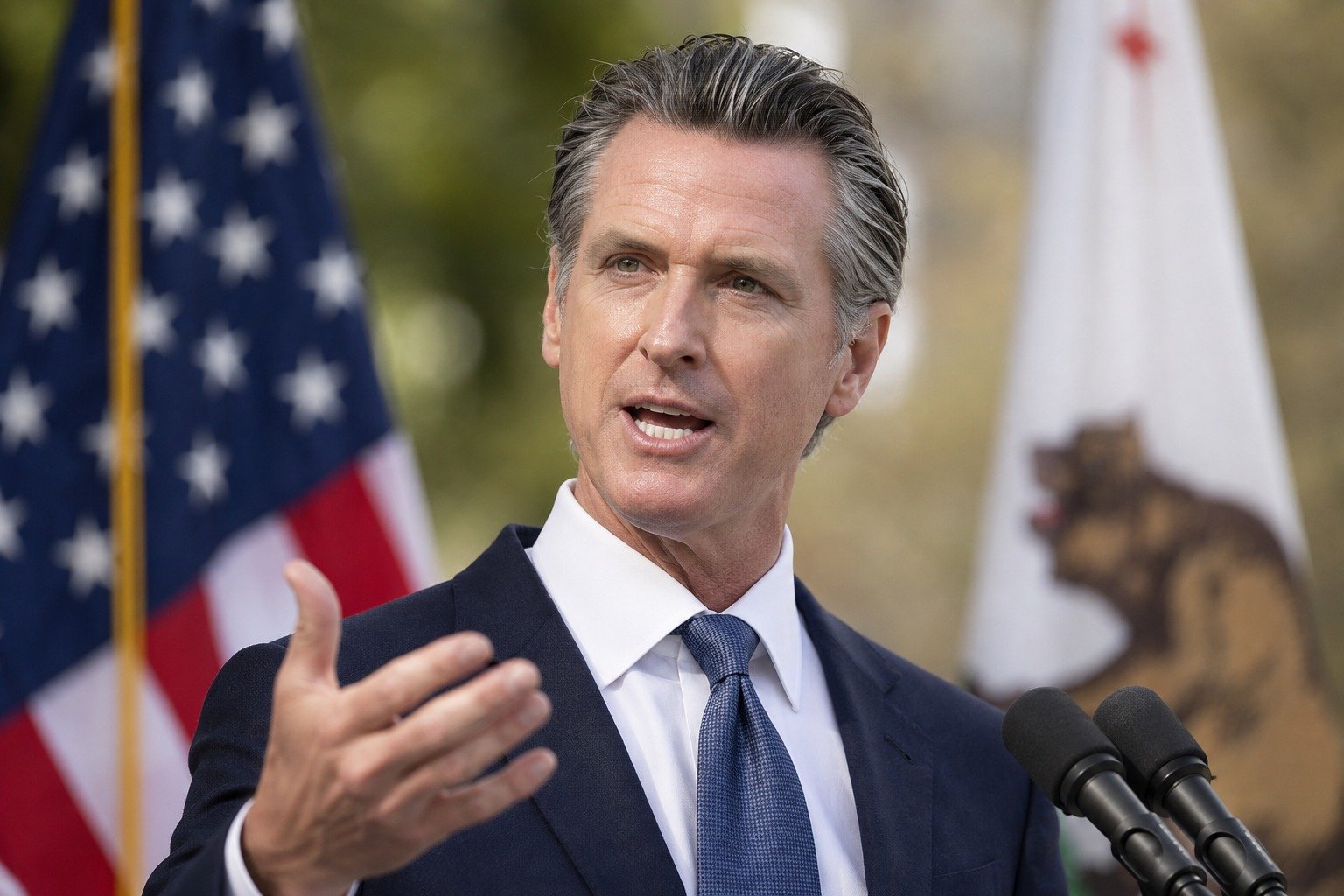
California is about to set the highest statewide minimum wage in the country. Governor Gavin Newsom announced on July 31 that the state’s minimum wage will rise to $17.40 an hour on January 1, 2027 – more than $10 above the federal minimum of $7.25, a rate that has not changed since 2009.
A Routine Raise, Not a Sudden Leap
The word “skyrocket” gets thrown around whenever California’s wage floor moves, but the reality is far less dramatic. The jump to $17.40 is a routine, automatic adjustment – roughly a 50-cent increase from the current rate. California indexes its minimum wage to inflation, meaning it rises a little each year to keep pace with the cost of living.
That design matters. Because the raise is tied to prices rather than politics, workers don’t have to wait for a legislative brawl to earn a wage that reflects what rent, groceries, and gas actually cost. The increase is small in isolation. What makes it look enormous is the yardstick it’s measured against.
The Real Story Is $7.25
The eye-popping gap between California and the federal floor isn’t really about California. It’s about Washington. The federal minimum wage has been frozen at $7.25 an hour since 2009 – the longest stretch without an increase since the federal minimum was established in 1938.
Sixteen years is long enough for an entire generation to enter the workforce and never once see the federal floor move. And because inflation never stops, a worker earning $7.25 today has far less buying power than a worker who earned the same $7.25 back in 2009. The number on the paycheck stayed still; the cost of everything around it did not. That is how a routine California adjustment ends up sitting more than $10 above the national baseline.
Newsom Draws a Contrast
Newsom framed the increase as a question of priorities, saying it “puts working families first.” He drew a sharp line between California’s approach and Republicans in Congress, who have repeatedly blocked efforts to lift the federal minimum wage. In his telling, one system quietly keeps pace with reality while the other has been left untouched through three presidencies.
Supporters of a higher federal wage argue that $7.25 is indefensible in an economy where basic costs have climbed year after year. Opponents counter that mandated increases burden small businesses. But the core fact is hard to argue with: the federal floor has not moved in over a decade and a half, while the price of living has never stopped rising.
What This Means for Americans
For Californians, the change means a modest but real bump in take-home pay, and a wage floor that adjusts automatically instead of waiting on a political fight. For the millions of workers in states still tied to the federal rate, it means nothing changes at all. Their minimum stays $7.25 – the same figure it has been since 2009 – no matter how much prices climb. The California increase is less a story about one state going big than a reminder of how long the rest of the country has stood still.
Stay informed on the stories that matter most. Follow Your Daily Updates on Facebook and bookmark yourdailyupdates.news for breaking news and analysis.