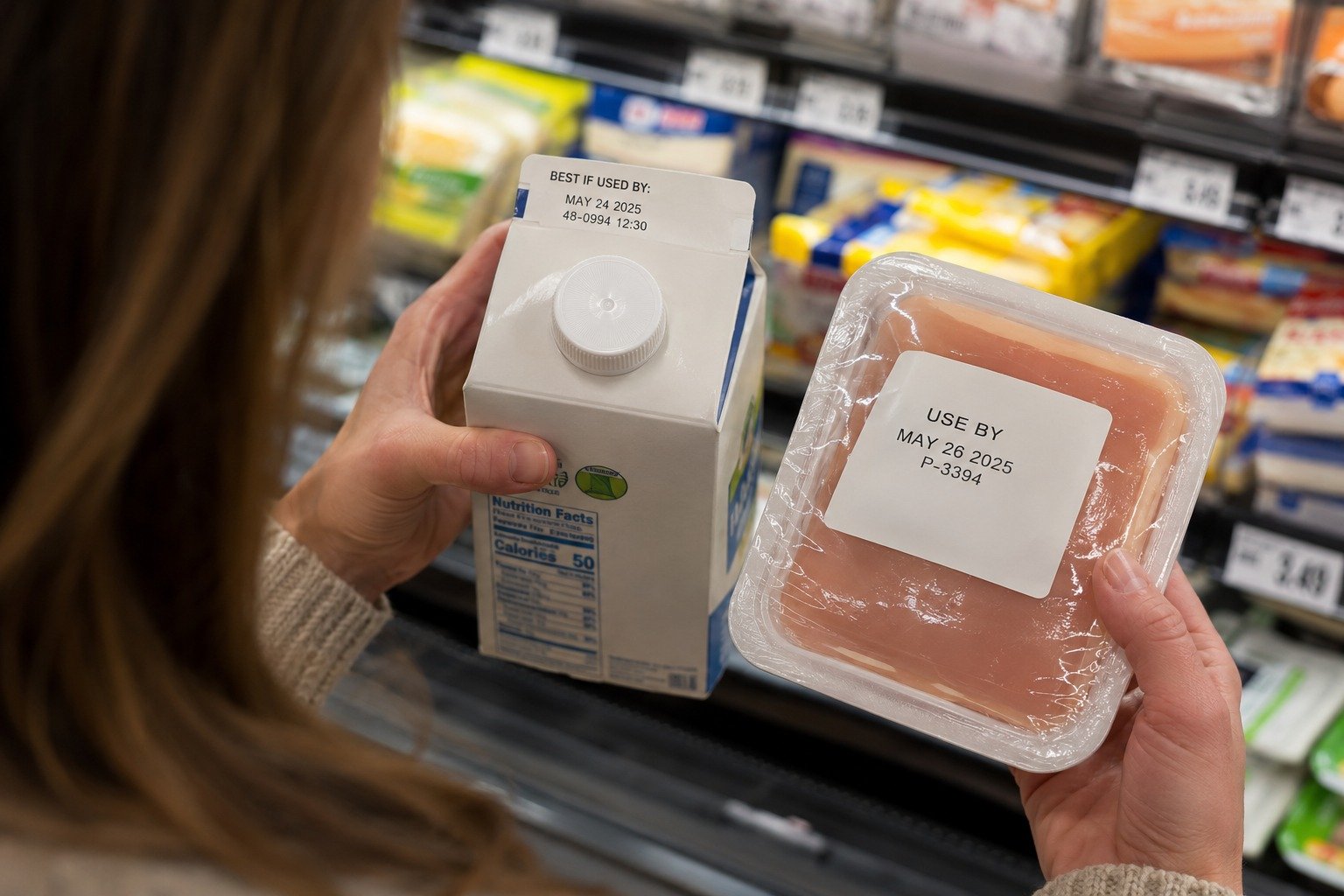
As of July 1, California became the first state in the country to standardize the date labels printed on packaged food, a change consumer advocates say could cut down on grocery bills and slash the enormous amount of food Americans throw away every year.
The new rules, established under Assembly Bill 660, ban the vague “sell by” stamp that has appeared on packaging for decades. In its place, manufacturers selling food in California must now use one of two standardized phrases: “Best if Used By,” which signals peak quality, or “Use By,” which is reserved for the narrow set of products that can become unsafe after a certain date. Eggs and infant formula are exempt from the requirement.
Why the old labels caused so much confusion
For years, food safety experts have pointed out a simple problem: most date labels were never meant for shoppers at all. A “sell by” date is an inventory tool that tells a store how long to keep a product on the shelf. It has little to do with whether the food is still good to eat at home. Yet without any national standard, packaging carried a patchwork of phrases — “sell by,” “best by,” “expires on,” “enjoy by” — and consumers understandably read most of them as hard expiration dates.
The result was a steady stream of perfectly edible food heading straight into the trash. Federal estimates have long attributed a significant share of household food waste to confusion over date labels, with studies suggesting billions of pounds of food are discarded each year in part because people misread these stamps.
A quiet win for household budgets
Supporters of the law frame it first and foremost as a pocketbook issue. When families toss food that is still safe, they are essentially throwing away money — and at a time when grocery prices remain a strain on many households, even small reductions in waste add up over a year of shopping trips.
“Best if Used By” is designed to tell shoppers the truth: the product may not be at its absolute freshest after that date, but it is generally still fine to eat. “Use By,” by contrast, is reserved for the genuinely perishable items where safety is a real concern. By narrowing the language down to those two clear options, the state hopes to give consumers the confidence to keep food they would previously have discarded.
An environmental payoff, too
The benefits are not limited to the checkout line. Food that ends up in landfills breaks down and releases methane, a potent greenhouse gas. Reducing avoidable food waste is one of the more straightforward ways to cut those emissions, which is why environmental groups joined consumer advocates in backing the measure. Less waste means fewer resources — water, land, fuel and labor — spent producing food that is never eaten.
How the rollout worked
California lawmakers passed AB 660 back in 2024 but built in a lead time so companies could redesign packaging and adjust their labeling systems before the requirement kicked in. That window closed on July 1, 2026, and the standardized labels are now the law of the land in the nation’s most populous state.
Because California represents such a large slice of the national grocery market, food producers often find it simpler to apply a single label nationwide rather than print separate packaging for one state. That means the practical effect of the law could reach far beyond California’s borders, even in states that have not passed their own rules.
Other states are watching closely to see how the transition plays out. For now, California has staked out a clear position: sometimes the most effective way to help families and the environment at once is simply to make the label tell the truth.