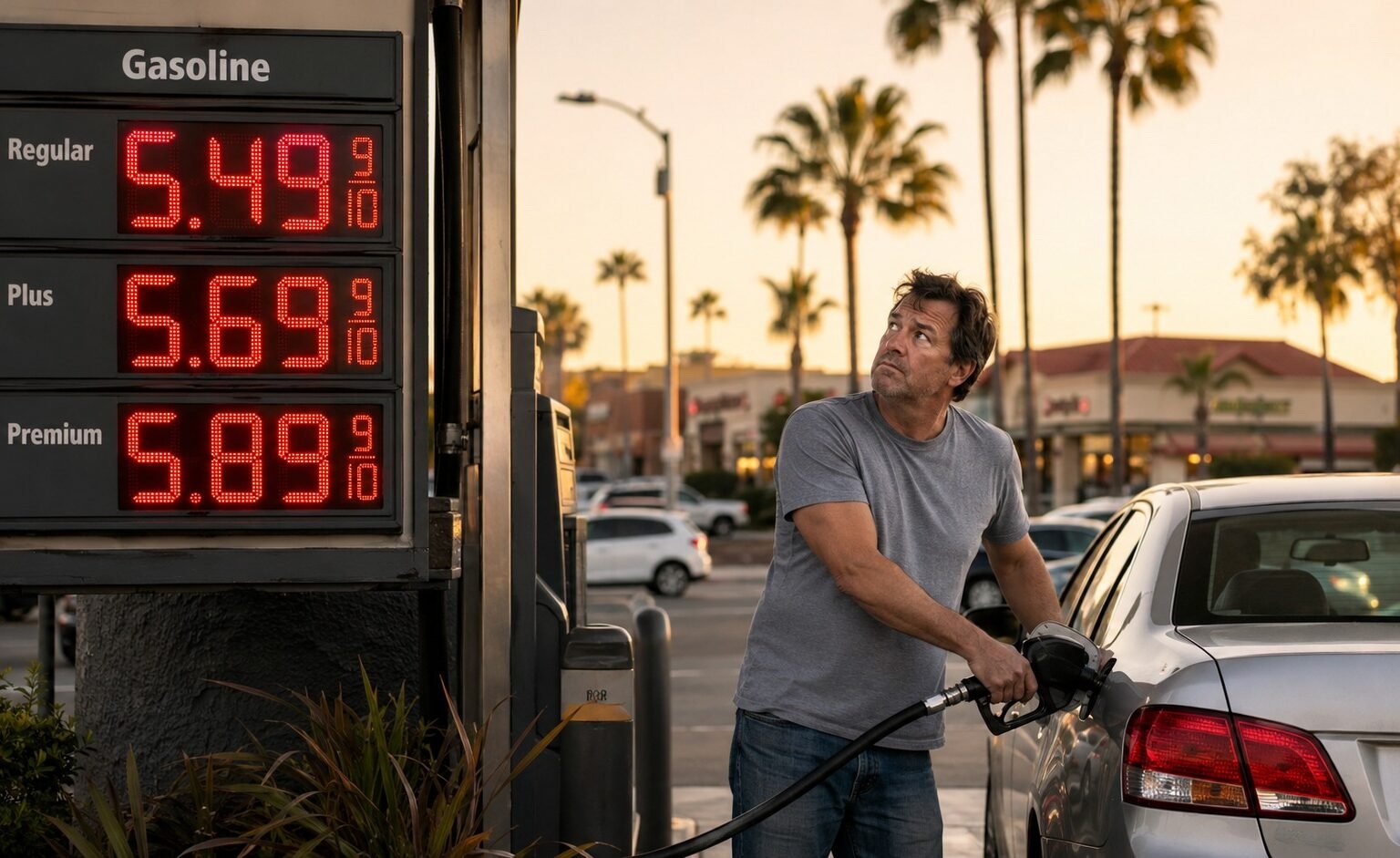
California drivers say they have finally put a name to the suspicion that has nagged them at every fill-up: a proposed class-action lawsuit filed in federal court in Sacramento accuses BP, Marathon, 7-Eleven, and Walmart of allegedly using artificial intelligence pricing software to coordinate and inflate the price of gasoline across the state. The drivers argue that what looks like a free market has, in fact, allegedly been an algorithm quietly steering competitors toward the same painful number.
At the center of the complaint is Kalibrate Fuel Systems, a company that sells AI-driven pricing tools to fuel retailers. The lawsuit alleges that the named companies fed their own pricing data into Kalibrate’s platform, which then allegedly helped them raise prices in lockstep rather than competing the way antitrust law requires. The drivers say that arrangement let rival stations behave less like competitors and more like partners.
What the Lawsuit Claims
The complaint, brought as a proposed class action on behalf of California consumers, says the alleged scheme violated two state laws. The first is the Cartwright Act, California’s core anti-monopoly statute, which prohibits agreements that restrain competition or fix prices. The second is AB 325, a newer measure aimed squarely at the modern version of price-fixing: companies using shared software and algorithms to coordinate prices without ever sitting in a room together.
That distinction matters. Traditional price-fixing cases require proof that executives conspired directly. But as pricing has moved into automated software, regulators and plaintiffs have argued that competitors can achieve the same result by all feeding their data into a common algorithm and letting it do the coordinating for them. AB 325 was written with exactly that scenario in mind, and this lawsuit is one of the early tests of how far it reaches.
Why This Resonates With Drivers
California has long had some of the highest gas prices in the country, a fact usually explained by taxes, environmental regulations, and supply constraints. Drivers have spent years watching the meter spin past five dollars a gallon while every station within a few miles somehow lands on nearly the same price. For many, the lawsuit gives shape to a frustration they could never quite prove: the sense that the squeeze at the pump was not simply the product of supply and demand.
If the allegations hold up, it would mean those prices were not just high but, at least in part, engineered. That is a powerful claim for households that budget around fuel costs, for workers who commute long distances, and for small businesses that depend on affordable transportation. It reframes a routine expense as a possible case of corporate coordination at consumers’ expense.
The Companies Have Not Been Found Liable
It is important to be precise about where this case stands. These are allegations in a newly filed lawsuit, not proven findings. BP, Marathon, 7-Eleven, and Walmart have not been found liable of anything, and they will have the opportunity to respond in court and contest the claims. A proposed class action also has to clear significant procedural hurdles before it can move forward on behalf of a broad group of consumers.
Still, the filing reflects a growing legal push to apply old anti-monopoly principles to new technology. Across multiple industries, from rental housing to fuel, plaintiffs and state officials have begun arguing that shared pricing software can function as a tool for coordination even when no human ever explicitly agrees to fix a price. How courts treat those arguments could shape what companies are allowed to do with AI pricing tools for years to come.
What This Means for Americans
For everyday drivers, the case is a reminder that the prices they pay are not always set by impersonal market forces alone. As more of daily commerce runs through algorithms, the question of whether that software is being used to compete or to coordinate becomes central to whether consumers get a fair deal. A win for the plaintiffs could open the door to refunds and tighter limits on AI pricing tools; even a closely watched loss would sharpen the debate over how to police automated price-setting.
Stay informed on the stories that matter most. Follow Your Daily Updates on Facebook and bookmark yourdailyupdates.news for breaking news and analysis.