For the first time in American history, a majority of citizens believe the country’s wealthiest individuals pose a direct threat to democracy itself. A new Harris Poll finds that 53 percent of Americans now view ultra-high-net-worth individuals — billionaires — as a danger to the U.S. democratic process. That number is up seven percentage points from 46 percent just one year ago, and it marks the first time that view has crossed the 50 percent threshold.
The shift is significant not just because of the number, but because of what it suggests about how ordinary Americans are thinking about the relationship between extreme wealth and political power.
The Numbers Tell a Stark Story
The Harris Poll data goes well beyond the headline figure. Seventy-one percent of respondents said they want the wealthiest Americans to have less influence over political decisions. An identical 71 percent support a national wealth tax. Sixty-four percent believe anyone worth more than one billion dollars should face mandatory philanthropic contribution requirements. And 53 percent support establishing a legal ceiling on personal wealth — with most of those respondents placing that cap at $10 billion.
These aren’t fringe positions. They’re majority or near-majority views, spread across a poll that surveyed a broad cross-section of the American public. Whether you agree with those numbers or not, they represent a measurable, documented shift in how Americans are feeling about concentrated wealth and its role in the country’s political system.
The Inauguration Photograph That Changed the Conversation
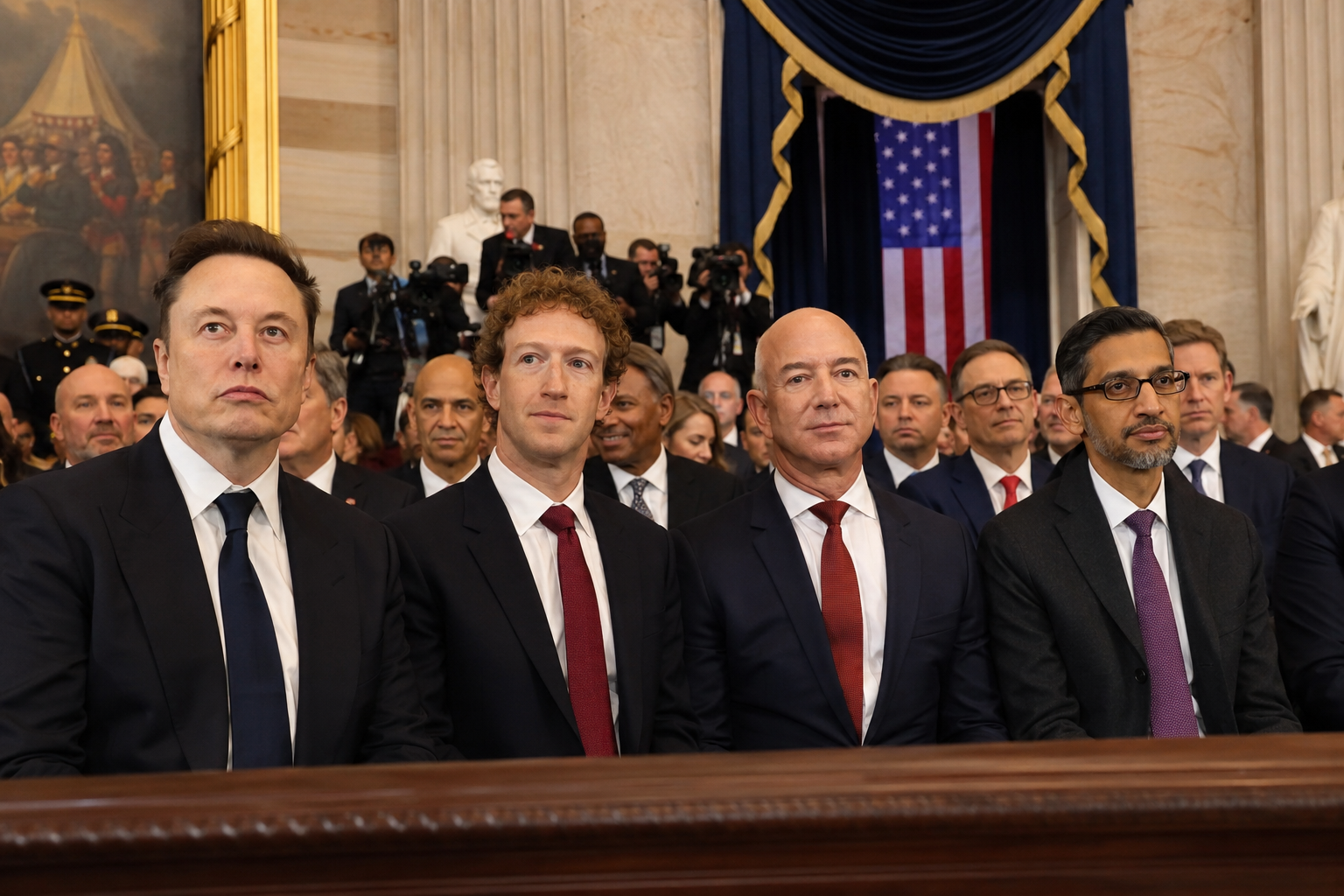
The timing of this shift is hard to separate from one very specific image. In January 2025, Elon Musk, Mark Zuckerberg, Jeff Bezos, and Sundar Pichai — four of the wealthiest people on the planet — sat together in the front row at Donald Trump’s presidential inauguration. The photograph circulated immediately. Within hours, it had been viewed millions of times across every major social media platform.
For many Americans, it wasn’t just a photograph of businessmen attending a public event. It was a visualization of something they had long suspected: that the people with the most money had secured a seat at the most powerful table in the world — and hadn’t needed to be elected to get there.
Whether that interpretation is fair is a separate question. But the image clearly landed. Polling data taken in the months that followed shows a consistent uptick in concern about billionaire influence in politics — and the Harris numbers are the latest and most striking indicator of that trend.
The Case on the Other Side
The debate isn’t one-sided, and the strongest arguments against restricting billionaires’ political involvement are serious ones.
These are private citizens. Elon Musk, Jeff Bezos, and Mark Zuckerberg built companies from scratch that now collectively employ hundreds of thousands of Americans and generate trillions of dollars in economic activity. Their success, by most conventional measures, is a product of the same capitalist system that the United States has long celebrated.
On the legal side, the Supreme Court has consistently held that political spending is a protected form of free speech. Landmark rulings have established that restricting political donations is itself a restriction on constitutional rights. If a teacher can write a $100 check to a political candidate, the constitutional logic holds that a billionaire can write a much larger one.
The argument, in other words, isn’t really about whether billionaires should exist. It’s about whether the scale of their wealth creates a tier of political access and influence that ordinary citizens simply cannot compete with — and whether that imbalance is something a democracy should address through law.
Where Americans Stand
The poll’s message seems clear: most Americans think that gap has become too large. Whether they support a wealth tax, mandatory philanthropy, a cap on fortunes, or simply less political spending from the ultra-rich — the majority position in the United States right now is that something needs to change.
What that something actually looks like in policy, and whether it’s even constitutional, is a much harder question. Courts would almost certainly challenge any hard cap on personal wealth. A wealth tax has been proposed in Congress multiple times and has never come close to passing. Mandatory philanthropic giving raises obvious questions about compulsion and government overreach.
The numbers show where public sentiment is heading. Translating that sentiment into law is where the real fight begins.
Should billionaires face stricter limits on their political involvement, or do they have the same First Amendment rights as every other American citizen?